Hasbro reported second-quarter results Tuesday morning, and the beat ran through every line that matters: revenue up 16% to $1.14 billion against expectations near $1.06 billion, adjusted earnings of $1.28 per share against a $1.13 consensus. Management raised full-year guidance across the board — revenue growth of 5% to 7% in constant currency, up from 3% to 5%; adjusted operating margin of 25% to 26%; adjusted EBITDA of $1.45 billion to $1.50 billion. Shares climbed as much as 3.8% in premarket trading.
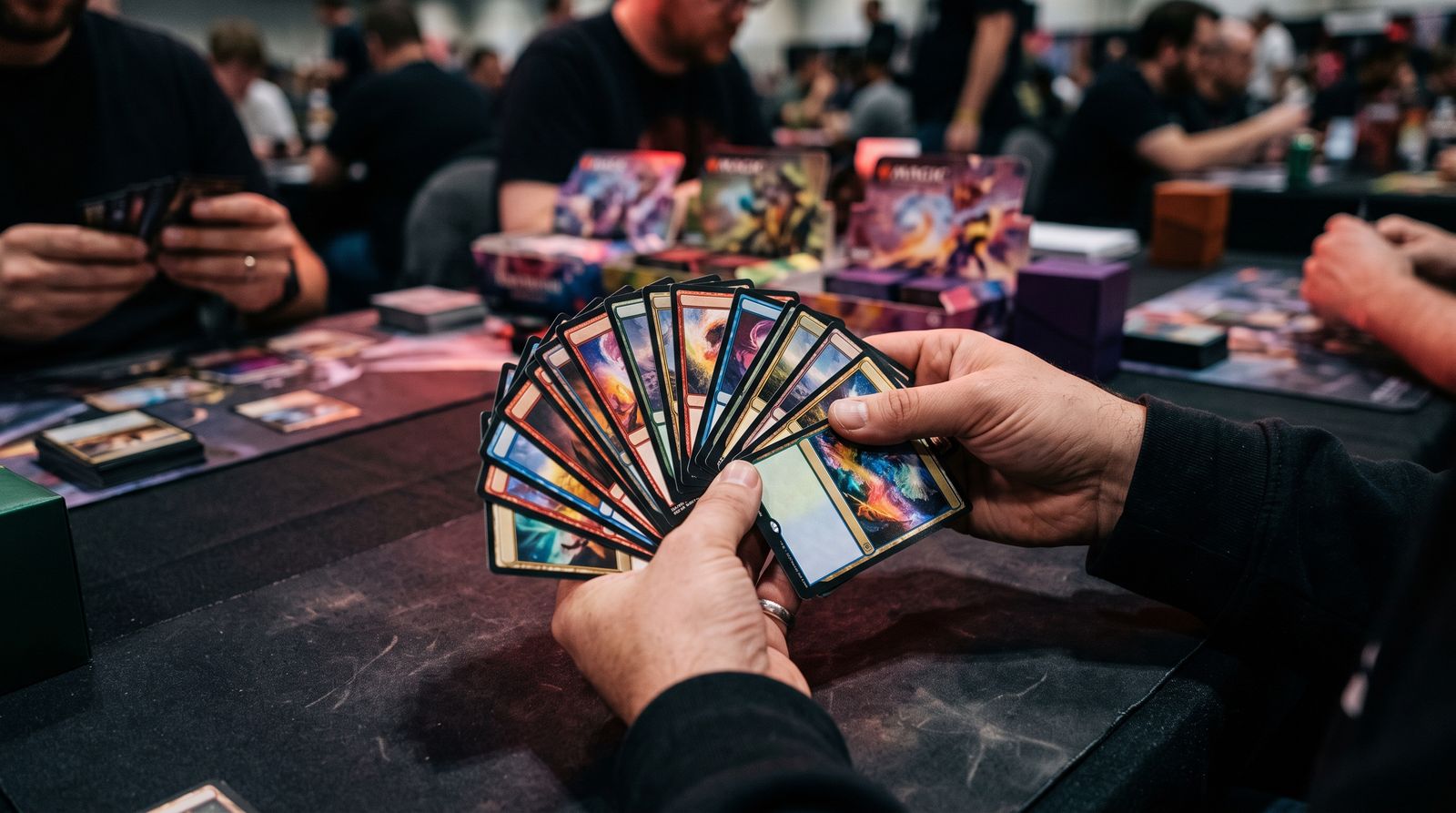
But the story isn’t the beat. It’s where the beat came from. Magic: The Gathering — the collectible card game now in its fourth decade — grew 32% to $545.3 million, the first time the franchise has cleared half a billion dollars in a single quarter. The driver was a record-breaking debut for its Marvel Super Heroes crossover set. Wizards of the Coast and Digital Gaming, the division that houses Magic, grew 27% to $663.8 million in revenue and threw off $270 million in operating profit.
Run the math and the story sharpens. Magic alone was nearly half of Hasbro’s total revenue this quarter. The Wizards division was 58% of it — at an operating margin north of 40%, the kind of economics software companies brag about. Hasbro still sells Play-Doh and Transformers, but the business investors are paying for is a card game with a printing press.
The Marvel playbook
The biggest set in Magic’s history isn’t built on Magic’s own lore — it’s borrowed IP. That’s the tell. Hasbro has found a repeatable lever: take a fandom with decades of accumulated attachment, print it into a collectible format with built-in scarcity, and let two audiences — players and collectors — bid against each other for the same cardboard. Crossovers aren’t a gimmick anymore; they’re the growth engine. And the pipeline of licensable universes is, for practical purposes, unlimited.
Our take: A guidance raise this size in July means management believes the Marvel quarter wasn’t a sugar high — the same signal GM sent this morning by raising its own year. But concentration cuts both ways: when nearly half your revenue is one game, every set launch is an earnings event. Collectibles businesses import collectibles risk — release fatigue, wallet strain, and the standing temptation to overprint the scarcity that makes the model work. Hasbro is now a hits business with a toy company attached, and hits businesses get hits-business multiples in both directions.
What to watch
- The back-half set slate. The raised guidance leans on crossover cadence. The next launches tell you whether Marvel was a ceiling or a floor.
- The other Hasbro. Traditional toys remain the tariff-exposed, slower-growth half of the company — and with Washington hinting at fresh trade action, the gap between the two halves can widen fast.
- Overprint discipline. Collectible value depends on scarcity. If reprints chase this quarter’s number, the flywheel wobbles.
- How the market treats beats. This season has rewarded misses and punished beats depending on positioning — a modest premarket pop on a blowout says expectations were already creeping up.
Bottom line: the quarter confirms the conversion of a century-old toymaker into a collectible-games company that happens to ship toys. The guidance raise makes it official.