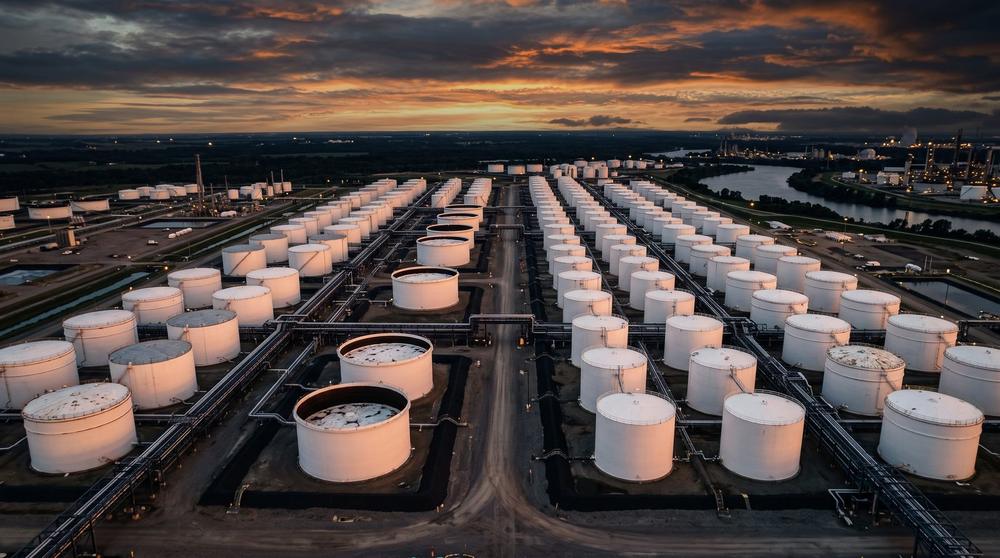
The International Energy Agency's September Oil Market Report cut this year's global demand forecast by a further 940,000 barrels a day. The agency now expects world oil demand to fall 2.5 mb/d in 2026 — the largest annual contraction since the pandemic year of 2020.
The cause it names is not a recession. It is price and availability. The continuing impasse in US–Iran negotiations pushes any normalisation of flows into next year, and the losses are concentrated in middle distillates and petrochemical feedstock, especially across Asia. That is the signature of demand destruction: diesel and naphtha buyers who cannot pass the cost through simply buy less. Refiners are following them down — global runs are forecast to fall 2.6 mb/d to 81.5 mb/d this year.
OPEC, working from a different model, also trimmed its 2026 demand-growth forecast — the fifth consecutive cut.
Why a demand collapse isn't a price collapse
Here is the part that trips up anyone reading the headline alone. Supply is falling faster. Global production dropped 1.6 mb/d month-on-month in August to 100.1 mb/d, with more than 10 mb/d of Gulf output still shut in amid security risks. The IEA's own framing, as Argus summarised it, is a big demand fall and a 2026 deficit. Both at once.
So prices behave accordingly. Brent settled at $104.42 on Friday, down 2.98% on the day; WTI closed at $99.99, down 2.43%. The fall came after Iranian state media reported plans for talks with Gulf states in Oman — a diplomacy headline, not a balance-sheet one.
Our take: Treat the demand cut as a cost read, not a growth read. A 2.5 mb/d contraction driven by shut-in supply tells you how much industrial activity has already been priced out of existence — and that activity does not return on the day the barrels do. The IEA pencils in a 2.6 mb/d recovery for 2027, almost exactly offsetting this year. That symmetry is a modelling convention, not a forecast you should plan a budget around.
The second-order effects are the expensive ones
Middle distillates are the transmission mechanism between an oil price and the rest of the economy. Diesel moves freight; naphtha and other feedstocks move plastics, packaging and fertiliser. A contraction concentrated there means input costs stay elevated in goods categories long after crude headlines calm down — which is exactly the pattern showing up in recent producer-price data.
It also complicates the central-bank arithmetic. A softening oil price helps headline inflation. A structurally tight distillate market does not help core goods. Policymakers reading a falling crude print as disinflation may be reading the wrong barrel.
What to watch
- The Oman channel. Talks between Iran and Gulf states are the single largest swing factor on 2027 supply. Watch whether anything is scheduled, not whether anything is said.
- Gulf restart pace. Ten million barrels a day of shut-in output is the size of a major producer. How quickly it returns — and in what condition the infrastructure is — determines whether the deficit persists.
- Distillate cracks versus crude. If diesel margins stay wide while crude eases, the demand destruction is structural rather than cyclical.
- Whether OPEC cuts a sixth time. Five consecutive downgrades from the producers' own cartel is an unusually consistent signal.
The one-line version: the world is using dramatically less oil and paying dramatically more for it. Those two facts usually do not coexist, and the reason they do now is that this is a supply shock wearing a demand-forecast costume.