The International Energy Agency's August report is the rare energy document that manages to be bearish and bullish in the same paragraph. It cut 2026 global oil demand by another 510,000 barrels a day, putting consumption on track to shrink by 1.6 million barrels a day this year — the steepest annual contraction the agency has ever forecast. Prolonged closure of the Strait of Hormuz, broken supply chains and fuel prices that have stayed high for months are doing what recessions usually do to demand.
And the market is still short. The IEA now sees a third-quarter deficit of 1.8 million barrels a day, more than double the roughly 800,000 it penciled in last month. Across the full year, supply lands about 1.27 million barrels a day under demand, widened from the 860,000 implied by July's numbers. Demand fell. Supply fell further.
That is the whole story, and it is not a story about consumption. Regional exports — including the cargoes routed around Hormuz — dropped 2.1 million barrels a day in July to average 15 million. Loadings briefly touched 20 million early in the month, then fell to around 12 million as the strait effectively shut again and tankers and infrastructure came under attack. Brent finished Friday near $87 and West Texas Intermediate around $81, both down more than 2% on the session after six straight higher closes. Prices are not where a 1.8-million-barrel deficit says they should be, and there is a reason for that.
The buffer is doing the work
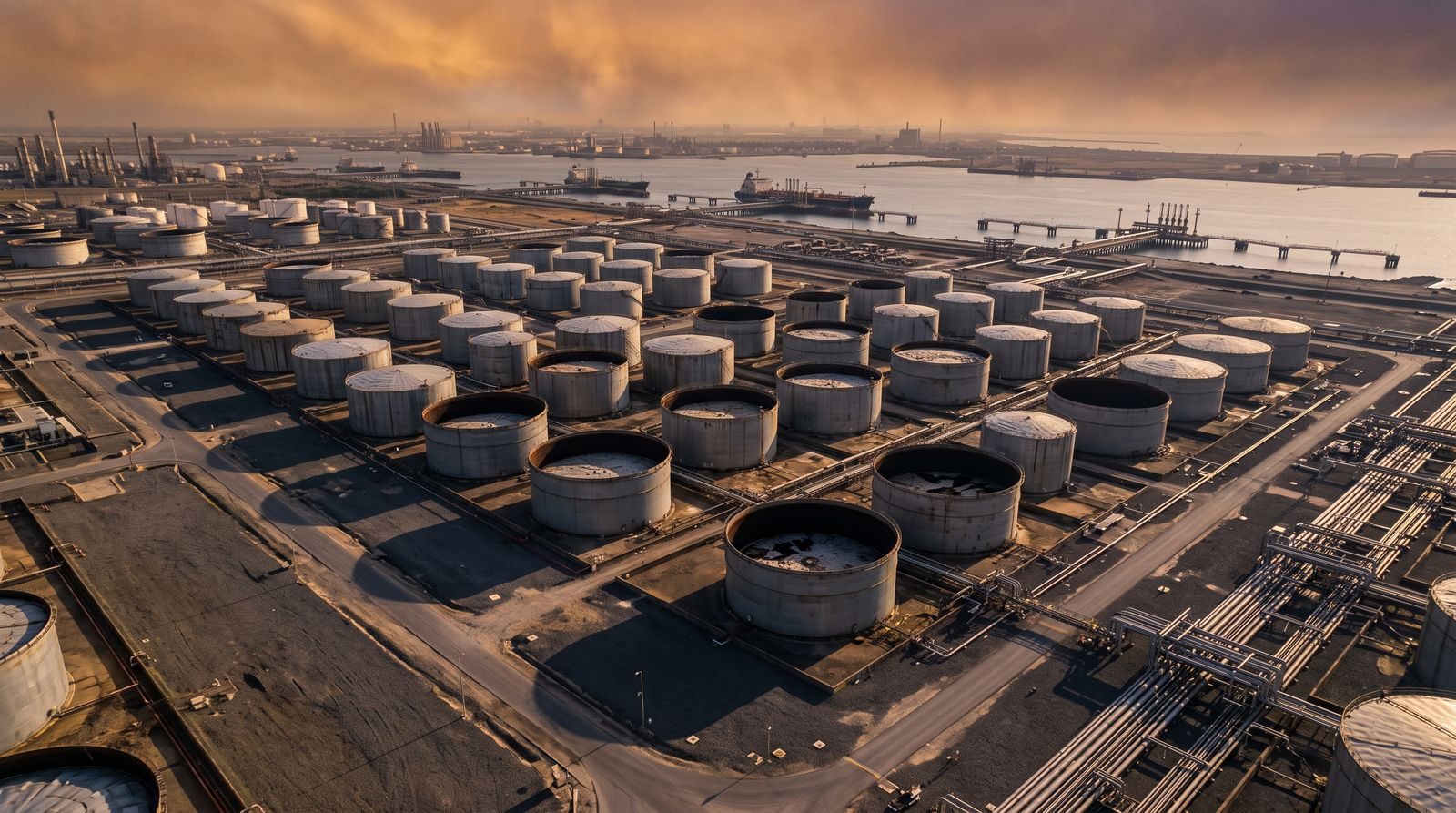
The reason is inventory. Between the end of February and the end of July, the world drew down 410 million barrels of observed stocks — an average of 2.7 million barrels a day. Observed inventories closed July below 7.9 billion barrels, the first time under that line since April 2025. Every barrel of that deficit has been paid for out of storage, which is why the physical market has stayed functional and the price has stayed merely uncomfortable rather than disorderly.
Our take: A deficit covered by inventory is not a shortage — it's a shortage on credit. The stock draw is the shock absorber between a broken supply chain and the pump price, and five months of drawing at 2.7 million barrels a day has spent a lot of it. The number that matters from here is not demand growth or OPEC's quota arithmetic. It's how many barrels are left in the buffer, because that is what determines whether the next escalation shows up as a headline or as a price.
The forecasters do not agree
Worth noting how far apart the official views have drifted. The IEA sees demand contracting 1.6 million barrels a day in 2026. OPEC, in its own August update, still models demand growth of 580,000 barrels a day — itself a fourth consecutive downgrade, but a different universe. Roughly 2.2 million barrels a day separates the two agencies on the same year, with four months left in it. Traders positioning off one number are positioning against the other.
What to watch
- Observed stock levels. Weekly and monthly inventory prints matter more than demand revisions now. The draw rate is the story.
- Hormuz transit volumes. Loadings swung between 12 and 20 million barrels a day inside a single month. Stability there, not diplomacy, is what resets the balance.
- The IEA–OPEC gap. One of these forecasts gets revised hard before December. Which way tells you who has been reading the demand destruction correctly.
- Whether high prices keep working. The demand cut is partly self-correcting — expensive oil is destroying consumption. That mechanism is currently the market's main source of balance, and it is not a comfortable one.
The setup is unusual: the deficit is real, the inventory cover is thinning, and the price is drifting lower anyway because demand is being crushed at roughly the pace supply is. That equilibrium holds exactly as long as both sides keep falling together.