Apple stores opened at 8am local time on Friday with the iPhone 18 Pro at $1,199 and the Pro Max at $1,299, both starting at 256GB. That is $100 above the equivalent iPhone 17 Pro and Pro Max.
Apple does not raise US flagship prices casually. The reason it did is sitting in data centres in Virginia, Ohio and Iowa.
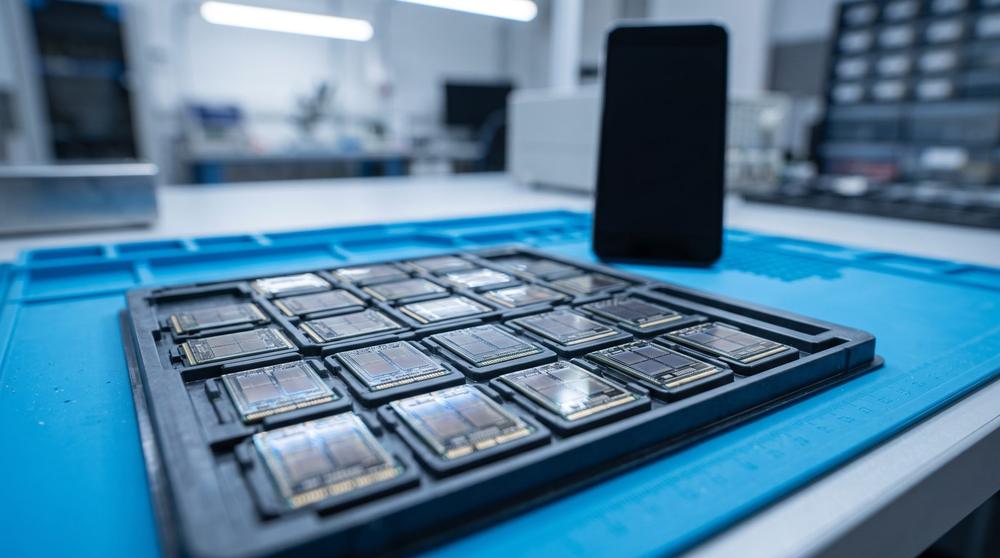
Memory is the cause. TechInsights estimates that memory for the 256GB Pro cost roughly four times more in the third quarter of 2026 than a year earlier, and that total component cost for the model is up about 38% year over year. Memory now accounts for a record share of the bill of materials — around a third, on a device where it has historically been a rounding error next to the processor and the display.
Our take: This is the first time the AI capital-expenditure cycle has arrived as a number a consumer pays at a till, and that makes it politically different from everything that came before. Data-centre spending has so far been an abstraction argued about in earnings calls. A $100 line on a phone is not an abstraction. Every company that buys memory — carmakers, laptop makers, console makers, anyone shipping an embedded system — is now in the same queue behind the same wafers, and most of them have less pricing power than Apple.
The mechanism: HBM eats the fab
High-bandwidth memory for AI accelerators consumes roughly three to four times as much manufacturing capacity per unit of memory as conventional mobile DRAM, and returns three to five times the revenue per wafer. Given that arithmetic, Samsung, SK Hynix and Micron did the obvious thing and redirected capacity toward HBM.
The victim is LPDDR5X — the low-power DRAM inside phones. It is not that nobody can make it; it is that nobody wants to make it at the margin when the alternative use of the same wafer pays several times better. Mobile memory is being crowded out by a higher bidder, which is the cleanest possible illustration of what an infrastructure boom does to everything sharing its supply chain.
This is the same squeeze showing up elsewhere in the industry: it is why SK Hynix has been circling Intel's idle Ohio fab, and why memory names have been the surprise leadership in an AI trade that most people still describe in terms of GPUs.
Why Apple ate it rather than absorbed it
Apple has historically swallowed component inflation to protect its headline price, using scale and long-term supply agreements as the shock absorber. Reporting through the summer suggested it went into this cycle without the memory agreements it usually holds. Whatever the cause, the decision to pass $100 to the customer — in a year when the company is also building its own AI server silicon — says the gap was too large to hide.
What to watch
- Whether the $100 sticks through the holiday quarter or gets quietly discounted via carrier and trade-in subsidies, which is where Apple usually hides price moves.
- Android flagship pricing in the first quarter of 2027. Apple has the most margin cushion in the industry; if it raised, everyone else has to.
- Memory contract pricing for the first half of 2027. If HBM demand keeps absorbing capacity, this is a two-year problem, not a one-cycle one.
- Whether the squeeze reaches categories with thinner margins — laptops, cars, industrial equipment — where a 400% memory cost increase cannot be covered by a $100 price bump.
The AI build-out has been described for three years as a trade. It is now also a bill, and it is being itemised.