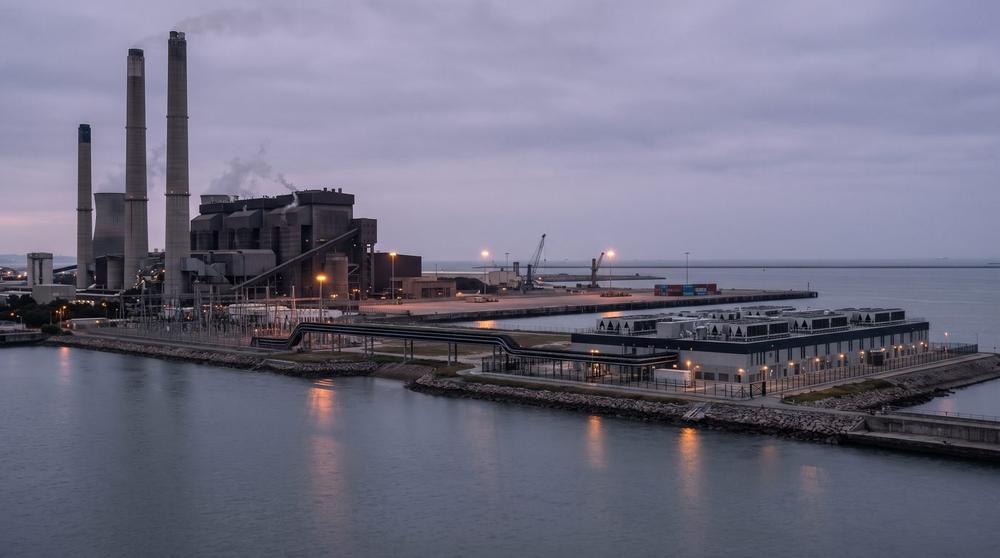
On Thursday, headlines across the AI and energy press said Japan’s JERA is in talks with Anthropic and Meta to build data centres beside its Tokyo-area power plants. Several added Amazon, Microsoft and Google.
Underneath that is one paywalled Nikkei interview with JERA’s chairman and global CEO, Yukio Kani. Reuters relayed it on November 26 and reported that “JERA, Anthropic, Meta, Amazon, Microsoft and Google did not immediately respond to Reuters’ requests for comment.” JERA’s newsroom has published nothing on the talks. Nikkei’s own page blocks automated access, so the primary text is unavailable to anyone without a subscription.
What is on the record is a different and more interesting document: JERA’s October 1 press release. It names no AI company whatsoever.
The confirmed deal
JERA signed a memorandum of understanding with Dell Technologies and RHAELM Holdings, a London-headquartered outfit the release describes as “a sovereign AI infrastructure developer.” Apollo Global Management is not a signatory; it “intends to serve as a strategic investment and financing partner for RHAELM.” The terms, in the release’s own words:
- Capacity: the project is “supported by power capacity of up to 400 MW.” Note the qualifier. Reuters reports it as “400-megawatt-class” and, elsewhere, that JERA “will supply 400 MW of power capacity for 15-25 years.” The 15-to-25-year term appears only in Reuters; the release states no term.
- Cost: “Total capital deployment of the Chiba Project is expected to exceed US $15 billion (2.3 trillion yen) across all phases of development spanning land, power infrastructure, facility construction and AI compute.” Reuters compresses this to “$15 billion.”
- Timing: “Operations are targeted to begin around 2028.” The release gives no phases and no 2029 date. Reuters adds both — “in phases in 2028 and reach full capacity in 2029.”
- Scale ambition: JERA and RHAELM “intend to explore deployment of the model at other JERA sites, with the ambition of supporting multi-gigawatt-scale AI infrastructure capacity across Japan in the 2030s.” No site count, no named second site.
- Tenant: none. Dell is the compute vendor. RHAELM develops, builds, operates and finances. Nobody is named as a customer.
The actual product is time-to-power
The sentence that explains why a utility is leading an AI build is this one, from the release: “The Project will be behind-the-meter from JERA’s operating generation asset enabling capacity to be delivered years ahead of a conventional grid-connected development schedule.” RHAELM’s chief executive, Bradd Lewis, puts it more plainly: “we can deliver a 400MW facility years ahead of a conventional grid-connected timeline.”
Behind-the-meter means the campus draws from the adjacent plant rather than joining the interconnection queue. That is the asset. Kani’s leverage is stated in the same release: “We already generate one third of Japan’s electricity and supply nearly all of the power consumed in the Tokyo metropolitan area.” JERA is a 50-50 joint venture of Tokyo Electric Power and Chubu Electric — a detail Reuters supplies and the release omits.
Reuters’ October coverage does not mention behind-the-meter at all. The single most load-bearing fact about the project appears only in the company’s own release.
Our take: Two things are worth separating. The first is that the siting constraint for frontier AI has moved from chips to electrons, and JERA is selling the one thing a hyperscaler cannot buy from a chip vendor: a connection that already exists. That is a real structural shift, and it is why the lead developer here is a power company rather than a cloud provider. The second is that the story that travelled was not that one. “Anthropic and Meta in talks” rests on a paywalled interview, relayed by outlets that in several cases describe themselves as agent-written and cite each other. We could not find a single named company confirming it, a contract value, or even whether the talks concern Chiba or some other plant — Reuters and the secondary coverage both say that is unstated. Meanwhile the attribution for Amazon, Microsoft and Google splinters four ways depending on which aggregator you read: to Kani directly, to Nikkei’s Japanese edition, to social posts, or to nothing confirmable. A $15 billion MoU with a named power term and no named customer is a genuine story. It is just not the one that got the headline.
What to watch
- A JERA release on the tenant talks. The October MoU shows the company publishes detail when it has it. Silence through a week of headlines is the signal.
- Whether “up to 400 MW” becomes 400 MW. A ceiling under an MoU is not delivered capacity, and the gap between those two readings is how data-centre pipelines get overcounted.
- The second site. “Multi-gigawatt” in the 2030s needs plants named, screened and permitted. No source we reviewed names one.
- Behind-the-meter as a template. If Chiba clears 2028 on an existing interconnection, every utility with spare generation and coastal land has a product. That is the part worth tracking, whoever the tenant turns out to be.