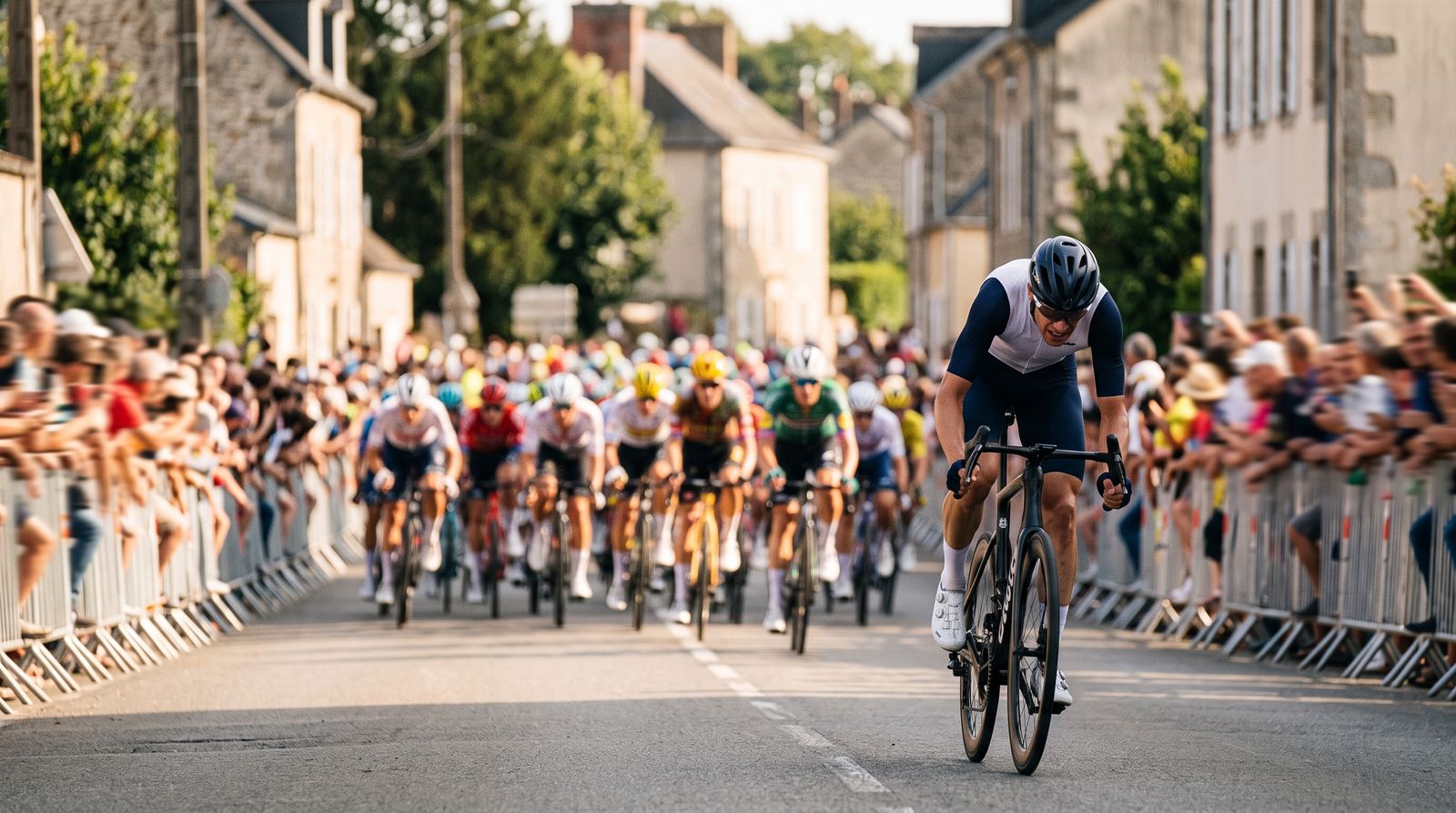
Tim Merlier won stage 12 of the Tour de France in Chalon-sur-Saône on Thursday — his third victory of this year’s race, after Bordeaux and Bergerac last week. The Soudal-QuickStep sprinter jumped off Milan Fretin’s wheel inside the final 200 metres and blasted past Fretin and Jasper Philipsen, while Olav Kooij came around the outside for second and Philipsen held third. Behind them the finish turned ugly: a rider clipped Fernando Gaviria’s front wheel and set off a high-speed, domino-effect pileup that brought down multiple riders — including Søren Wærenskjold, who won yesterday’s stage.
That name is the story. Twenty-four hours earlier, Wærenskjold won the fastest road stage in Tour history at 50.91 km/h while Merlier — the race’s in-form sprinter — got boxed in and never truly got to sprint. Listen to how he explained the turnaround at the finish: “Today, I was really focussed on the guys who were in the move yesterday, and that was the reason I was boxed in. So today, I tried to stay in front of them… I needed to calm down and then launch again.”
Read that quote as a performance review, because that’s what it is. No “bad luck.” No “the legs weren’t there.” Merlier named the causal error — fixating on specific rivals put him in the wrong position — converted it into one behavioral instruction (stay in front of those riders), and added a regulation cue for the moment itself (calm down, then launch). One diagnosis, one fix, executed on the very next rep, against the same field, under more chaos.
Our take: most post-mortems fail because they end in adjectives — “be sharper, start faster, focus more.” Merlier’s ended in a sentence you can act on, which is why the correction took exactly one day. That’s the difference between reviewing a result (“I lost”) and reviewing a mechanism (“watching my rivals put me in a box”). Three wins in one Tour isn’t a hot streak; it’s a repeatable process with a working feedback loop. If your review of a lost deal or a blown week doesn’t produce one specific instruction for the next rep, it isn’t a review — it’s a mood journal.
What to watch
- The crash bill. Wærenskjold and Gaviria hit the tarmac at sprint speed. Tomorrow’s start list will show the real cost, and another high-speed pileup in a bunch finish will sharpen the sprint-safety argument that has followed this Tour all week.
- The green jersey. Mads Pedersen faded to ninth but the points lead remains his to lose now that the flat stages are effectively done — Merlier’s three wins likely came too late to flip it.
- The GC clock. Tadej Pogačar rolled in untouched and keeps yellow at 3:36 over Jonas Vingegaard and 4:06 over Remco Evenepoel. The sprinters’ week is over; the mountains now decide whether anyone can make those numbers move.