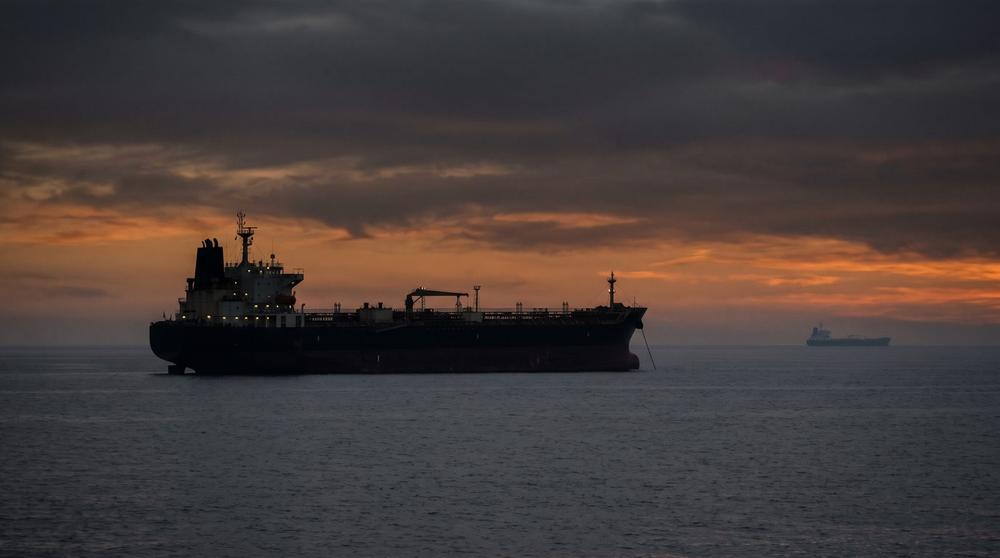
The Houthis said on Saturday they had attacked Saudi oil facilities and airports, naming an Aramco site at Yanbu, the Rabigh refinery and King Khalid International Airport in Riyadh. The Saudi-led coalition said it intercepted two ballistic missiles headed for Yanbu and Taif, then more drones and missiles aimed at Riyadh, Khamis Mushait and the south on Sunday. Saudi Arabia has confirmed none of the claimed hits, and no damage to oil infrastructure has been independently verified.
By Monday morning Brent was at $114.60, down $2.15 or about 1.8%, and WTI was at $101.10, off 2.1%. Both had settled nearly $3 higher on Friday, capping a 6% week for Brent.
Murban went the other way. Abu Dhabi’s flagship grade climbed above $118, up roughly 3%, leaving it about $3.40 clear of Brent. On Friday it had risen nearly 4% to $114.40, drawing level with the benchmark. A grade that normally trades at or below Brent is now trading through it.
Why one barrel rose while the other fell
The difference is geography and plumbing, not sentiment. Murban loads at Fujairah, on the Gulf of Oman side of the Strait of Hormuz — Gulf crude a buyer can lift without sending a tanker through the chokepoint. With Hormuz traffic still badly restricted, that is the scarce product, and the price says so.
Brent and WTI are pricing something else. They are the deepest paper markets in oil, and on Monday they moved on macro: reported US remarks about talks with Iran, and a market reluctant to hold risk into Wednesday’s Federal Reserve decision. A diplomacy headline moves a futures benchmark in seconds. It does not get a cargo out of the Gulf.
Our take: The benchmark has stopped being a reliable proxy for the price of oil. For a refiner buying Gulf crude, or a treasurer hedging a fuel bill against Brent, the gap between the screen and the invoice is the exposure — and it is now wide enough to matter. That is basis risk, and it is the kind that stays invisible until settlement.
September showed how wide this can get
None of this is new, only sharper. In mid-September, Iraqi Basrah Medium for next-month loading was offered at a discount of $43.06 a barrel to Murban, on Argus data reported by Reuters’ Clyde Russell, with Murban then above $127. Australian Pyrenees, well clear of the Gulf, traded at $138.04 — against $70.59 on 27 February, before the US and Israeli strikes on Iran. Same commodity, loading in the same window, at prices more than $50 a barrel apart.
Most Iraqi crude loads inside the Persian Gulf, so Baghdad has been discounting hard to persuade buyers to accept the transit. Murban loads outside it and charges for the privilege. The dispersion is the market pricing a route, not a hydrocarbon.
The restriction is still being managed rather than resolved. US Central Command’s chief, Adm. Brad Cooper, flew over the Strait on Sunday; CentCom says American forces have helped partners move more than 1.5 billion barrels out since the summer.
What to watch
- The Murban–Brent spread. It went from level to roughly $3.40 over in two sessions. That is the cleanest read on chokepoint risk available on a screen.
- Iraqi differentials. Basrah’s discount is the price buyers charge for accepting the transit. Narrowing means confidence returning; widening means the opposite.
- Whether Saudi Arabia confirms any damage. Three days of claimed strikes with no verified hit is doing a lot of work in the current price. Confirmation would reprice both the paper and the physical, in different directions.
- War-risk insurance and freight. Both remain expensive, and both sit between the screen price and the delivered price.