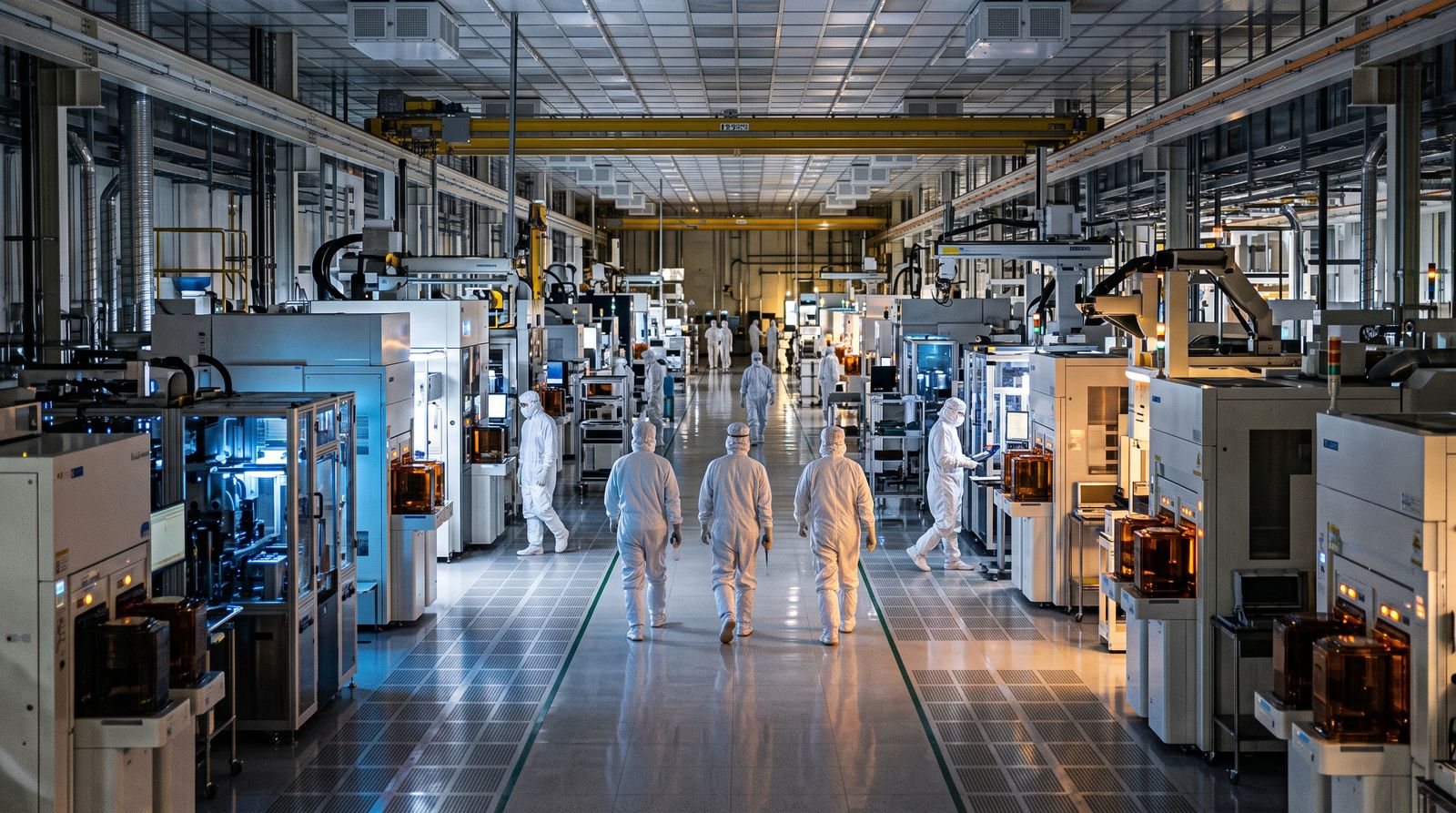
SK Group and Nvidia said Saturday they plan a partnership worth more than $500 billion to build AI infrastructure in South Korea, formalized so far through letters of intent. The announcement went out on Nvidia’s newsroom and SK hynix’s newsroom simultaneously and was carried by CNBC, Tom’s Hardware and GlobeNewswire.
Two pieces matter. SK Telecom will build a 2-gigawatt AI factory on Nvidia’s Vera Rubin DSX platform, with the first capacity targeted to come online in 2027 and run on SK hynix HBM4. Separately, Nvidia and SK hynix entered a long-term arrangement to secure and co-develop next-generation AI memory, HBM included.
SK hynix controls roughly 60% of the global market for high-bandwidth memory. That is the number that makes the rest of this announcement legible.
The bottleneck moved, and it isn’t the GPU
For three years the scarce input in an AI buildout was accelerator silicon. It isn’t anymore. An accelerator without HBM stacked next to it is inventory, and HBM capacity is booked years out against a demand curve that buyers themselves describe as up to 100% higher in 2027. When the constraint moves from the chip to the memory beside it, the company that makes the memory stops being a supplier and starts being a gate.
Nvidia’s response is the one any operator facing a single-source constraint should recognize: don’t negotiate quarter to quarter, get inside the supplier’s roadmap. Co-development is the real asset here. A long-term supply agreement gets you volume at a price. Co-developing HBM4 gets you a say in the spec, and a claim on the first wafers off a line designed partly around your architecture.
What a letter of intent actually buys
An LOI is not a binding purchase commitment, and $500 billion is a program value spanning construction, compute and memory over years — not cash leaving Santa Clara this quarter. Treat the headline number as a stated ambition until definitive agreements land.
What the LOI does buy immediately is exclusion. Every competitor now negotiating for 2027 HBM4 allocation is bidding against a publicly announced, government-adjacent partnership with the market leader. The signal moves the market before the ink does.
Our take: The transferable lesson isn’t about chips, it’s about where you spend your leverage. Nvidia is the most powerful buyer in its supply chain and it still chose to lock in the constrained input with a decade-scale commitment rather than push for a better unit price. That is a company that has correctly identified which variable it cannot control. Most operators do the opposite — they grind the vendor they depend on most, because that’s where the biggest line item is, and then discover during a shortage that price was never the risk. Look at your own stack and find the input where one supplier holds most of the market. That’s the relationship that deserves a long contract and an engineer embedded in their roadmap, not a procurement email. The correct time to sign it is while you still have alternatives.
What to watch
- Whether LOIs convert to definitive agreements, and on what timeline: The gap between announcement and signature is where program values get revised. Watch for a dollar figure that survives the conversion.
- Samsung and Micron’s counter-moves: If SK hynix’s best capacity is spoken for, the second and third HBM suppliers just gained pricing power with everyone else. Their next supply announcements are the tell.
- The 2027 online date: Two gigawatts is a power problem before it is a silicon problem. Grid interconnect timelines in Korea, not fab yields, are the likeliest source of slippage.