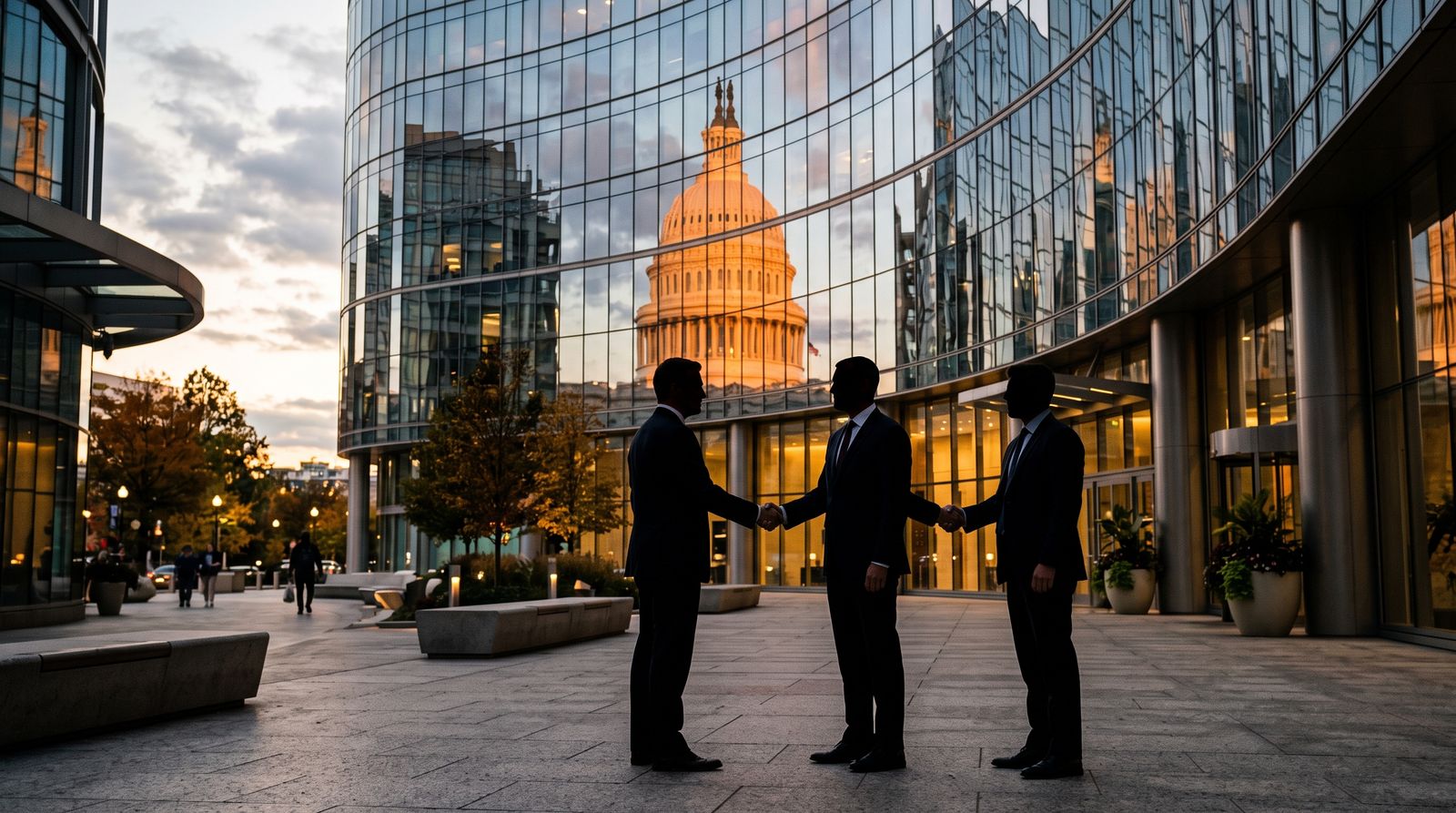
OpenAI has proposed giving the U.S. government a roughly 5% stake in the company, according to Financial Times reporting confirmed across Bloomberg, CNBC, and Forbes. At OpenAI's recent $852 billion valuation, that stake would be worth about $42.6 billion. Under the reported pitch, the holding would sit in a sovereign-wealth-fund-style vehicle — and Sam Altman envisions other leading U.S. labs, including Anthropic, Google, and Meta, ceding similar stakes, with the upside flowing to the public in the style of Alaska's oil fund.
The timing is the story. The proposal surfaced days after OpenAI delayed the full launch of GPT-5.6 at Washington's request, and while the White House works to finalize voluntary release standards for frontier models with OpenAI, Google, and Anthropic. The discussions reportedly involve Commerce Secretary Howard Lutnick and Treasury Secretary Scott Bessent, and Altman has been pitching versions of the idea since early 2025. President Trump has called a government stake in AI companies "a beautiful thing" that would make Americans "partners in this revolution."
The obstacles are real: the proposal is early-stage, would likely require Congressional approval, and there's no sign the other labs want in. Anthropic — which by several accounts now out-earns OpenAI on annualized revenue — has little obvious incentive to hand Washington equity on OpenAI's schedule.
Our take
Equity is the tell. Pair a government shareholding with pre-release review standards and you get something new: a regulator with a book position. A state that owns 5% of the upside has an incentive to protect its holdings — which is great for OpenAI and rough for everyone trying to displace it. Read the $42.6 billion as an insurance premium: it buys legitimacy, softens the "Washington delayed our launch" problem, and raises the cost of entry for rivals who don't have equity to trade. For operators and investors, the practical shift is that policy risk now cuts both ways — the same government that can hold a model at the gate would profit when that company wins. Watch who refuses to join the fund. Refusal tells you who thinks they can win without Washington.
What to watch
- Congress. A federal stake in private AI labs almost certainly needs legislation. Whether it's structured as a public fund or a direct holding decides how political it gets.
- The other three. Anthropic, Google, and Meta have said nothing. One defection makes it a fund; universal refusal makes it an OpenAI side deal.
- The standards announcement. Release rules could land as early as next week. Equity talks and launch-gate talks are officially separate — watch how often they're mentioned together.
- IPO paperwork. A government stake plus release review would both belong in an OpenAI prospectus. Disclosure language will reveal the arrangement's real weight.
The state keeps moving deeper into the AI stack: it's the customer in California's statewide Claude deal, the strategist behind South Korea's $880 billion chip program, and now, possibly, a shareholder. The market's biggest new investor has a printing press and a veto.