Oracle is preparing another round of job cuts this month, according to reports, with managers asked to identify which employees go before the company’s second fiscal quarter starts on September 1. Some teams are looking at double-digit percentage reductions.
The reason is not a demand problem. Oracle grew revenue 17% in the fiscal year that ended May 31, and its cloud infrastructure business grew 77%. The company is not shrinking because customers left. It is shrinking because of what it costs to serve the ones arriving.
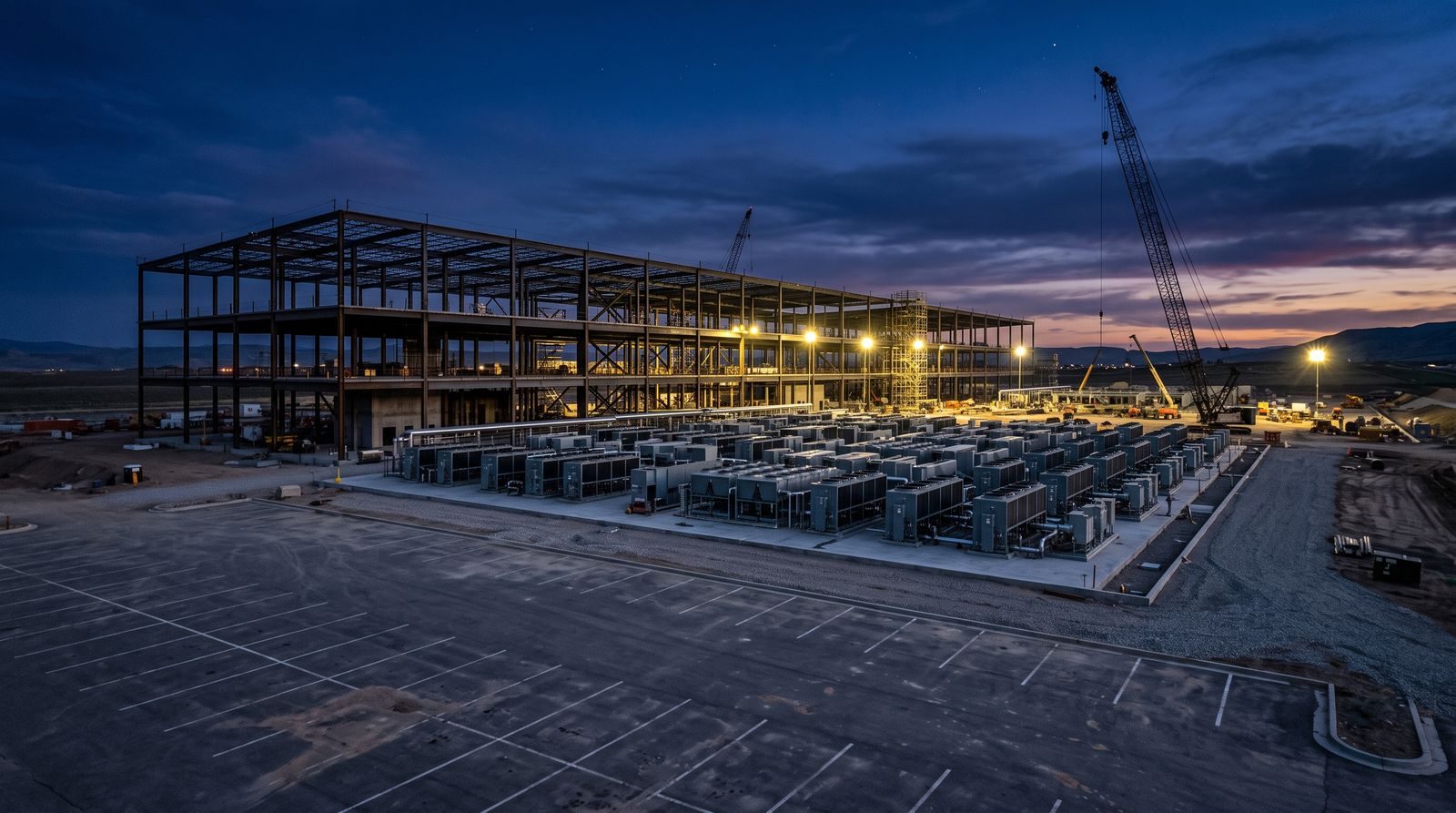
Capital expenditure for fiscal 2026 came in at $55.7 billion, up from $21.2 billion the year before — a 163% increase in a single year. That spending left Oracle roughly $23.7 billion in the hole against the cash it generated. It closed the gap by raising about $43 billion in debt and another $5 billion in equity, and it expects to raise something like $40 billion more in the year ahead.
Payroll is the flexible line
A data centre commitment is not flexible. Once the land is bought, the transformers ordered and the GPUs contracted, the money is spoken for years in advance. Headcount is the one large operating cost a company can move on a quarter’s notice, which is why it moves.
This is not the first cut. Oracle’s workforce fell by 21,000 people over the fiscal year to May 31 — a 13% decline — leaving roughly 141,000 employees. August’s round sits on top of that, and the timing against the September 1 fiscal quarter boundary tells you it is a P&L exercise, not a reorganisation.
Our take: The AI capex boom is usually reported as a spending story. It is also a financing story, and financing has a claimant order. Oracle raised $48 billion from debt and equity markets last year and plans another $40 billion. Lenders and shareholders both want to see the operating margin hold while the balance sheet expands. The only large cost line that can be compressed on demand is salaries. So the sequence runs: commit to capacity, borrow against it, then cut people to protect the margin the lenders are underwriting. The 77% cloud infrastructure growth and the layoffs are not in tension — the second is how the first gets paid for.
What to watch
- The September quarter’s capex guide. If the $40 billion funding plan holds while capex rises again, the payroll line has further to fall. If capex flattens, this round may be the last big one.
- Which teams get cut. Double-digit reductions concentrated in legacy licence and applications businesses is a portfolio shift. Cuts inside the cloud organisation would be a different and worse signal.
- Interest expense. $43 billion of new borrowing shows up as a cost that grows every year regardless of whether the AI revenue arrives on schedule. Watch the gap between interest expense growth and cloud revenue growth.
- Whether the pattern spreads. Every hyperscaler is financing the same buildout. Oracle carries more debt relative to its cash generation than most, so it hits the constraint first — not necessarily alone.