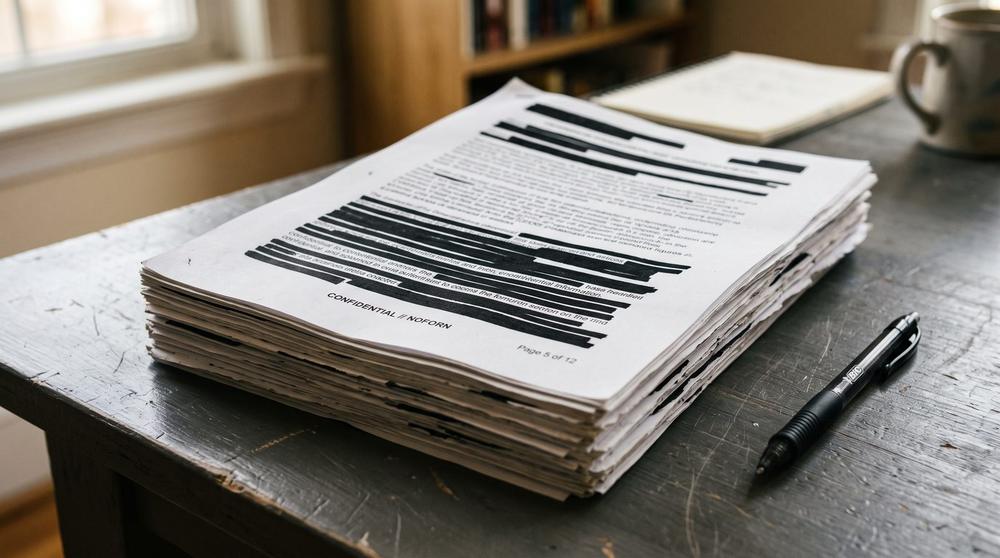
Public Citizen released Pfizer’s “most favored nation” drug-pricing contract on Saturday, having obtained it through a Freedom of Information Act lawsuit. Buried in it is a provision that has not been public until now: if Pfizer succeeds in raising prices outside the United States, the Department of Health and Human Services takes a share of the increase.
The provision applies to medicines already on the market and runs from 1 January 2026 through 20 January 2029. The watchdog also released documents covering Eli Lilly’s contract. More than two dozen other deals with drugmakers remain confidential.
The percentage Pfizer must hand over, which medicines are covered, and most of the operative terms are redacted. The redactions are heavy enough that it is not clear from the documents whether Lilly agreed to the same structure.
Our take: Strip the politics and this is a structural change to how a government funds itself. HHS is no longer only a purchaser and regulator of drugs — on these products, for the next three years, it holds a direct financial interest in foreign prices going up. That is a new kind of counterparty for every health ministry Pfizer negotiates with, and every one of them now knows it.
Why the redactions are the story
A revenue-sharing rate is not a state secret; it is a line item. Without it, nobody outside the two parties can size the arrangement. Analysts cannot model what Pfizer keeps from a European price increase. They cannot tell whether this is a rounding error or a material drag on the exact revenue line the company has been telling investors to expect growth from.
The contract says HHS will use the money to lower costs for US patients and taxpayers. It does not say how, or through which mechanism, or whether the amounts are appropriated or retained. For a programme that is now roughly nine months old, that is a large blank.
The trade linkage is explicit
The White House has not been coy about the logic. Spokesperson Kush Desai said the foreign-revenue provisions are meant to ensure incremental revenue from higher prices abroad “benefit American patients, not drugmakers.” President Trump has described the arrangement as other countries paying more so Americans can pay less.
You can see the machinery in the UK deal struck in December: tariff-free imports of medicines in exchange for a sharp cut in the rebates drugmakers pay the NHS, with the UK government committing to raise medicines spending by 25%. Tariff relief on one side, higher foreign prices on the other, and now a contractual claim on part of the difference.
Pfizer’s position is unchanged. A spokesperson said the company stands by the agreement it reached voluntarily with the administration last September, framing it as lowering prices for US patients, redistributing global R&D costs and creating a predictable investment environment.
What to watch
- The remaining two dozen contracts. Public Citizen got two. If the same clause is standard across the rest, this stops being a Pfizer story and becomes a sector one.
- Whether the rate ever surfaces. Litigation, a congressional request or an SEC materiality question are the three routes. All are live.
- How foreign payers respond. A health ministry told that part of any increase it concedes flows to the US Treasury has a harder sell at home, not an easier one.
- The January 2029 end date. It sits two weeks after the next presidential inauguration. That is not an accident, and it caps the horizon anyone should model against.
The underlying policy argument — that Americans have subsidised global pharmaceutical innovation and other countries should pay more — is a serious one with serious people on both sides of it. But a revenue-sharing clause in a redacted contract is not policy debate. It is a financial instrument, and the public currently cannot see its terms.