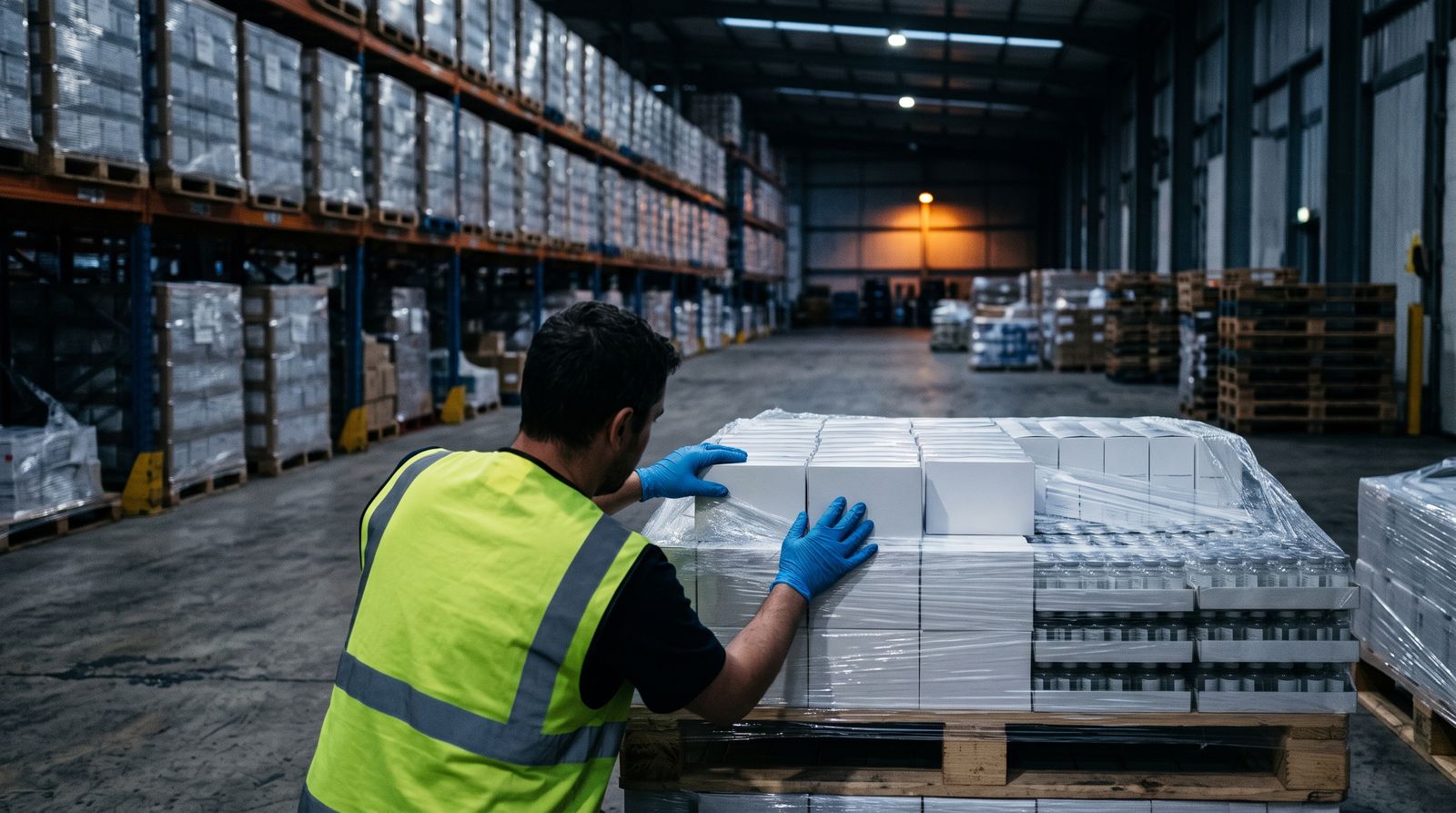
On Friday the largest tariff rate the United States has put on any product category went live: 100% ad valorem on patented pharmaceutical articles and the active ingredients that go into them. The authority is Section 232 of the Trade Expansion Act of 1962 — the national-security lane, the same one used for steel, aluminum and copper. The proclamation itself was signed on 6 April. Covered goods are drugs under a valid, unexpired U.S. patent listed in the FDA’s Orange Book or Purple Book, plus the APIs and key starting materials behind them.
There are two dates, not one. Annex III of the proclamation names 17 large manufacturers — Pfizer, Johnson & Johnson, Merck, Eli Lilly, AbbVie, Amgen, AstraZeneca, Novartis and Sanofi among them — and gave that group 120 days. That clock ran out 31 July. Everyone else, explicitly including companies that lean on contract manufacturers outside the United States, got 180 days: 29 September.
Now the part that makes the headline number close to fictional. Over the same window, the administration signed most-favored-nation drug-pricing agreements with essentially that same set of large manufacturers — reported counts run 16 to 17 depending on who is doing the counting — and the consideration those companies received was a tariff reprieve. Signatories pay 0% on their branded drugs for roughly three years, into 2029. So the duty that switched on Friday, aimed at the biggest importers of patented medicine on earth, collects close to nothing from the companies printed on the list.
Our take: Annex III was never a target list. It was a leverage list. Naming the 17 largest importers and starting a 120-day countdown produced signed pricing concessions and an enormous pile of announced U.S. plant spending — Johnson & Johnson at $55 billion, Roche $50 billion, Bristol Myers Squibb $40 billion, Novartis $23 billion, Sanofi at least $20 billion, Eli Lilly more than $27 billion committed in 2025 alone. Customs revenue was never the point; the deals were. Which means the date that actually bites is 29 September, and it lands on the companies that had nothing to trade.
The September problem
Picture the company on the wrong side of that second date. Mid-cap or specialty pharma. One or two patented products. A single fill-finish partner in Ireland or India, because building sterile-injectables capacity for a $400 million franchise never made sense. A Medicaid book far too small for a most-favored-nation concession to interest anyone in Washington.
That company has no deal available to sign. What it has is a 100% duty on its own product and roughly eight weeks. Qualifying a new API source is a multi-year regulatory exercise; standing up a domestic sterile line is longer than that. The options that fit inside the window are raising price, eating margin, or pulling the product. None of those is onshoring.
The generics wave tells you the administration knows this. Tariffs on generic drugs are slated to begin in 2028 — a deliberate two-year runway to see whether the onshoring push produces actual capacity before touching the roughly nine in ten U.S. prescriptions filled with a generic. Applying this rate to generics today would not produce factories. It would produce shortages, and everyone involved appears to know it.
What to watch
- 29 September. Whether the second tranche ships on schedule or picks up its own carve-out. A delay would confirm the duty is a negotiating instrument rather than a revenue line.
- Mid-cap guidance in the next earnings cycle. A 100% duty on one imported API shows up in gross margin before it shows up anywhere else. Watch the companies nobody named.
- Construction starts, not press releases. Announced capex is the cheapest thing a pharma CFO can produce. Permits, equipment orders and hiring on API and sterile-injectables lines are the real signal.
- Renegotiation risk. The tariff reprieve runs about three years; the pricing commitments run longer. Somebody will test that asymmetry before 2029.
The number in the headline is 100%. The operative number is 17 — the companies that got named, and therefore got out.