The 171 kilometres from Puçol to Xeraco were the least dangerous thing on the Vuelta’s route sheet. One category-two climb, a coastal run, a sprint finish. A transition day.
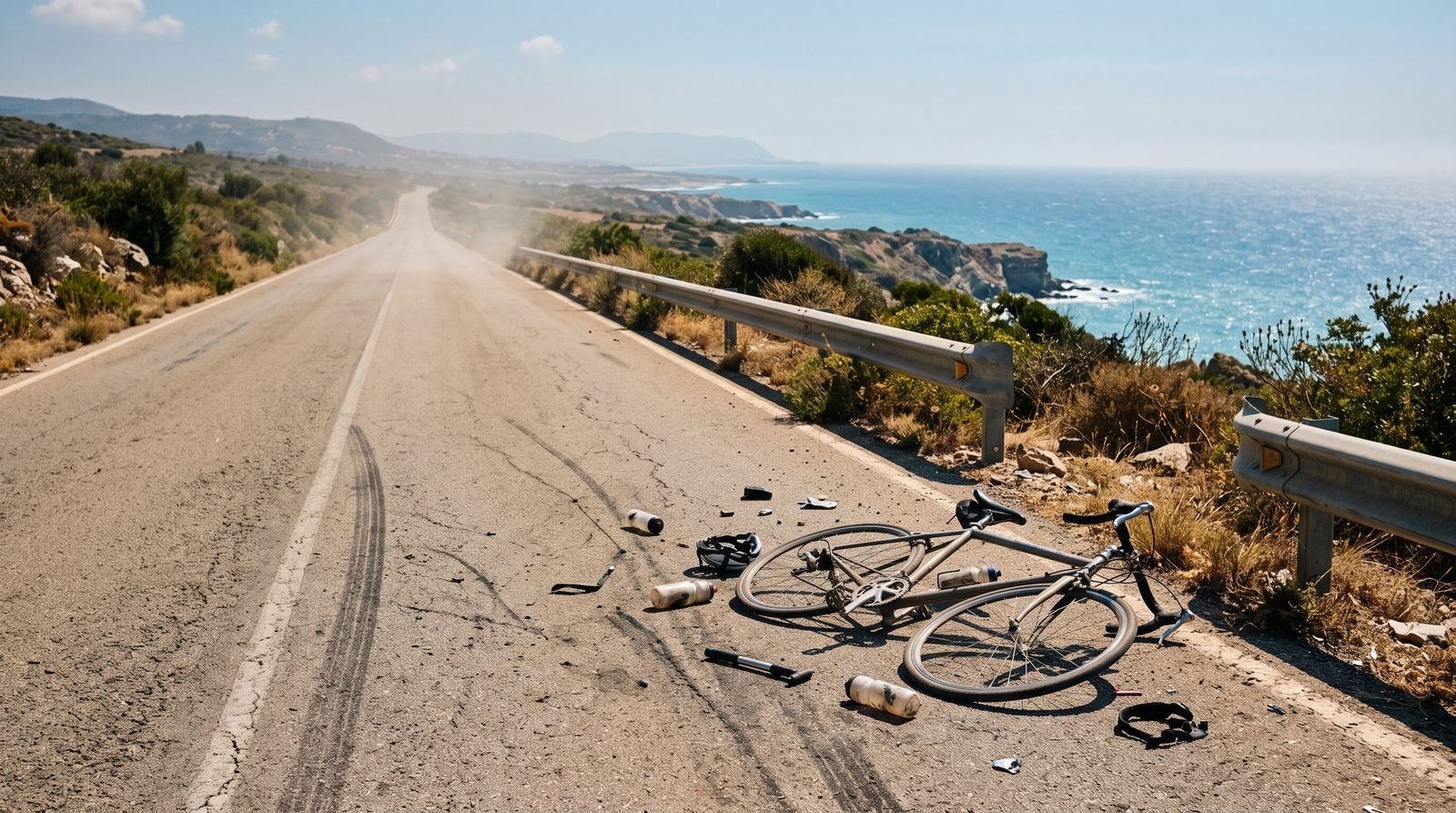
With about 32 kilometres to go, riders went down in the peloton and Tadej Pogačar went down with them. He suffered deep wounds and cuts to his left shoulder and the left side of his face. He got up unaided and looked, briefly, like a man about to remount — then shook his head, sat back down, and was helped into an ambulance and taken to hospital. The race leader’s Vuelta was over on the flattest terrain it had offered all week.
He had been leading by nearly four minutes over Movistar’s Enric Mas, who now takes the red jersey by default. Bryan Coquard won the stage for Cofidis out of what was left of a crash-marred sprint. It is a career day for a rider who will spend the next week answering questions about someone else.
The exposure nobody prices
This is the part worth sitting with, because it generalises well beyond bike racing. Pogačar built that four-minute buffer doing hard things — attacking on gravel at El Bartolo and taking time on the climbs, in the terrain where a rider of his quality is supposed to be exposed and where his ability is actually decisive.
He lost it on a day where his ability was worth almost nothing. A grand tour leader on a flat stage has no upside available. He cannot gain time. He can only be in the bunch, at speed, surrounded by 150 riders with different objectives, absorbing a risk he has no way to convert into anything. The mountains are where the race is won. The flat stages are pure downside, held for two or three hours a day, every day, for three weeks.
Riders and teams know this. It is why leaders spend flat stages fighting for position at the front — not to win, but to be ahead of the crash when it happens. It works most of the time, which is different from working.
Our take: The lesson is not “bad luck”, it is that dominance in the decisive phase does not protect you during the undecisive one. Any advantage accumulated over weeks can be surrendered in a domain where your edge does not apply and your exposure is continuous — and the flat stage is precisely the situation people stop paying attention to, because nothing appears to be happening. It is worth asking where your own version of that sits: the routine, unglamorous, apparently low-stakes stretch of a long project where you have no upside on offer and the entire lead is still on the table. Pogačar was the strongest rider in this race by a distance. He is now in hospital, and Mas is in red, and the strength was never the variable.
What to watch
- The medical update. Facial and shoulder wounds were described as deep. The severity determines whether this is a lost Vuelta or a longer absence from the calendar.
- Whether Mas can defend it. He inherits a lead he did not build, against a mountain block that is still to come. Movistar now has to ride like a team protecting a jersey rather than chasing one — a different and more expensive job.
- How the rest of the general classification reshapes. With the reference rider gone, the race stops being a procession and becomes an open contest between riders who had already written off the win.
- Course design questions. The Vuelta has already had a mountain stage cancelled by weather this year. A second high-profile safety incident, this time on a sprint finish, sharpens an argument the sport keeps postponing.