The US Open main draw begins Sunday in New York, at the end of a summer in which professional tennis finally agreed on how to measure heat. Both tours now run on wet bulb globe temperature. The four Grand Slams — the events with the longest matches and the most exposure — still write their own rules.
The ATP board approved a heat rule effective from the 2026 season, aligning the men’s tour with the WTA after a run of mid-match retirements. It is built on WBGT, and it has two hard numbers in it. At a reading of 30.1°C or above, cooling measures apply during the first two sets of best-of-three singles: either player can request a 10-minute break after the second set, and it applies to both. Above 32.2°C, play is suspended.
During the break players can cool down, hydrate, change clothing, shower and receive coaching, under the supervision of tour medical staff. It is the most prescriptive heat protocol men’s tennis has ever had.
Why WBGT is the right number
Air temperature is a poor proxy for heat strain and always has been. A 34°C day in dry air with a breeze and a 30°C day in still, humid air with the sun directly overhead are different physiological events, and the second one is the dangerous one. Sweat is the body’s cooling system, and sweat only works if it evaporates.
WBGT bundles the variables that decide whether it can: humidity, radiant heat from the sun and the court surface, and air movement. It is not a tennis invention. It came out of military training research and is the standard used in occupational heat-stress regulation, which is why it survives contact with lawyers and physiologists at the same time.
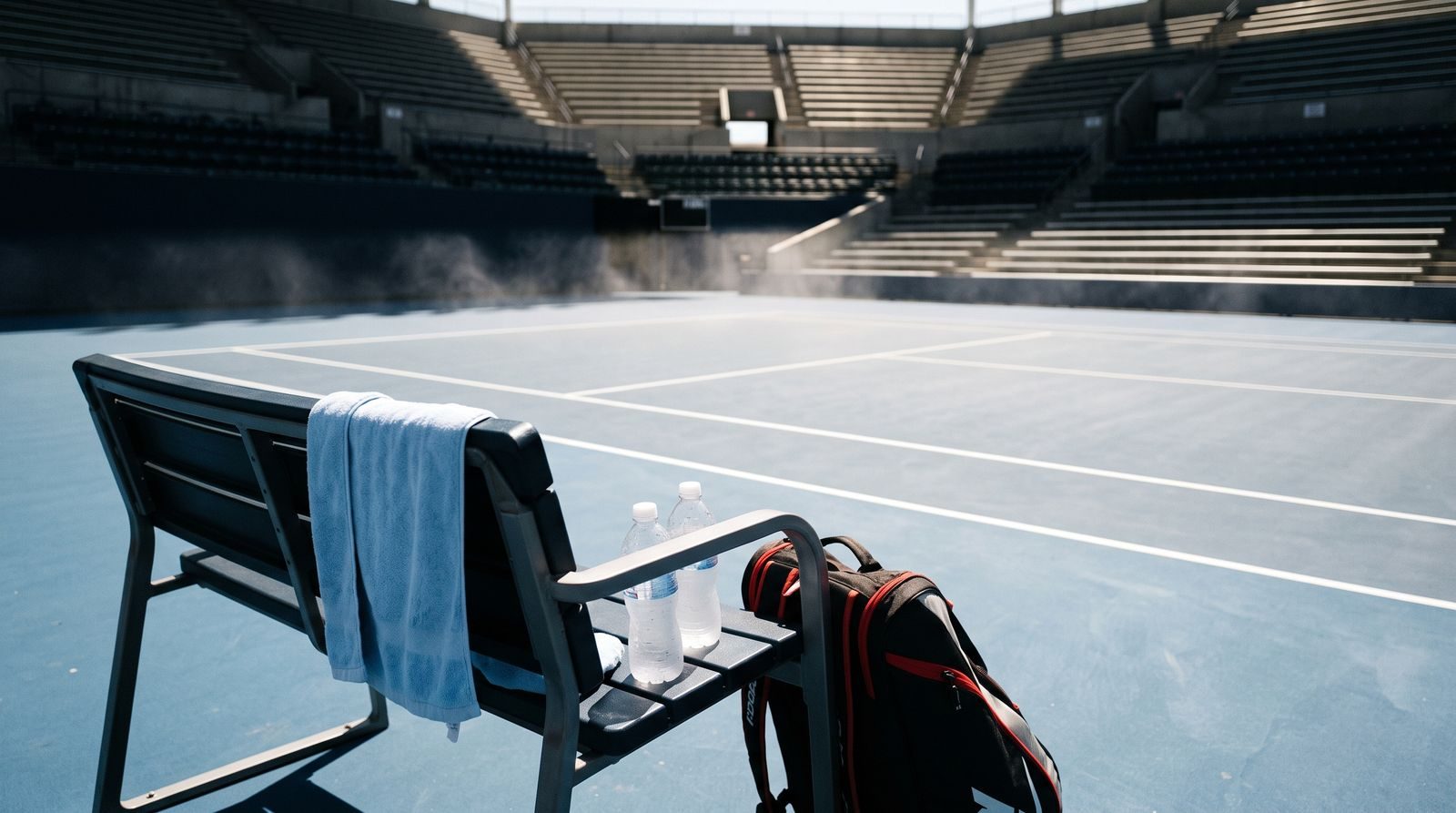
For an athlete, the practical translation is that the number on the phone weather app tells you very little about what a hard court will do to you. A blue acrylic surface in direct sun runs far hotter than the air above it, and the player closest to it is the one hitting from behind the baseline for four hours.
Our take: The metric is settled and the enforcement is not, and that gap sits exactly where the risk is highest. The tour rule covers best-of-three. Grand Slam men’s singles is best-of-five, over two weeks, in New York in late August — longer matches, more accumulated load, and no mandatory stop. Per Weather.com, the USTA has taken WBGT readings every 30 minutes since 2024 but has stopped short of writing a suspension threshold into its rulebook, as the Australian Open has also declined to do. Monitoring is not a rule. A number nobody has to act on is a data point, not a protection.
The transferable part
If you train outdoors, the useful lesson has nothing to do with tennis. It is that the threshold at which trained, acclimatised, medically supervised professionals are told to stop is around 32°C WBGT — which on a humid, still, sunny day can occur well below 32°C on a thermometer. Elite athletes get a 10-minute shower and a doctor. Most people get a water bottle and stubbornness.
Heat acclimatisation is also real and takes roughly 10 to 14 days of progressive exposure to develop. It is why the players who arrived in New York early are in a different physiological position from the ones who flew in this week, and why the first genuinely hot day of a season is disproportionately the one that hurts people.
What to watch
- Whether the Slams close the gap. Two tours with a hard threshold is real pressure on the four events without one.
- Roof usage on Ashe and Armstrong. The two covered courts create a two-tier tournament on hot days, and the draw decides who gets which.
- Retirement counts in the first week. Early-round men’s five-setters in daytime heat are where the load concentrates.
- Whether readings get published. Tournaments that publish WBGT in real time invite accountability. Tournaments that do not, do not.