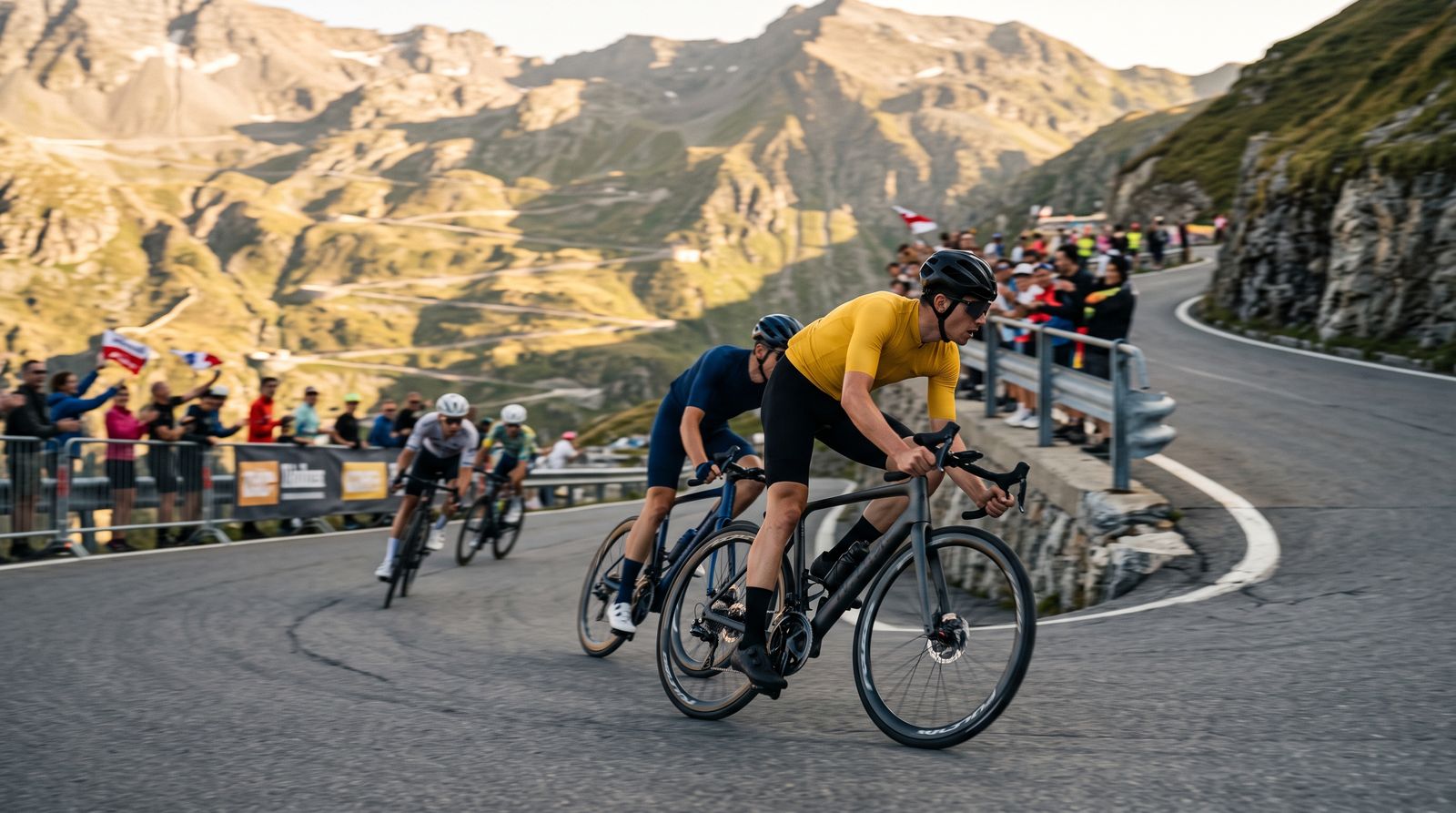
Stage 20 of the Tour de France sent the race back up Alpe d’Huez for the second time in 48 hours — 170.9 km from Le Bourg d’Oisans with 5,600 metres of climbing, the first time the Alpe has ever been used on the penultimate day. Richard Carapaz went up the road in the breakaway again, got distanced by Sepp Kuss near the top of the Col de Sarenne, and then inherited the win when the American crashed on the run to the line. The Ecuadorian finished in 4:59:39, with Remco Evenepoel 26 seconds back and Kuss third at 31.
Tadej Pogačar finished fourth, 1:05 down. That was a choice. A day after breaking Marco Pantani’s 31-year Alpe d’Huez record by 83 seconds, the yellow jersey spent the last third of the queen stage riding tempo for teammate Isaac del Toro, defending del Toro’s podium place and white jersey against Paul Seixas and Lenny Martinez. When Evenepoel attacked inside the final two kilometres, Pogačar didn’t respond. The bill: 39 seconds on the road, 45 with finish bonuses.
He could afford it. Pogačar goes into Sunday’s finish in Paris with 6:26 on Evenepoel, in a Tour that lost its only other three-week winner when Jonas Vingegaard crashed out on stage 15. Del Toro holds third at 9:42, then Seixas at 11:56 and Martinez at 13:02. Not a single GC position changed on the hardest day of the race — which, on a stage with 5,600 metres of vertical and a summit finish, is its own kind of statement.
Our take: The story isn’t that Pogačar won the Tour — that was settled days ago. It’s what he did with a win he’d already banked. With the outcome locked, he had a surplus of form that was worth nothing to his own result and everything to someone else’s, and he spent it. Most people do the opposite: once their number is safe, they protect it and coast. The compounding move is to notice when your effort has stopped buying you anything and redirect it to where it still buys something — a teammate’s podium, a junior’s first win, a project that isn’t yours. It costs 45 seconds and buys a decade of loyalty. And it only works if you keep executing when the pressure is off, which is the rarer discipline.
The jerseys, settled
- Polka dot: Carapaz sealed the mountains classification with 156 points, ahead of Pogačar on 100 and Valentin Paret-Peintre on 99. It was Carapaz’s second stage win of this Tour.
- Green: Mads Pedersen went over the Croix de Fer into the break, took the intermediate sprint, and put the points jersey mathematically out of reach — 527 to Jasper Philipsen’s 445.
- White: Del Toro, with 2:14 on Seixas, thanks in large part to the work his team leader did for him.
- Teams: Lidl-Trek, by 36:57 over UAE Team Emirates-XRG.
- Out: Ilan van Wilder crashed on the descent of the Col de la Croix de Fer, ending his top-10 bid.
What to watch
- Paris, Sunday. One stage left. Barring something strange, the GC is done — the racing that matters happens on the run-in, not the standings.
- The Cavendish math. Pogačar stays on 26 career Tour stage wins after skipping the chance to make it 27. Mark Cavendish’s all-time record of 35 is now a multi-year question, not a this-week one.
- Succession at UAE. Yellow and white in the same team car is a nice problem and eventually a real one. How the leadership splits in 2027 is the interesting subplot.