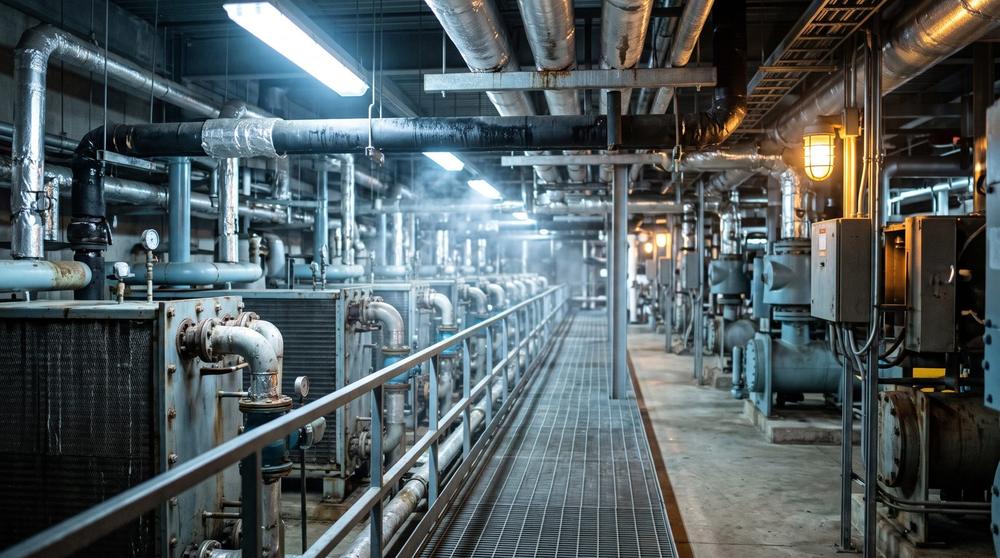
Bloomberg reported Thursday, citing people familiar with the matter, that Samsung Electronics is in talks to acquire Modine Manufacturing — a 110-year-old Racine, Wisconsin company that spent most of its life making radiators and now makes cooling systems for AI data centers. Modine closed regular trading at $106.10, a market value of about $5.6 billion, then ran past $135 after hours, a 28% jump. By Friday's premarket it was quoted up more than 38%.
Here is what has not been reported: a price. No offer per share. No deal structure. No timeline beyond “could come together within weeks.” Samsung and Modine both declined to comment.
That has not stopped the figures from circulating. Seoul Economic Daily put the purchase price for 100% of the company at $7.5 billion to $8 billion — a number it derived by applying a 33% to 42% control premium to Thursday's $5.64 billion market cap. That is arithmetic, not reporting, and the distinction matters when the same outlet notes the deal would surpass Samsung's roughly $8 billion purchase of Harman in 2017 as its largest acquisition ever.
Why a radiator company is worth this much
Modine's data center division booked $439.7 million in revenue last quarter, up 95% from a year earlier. Its hyperscaler-facing unit has grown 86% annually over the past three fiscal years, according to Bloomberg Intelligence. Company projections put fiscal 2027 revenue — the year running April 2026 to March 2027 — at as much as $3.2 billion. In October the company spun off its automotive business to become a pure-play thermal management firm, which is a reasonably clear signal of what management thinks it is now selling.
The strategic logic on Samsung's side is vertical integration. Every megawatt of AI compute a chipmaker sells has to be cooled by somebody, and right now that somebody is Daikin, LG Electronics or Vertiv. Samsung bought the German HVAC maker FlaktGroup last year for €1.5 billion, committed 240 billion won this year to a data center cooling production line at its Gwangju plant, and lost out to Bosch in 2024 bidding for Johnson Controls' air conditioning business. This is the fourth move in the same direction.
Our take: Treat the $7.5–8 billion figure as a placeholder until someone reports an actual offer. What is solid is the pattern: a memory-chip company with a $910 billion market value, up 72% this year, repeatedly spending real money to own the physical layer around its silicon. The read-through is not about Modine. It is that the scarce asset in AI infrastructure has quietly moved from chips to the ability to remove heat from a building — and the chipmakers have noticed before the market has.
The parts that could still break
Bloomberg's sources say no final decision has been made, the talks could collapse, and another suitor could emerge. Modine had fallen around 15% since November 3, when quarterly results underwhelmed investors — which is to say the stock a potential acquirer is pricing had just been marked down. An agreement could come as early as this month, or not at all.
What to watch
- A per-share number. Until one is reported, every dollar figure attached to this story is a derived estimate. The gap between $7.5 billion and $8 billion is $500 million of somebody's assumption.
- A competing bidder. Vertiv, Daikin and the big HVAC incumbents all have the same reason to want this asset and the balance sheets to act on it.
- Regulatory temperature. A Korean conglomerate buying a US industrial supplier to AI data centers is not an obviously frictionless transaction in the current climate.
- Modine's next quarter. A 95% growth rate in the data center segment is the entire thesis. One soft print changes the premium anyone will pay.
If you supply anything into data center buildouts, the signal here is that the integrators are buying rather than contracting. That shortens the runway for independent suppliers in the same niche.