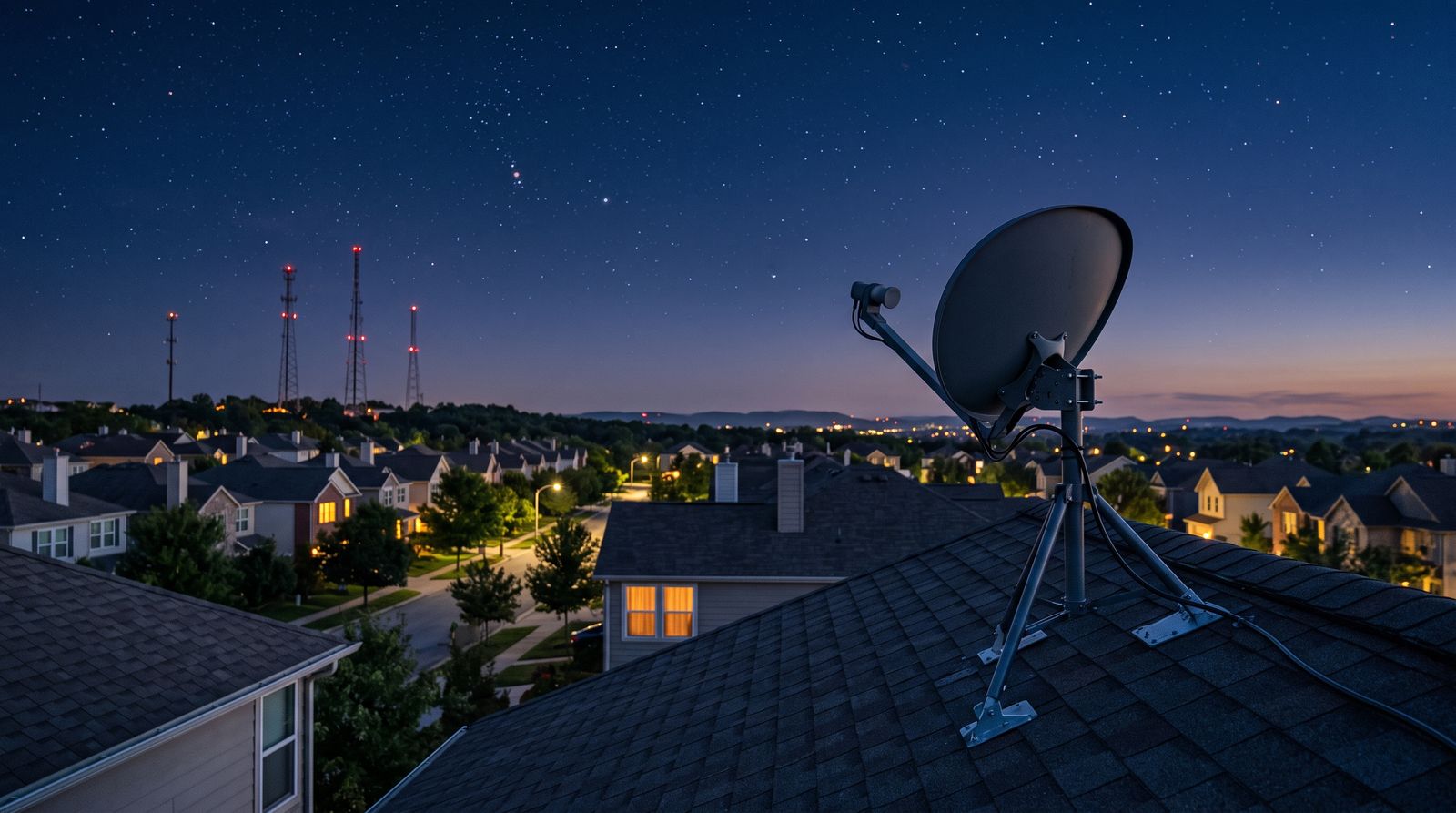
Verizon and AT&T are sliding toward their worst week in years, and the culprit isn't earnings, churn, or debt. It's a satellite constellation. SpaceX's Starlink push into high-speed consumer satellite service has investors re-asking a question the telecom trade considered settled: who actually owns the connection to the customer?
Why this stings more than a typical competitor
Telco valuations rest on one assumption — infrastructure scarcity. Towers, spectrum, fiber trenches: capital moats measured in decades. Satellite broadband attacks the assumption itself. If a dish on the roof can substitute for the line in the ground for a meaningful slice of households, the moat doesn't shrink — it gets bypassed. That's why the market reaction is disproportionate to any subscriber math you can do today: it's repricing the terminal value of the moat, not this quarter's revenue.
Our take: The "safe dividend" telecom thesis just acquired a real bear case, and dividend safety is exactly the kind of belief that unravels fast once questioned. This doesn't mean the telcos are dead — physics still favors fiber for density. But watch what income investors do next: their playbook has no chapter for a moat that gets bypassed from orbit. And remember this pattern is bigger than telecom — every "infrastructure scarcity" business should be asking who's building over the top of them.
What to watch
- Price and speed disclosures: the substitution case lives or dies on whether Starlink's consumer tiers genuinely rival terrestrial broadband on both.
- The telco response: counter-bundles, satellite partnerships of their own, or dividend defenses — each answer reveals how scared they actually are.
- SpaceX's numbers: every datapoint on Starlink revenue sharpens the case for the most anticipated IPO conversation in markets.