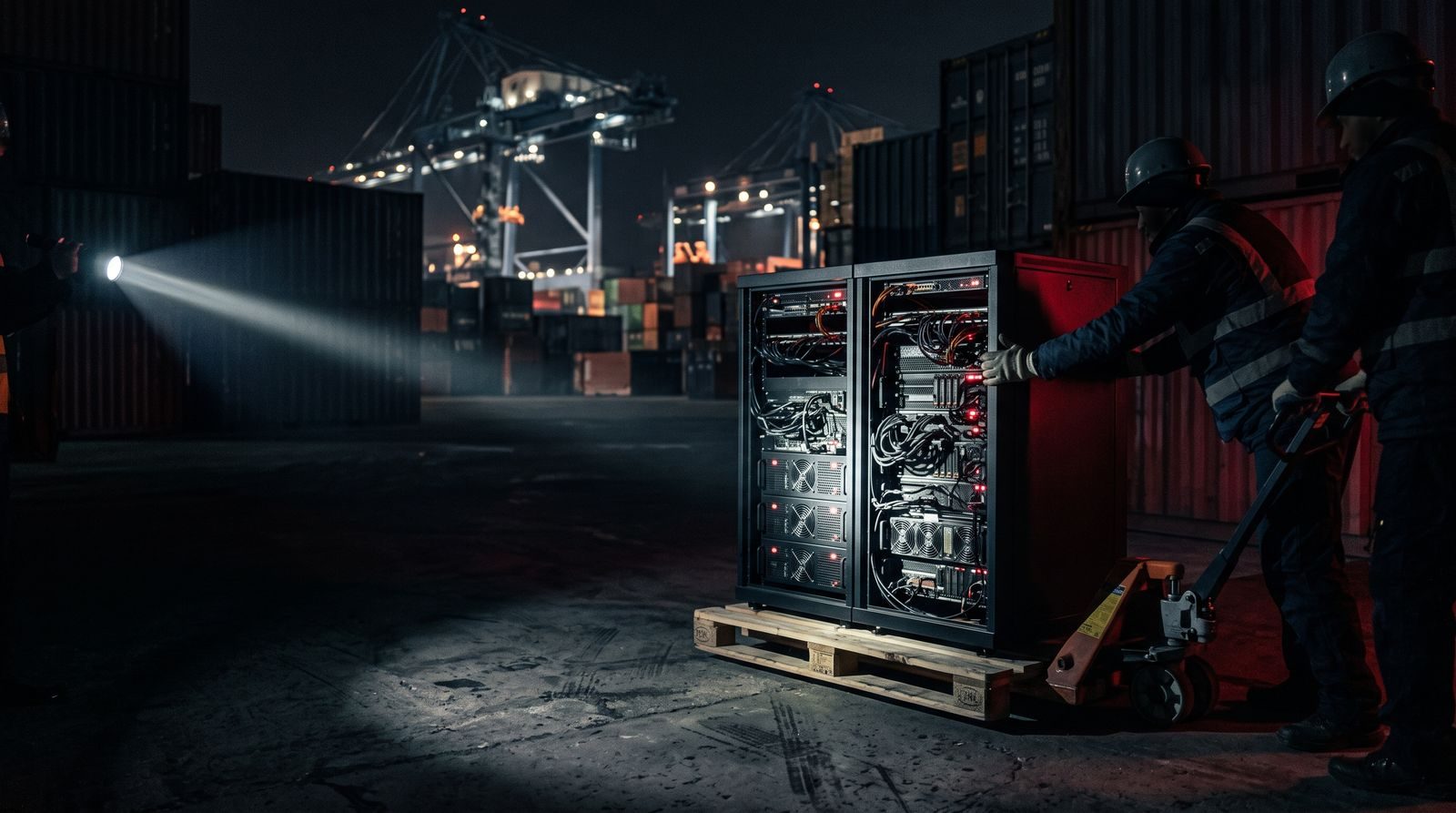
The AI chip-smuggling story just moved from customs warehouses into the companies themselves. Prosecutors in Keelung, Taiwan, have indicted nine people — including a manager at Nvidia’s Taiwan unit and two employees of Super Micro’s local operation — over a scheme that shipped restricted AI servers to Chinese buyers on falsified paperwork.
The mechanics, laid out in reporting from the Wall Street Journal, Nikkei and the Associated Press, were simple. The group ordered 130 of Super Micro’s B300 servers — machines built around Nvidia’s current-generation Blackwell Ultra chips, which are barred from sale to China under US export controls — using end-user documents claiming the hardware would be installed at a rented server facility in Taiwan. Seventy-four of them were instead delivered to Chinese customers, some shipped directly, others routed through Indonesia, Japan and Hong Kong. The remaining 56 never made it out of Taiwan.
The tell was almost comically mundane: the rented facility didn’t have anywhere near the power capacity or bandwidth needed to actually run the machines. Prosecutors charged the defendants with breach of trust and document forgery, and are seeking maximum five-year sentences for four of the nine — including the Nvidia manager, identified by the surname Chang, whom they describe as the key figure who authorized the release of the B300 hardware.
Why this one is different
Chip-diversion stories usually feature shell companies and middlemen. This indictment reaches inside the two firms that sit at the center of the AI hardware supply chain — the company that designs the chips and the company that builds the servers around them. Export controls assume the people operating the checkpoints are on the checkpoint’s side. Keelung’s case alleges the opposite: insiders who knew the rules, knew the internal checks, and colluded around both for profit.
Our take: Export control is usually debated as policy — entity lists, license regimes, chip thresholds. This case is a reminder that the real choke point is people with release authority and a stack of paperwork nobody physically verifies. One site visit to a server room with insufficient power would have killed this scheme on day one. Expect the fallout to be procedural: physical end-user verification, tighter internal controls at Nvidia and Super Micro, and more US pressure on Taipei over transshipment. But note the scale, too — 74 servers is a rounding error against China’s compute appetite. Smuggling can embarrass the control regime; it cannot defeat it at volume. That’s exactly why Beijing keeps pouring money into domestic silicon.
What to watch
- Nvidia’s earnings call Wednesday. The company reports its biggest quarter ever with China policy already a live question — management will almost certainly be asked about internal controls.
- Washington’s response. US Commerce has been leaning on partners to close transshipment routes; a criminal case built on forged Taiwan end-user certificates hands it fresh ammunition.
- Whether Taipei tightens the rules. Taiwan polices the world’s most sensitive hardware corridor. Prosecutors seeking maximum sentences is a signal — the question is whether export-administration changes follow.