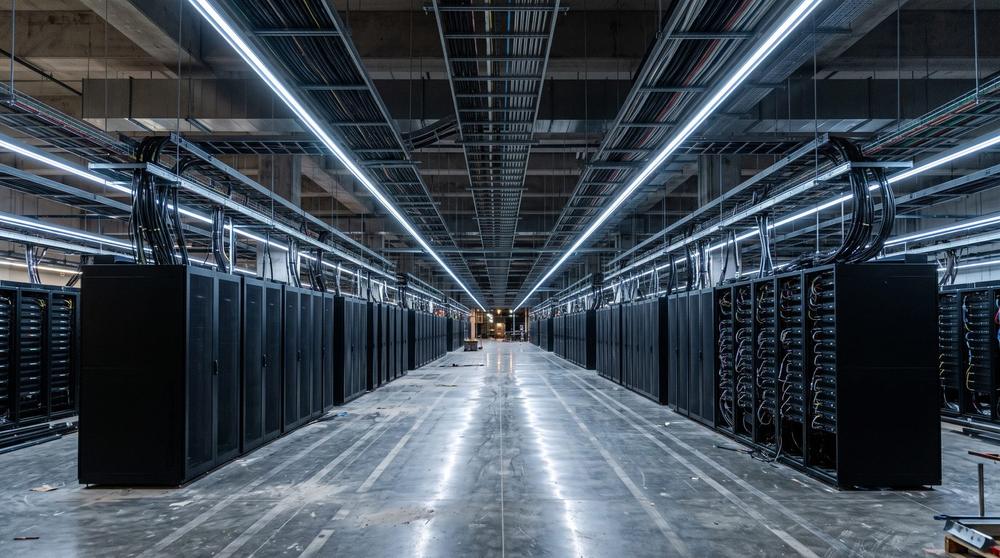
OpenAI signed a six-year agreement with TensorWave for 457 megawatts of IT capacity across multiple US data center sites. The hardware is AMD: Instinct MI455X GPUs in AMD Helios rack-scale systems, with high-performance Ethernet scale-out networking between racks. The sites, the release says, are designed specifically for Helios.
Capacity begins coming online in the first half of 2027. Full deployment is expected by early 2028. It will run as dedicated, single-tenant capacity for OpenAI — not shared cloud.
The release carries three executive quotes, from AMD, TensorWave and OpenAI. It does not carry a dollar figure. It also does not say that terms were undisclosed. The number simply is not there.
Why a neocloud, and why this one
TensorWave is an AMD-exclusive AI cloud backed by AMD Ventures, alongside Magnetar and Nexus Venture Partners. It was the first public cloud to deploy AMD Instinct MI300X, it is a Helios launch partner, and it describes itself as the first neocloud publicly named as an infrastructure provider supporting the AMD–OpenAI agreement.
That last point is the interesting one. OpenAI and AMD announced a strategic partnership some time ago; this release refers to it only as “previously announced” and does not quantify it. What is new is the delivery mechanism. The capacity is not coming from a hyperscaler. It is coming from a specialist operator whose own disclosed scale is “more than 2 gigawatts of long-term data center capacity” secured, and for whom this deal is, in its own words, the largest deployment to date.
Our take: Strip the megawatts away and this is a financing story wearing an infrastructure jacket. TensorWave raised a Series B in June 2026 and did not publish the amount. It has now committed to standing up 457 megawatts of next-generation GPU capacity — its biggest build ever, by a wide margin — for a single tenant, starting in about fourteen months. The release names no sites, no chip counts, no contract value and no financing structure. A six-year single-tenant offtake from OpenAI is exactly the kind of contract that makes that build financeable. Whether it has been financed is the question the announcement does not touch.
The diversification read
For AMD, this is a reference deployment at frontier scale on silicon that has to prove it can hold a training and inference workload for the most demanding customer in the market. Instinct has had wins; it has not had many wins where the buyer locks in six years of single-tenant capacity on an unreleased generation.
For OpenAI, it is one more line in a compute book that now spans several vendors, several balance sheets and several counterparties whose ability to deliver is itself the risk. We have written before about how much of this buildout rests on commitments that are signed rather than funded. This one is signed.
What to watch
- Sites. None are named. 457 megawatts across “multiple US sites” needs interconnect agreements and utility queue positions that are a matter of public record once they exist.
- The financing disclosure. Series B amount, debt facilities, any GPU-backed structure. A buildout of this size does not come out of equity.
- MI455X and Helios schedule slip. First-half-2027 first capacity on a next-generation part leaves little room. Watch AMD's own ship dates, not TensorWave's.
- Whether other neoclouds get named. TensorWave says it is the first publicly announced. “First” implies others.
The deal was announced November 16. As of this writing no contract value has been published by any party.