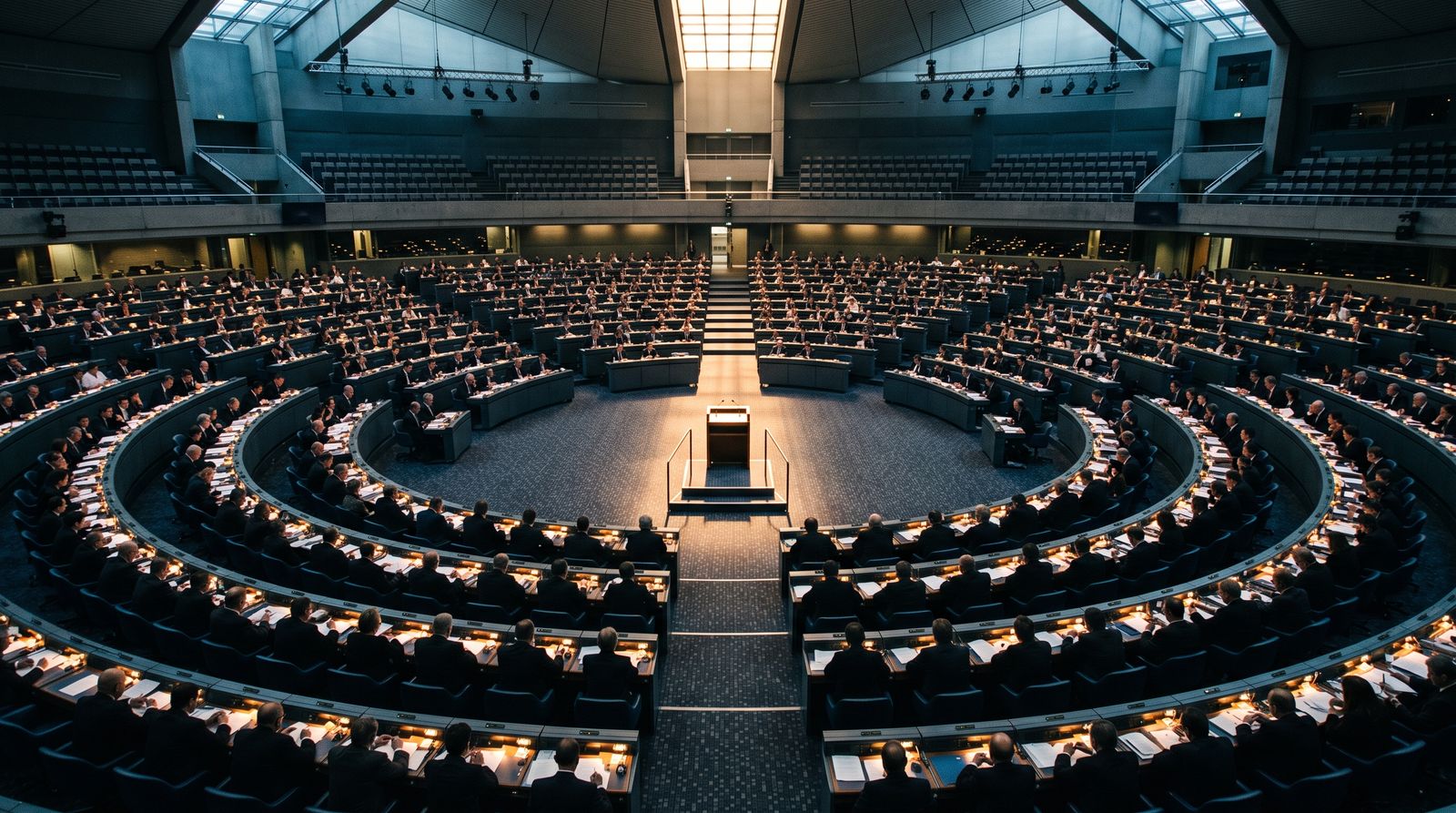
The United Nations' new scientific panel on AI published its first preliminary report this week, and one finding cuts deeper than the rest: there are currently no known technical guarantees that AI agent systems — software that executes multi-step tasks without continuous human supervision — will actually follow their instructions. The 40-member Independent International Scientific Panel on AI, co-chaired by Turing Award winner Yoshua Bengio and Nobel laureate Maria Ressa, presents the report Monday as the inaugural Global Dialogue on AI Governance opens in Geneva.
The panel — established by General Assembly resolution 79/325, its members selected from more than 2,600 candidates — is built to be the closest thing AI has to the IPCC: a standing body producing regular, evidence-based assessments instead of one-off summit declarations. Its first assessment is blunt. AI capabilities are advancing faster than any government's ability to understand, test, or regulate them. Conversational AI now reaches more than a billion users weekly. And the most consequential decisions about the technology sit with a handful of companies in a handful of countries. Deliberately, the report makes no policy recommendations — Bengio says the panel's job is evidence held to the “highest standards of scientific integrity,” not prescriptions.
The agent finding is the one with a price tag. This year's defining business story is delegation: Sonnet 5 repriced autonomous work to roughly $2 of tokens a day, xAI is selling phone agents by the hour, and every enterprise deployment pitch assumes the software does what it's told. The UN's scientists just put on the record that nobody can prove that assumption — not the labs, not the buyers, not the regulators.
Our take: The report's power is precisely that it demands nothing. It's a reference text, and reference texts are what liability gets built on. When an agent wires the wrong payment or leaks the wrong file, plaintiffs and insurers now have a UN-stamped sentence saying the industry knew guarantees didn't exist. If you run agents in production, treat that line as your design spec: hard scopes, spending caps, approval gates on irreversible actions, logs you can replay. Agents got cheap this year. Unsupervised agents just got expensive.
What to watch
- Whether Geneva adopts the report's agent language this week. UN definitions have a habit of resurfacing in national law and procurement checklists a year later.
- Whether Washington cites the panel or ignores it. The pending White House release standards either converge with Geneva's vocabulary — one compliance regime — or fork it into two.
- The first full annual report. “Preliminary” is the word doing the work here. The cadence, and the pressure, is now annual.
The Dialogue opens Monday at Geneva's Palexpo. The communiqués will be forgettable. The sentence about agents won't be.