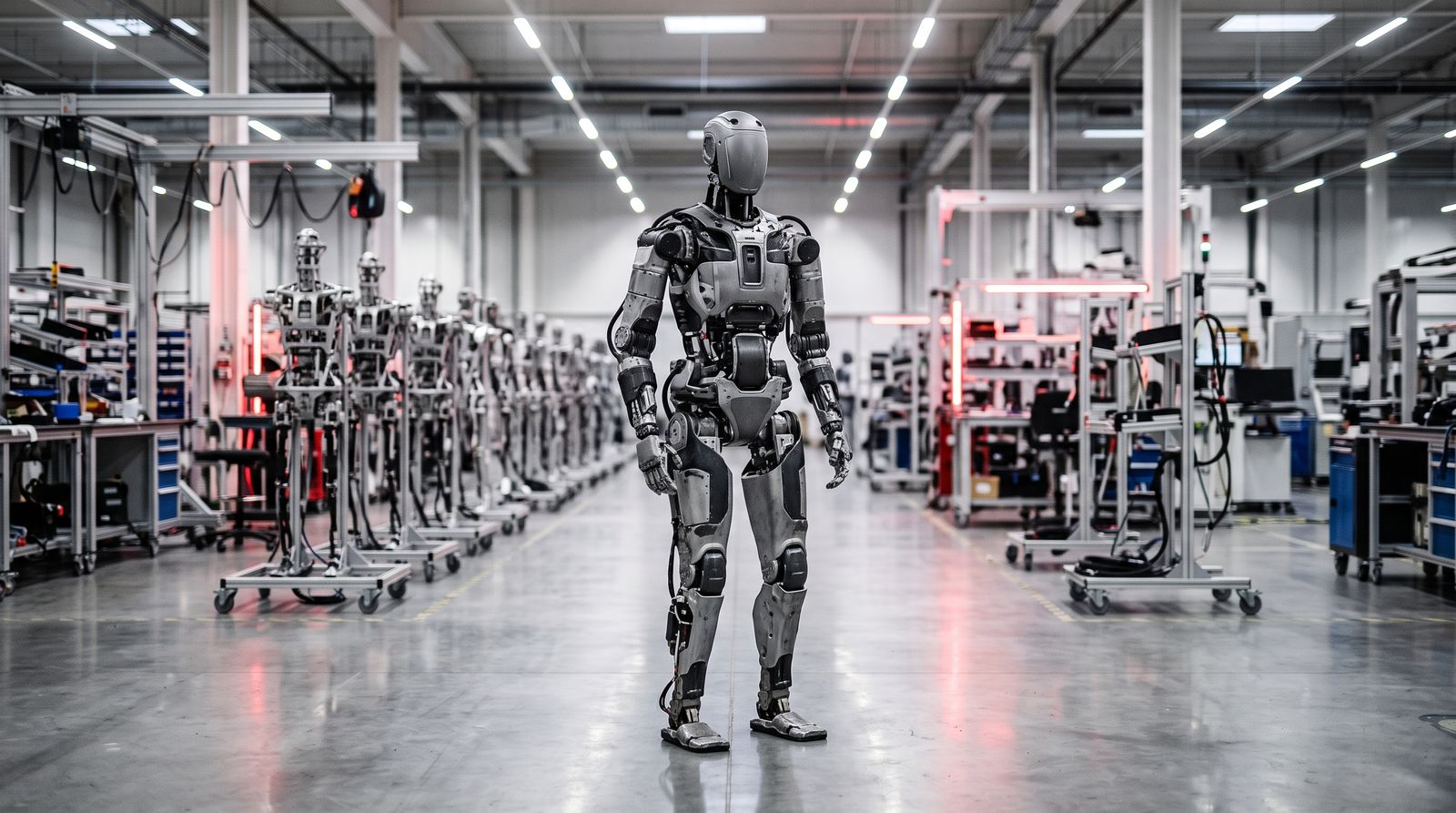
Unitree Robotics opened its subscription book on Shanghai’s STAR Market on Monday, and Chinese retail investors put in orders for 5,526 times the shares set aside for them, according to Bloomberg’s tally. A separate count of preliminary orders ran past 8,000 times — enough to trigger the clawback mechanism that pulls shares away from institutions and hands them to retail buyers.
The offering itself is modest: 40.4 million shares at 150.80 yuan apiece, about 6.1 billion yuan (roughly $900 million), for 10% of the enlarged company. That puts Unitree at roughly 61 billion yuan, or about $9 billion. The Hangzhou company becomes the first pure-play humanoid robot maker to list on a mainland Chinese exchange.
DeepSeek took a strategic allotment — 140.8 million yuan for 933,399 shares, about 2.31% of the offering — alongside an agreement to jointly develop AI models for robots. PetroChina also took a strategic slice. Tencent, Alibaba and Meituan were already on the register. Payment is due Wednesday. As of Monday, the first trading day had no announced date.
Ten percent of the company, 5,526 times the demand
Those two numbers are the entire story, and they are not really about robots. STAR Market listings float small slices, allocate a chunk by lottery, and let a queue of retail money bid for what is left. Scarcity is engineered into the structure before a single order arrives. It is the same mechanism that produced CXMT’s 472% first-day move earlier this year. Whatever Unitree does on day one will say more about float mechanics than about the humanoid robotics market.
The business underneath is more interesting than most of what China has floated on the robotics theme. Unitree booked roughly 1.7 billion yuan of revenue in 2025, with more than 40% of it from overseas customers — a genuinely unusual profile for a Chinese hardware company selling into a category the U.S. and Europe are increasingly nervous about. It sells quadrupeds and humanoids, and unlike most of the field it sells them at volume to universities, labs and industrial buyers today rather than promising a factory workforce later.
The wider context is Beijing’s push into “embodied intelligence” — AI that moves through physical space instead of sitting in a data centre. Unitree is not alone in heading for the exit door: AgiBot has been running the same export playbook, and Leju Robotics is also queuing for public money. The capital markets are being asked to fund the manufacturing scale-up before anyone has proven the end demand.
Our take: A 5,526-times subscription is a statement about the supply of listed robotics exposure in China, not about Unitree’s order book. Retail investors have no other way to own this theme domestically, and the float is 10%. That combination reliably produces a spectacular debut and an unreliable price. The number worth tracking is the 1.7 billion yuan of 2025 revenue and the 40%-plus that came from abroad — because export exposure is what makes this a real business and also what makes it a policy target. DeepSeek, which just told its own investors to stand down on a $74 billion round, is buying in here. That is a partnership signal, not a valuation one.
What to watch
- The listing date. Payment lands Wednesday; the first trading day was still unannounced as of Monday. That gap is where the pop gets built.
- Day-one close versus day-thirty close. STAR Market debuts routinely give back most of the first-day move. The second number is the useful one.
- The overseas revenue share. More than 40% of 2025 sales came from abroad. Any export-control or procurement action against Chinese robotics hits that line first.
- What the DeepSeek deal actually ships. A joint robot-model agreement announced beside an IPO is a headline. A model running on shipped hardware is a business.
- The queue behind it. AgiBot and Leju are next. If Unitree prices well and trades badly, that pipeline reprices fast.
China has just put a public price on the humanoid robot. The bid says $9 billion. The revenue says 1.7 billion yuan. Both are real numbers, and the distance between them is the trade.