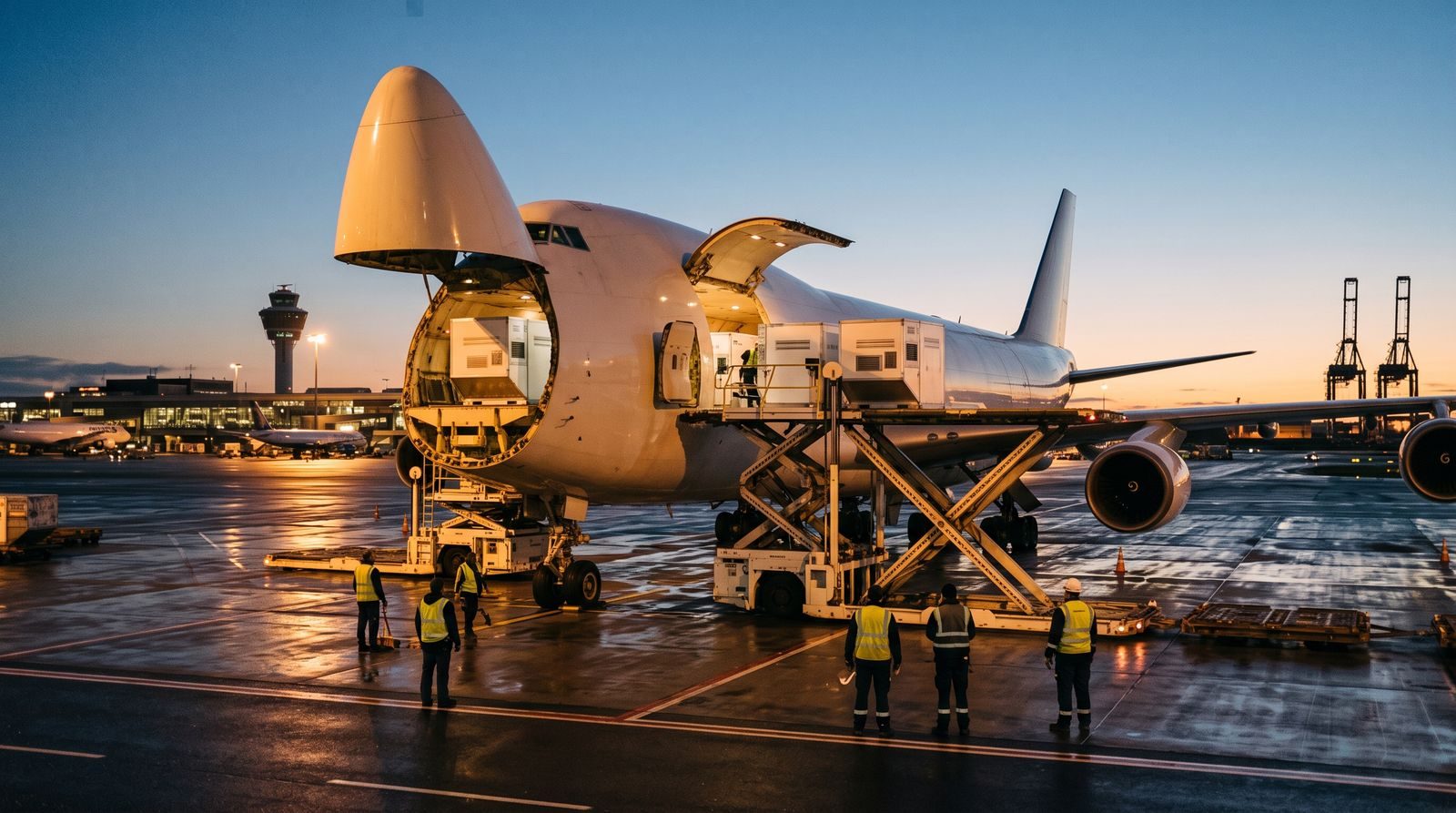
UPS put a number on the quiet half of its turnaround today: more than $2 billion. That’s what the carrier is investing in its international, healthcare and supply-chain businesses between 2024 and 2028, UPS international strategy executive Scott Szwast told CNBC — the first time the company has disclosed the total. The buildout includes a new hub in the Philippines opening this year, a facility in Ontario, Canada due in 2027, and an air hub at Hong Kong International Airport slated for 2028.
Read that list again: none of it is in the United States. At home, UPS is doing the opposite of building. It plans to cut up to 30,000 operational jobs this year, has flagged 24 buildings for closure in the first half, and is stripping out another million Amazon packages a day — on top of the 48,000 jobs and 93 buildings it eliminated last year. The company has now walked away from roughly half its Amazon volume on purpose, trading low-margin density for a smaller, more automated network.
The money is following the margin. In healthcare logistics, UPS bought Canada’s Andlauer Healthcare Group for $1.6 billion and is putting $48 million into 27 temperature-controlled facilities across its network — capacity aimed squarely at cold-chain pharmaceuticals like the GLP-1 drugs whose international sales are now outgrowing their US business. Moving a validated, temperature-controlled shipment of a $1,000 medication is a different trade from dropping a phone case on a porch: fewer competitors, contractual service levels, and pricing power that commodity parcel hasn’t seen in years.
Our take: This isn’t a cost story and a growth story — it’s one story. UPS is converting itself from a proxy for US e-commerce into a proxy for global pharma and specialty trade flows. Judge the turnaround on margin mix and healthcare revenue, not package counts. And note where the new hubs sit: Manila and Hong Kong are bets that complex intra-Asia supply chains keep compounding even as tariff walls go up. Networks route around politics — that flexibility is the actual product UPS is selling.
What to watch
- Tariff crossfire. UPS is announcing international capacity in the same news cycle in which US–Canada trade talks collapsed. Cross-border volume is the swing variable for the whole plan — and the new Ontario facility now sits behind a hardening border.
- Margin proof. The next earnings print needs to show the smaller US network and richer mix doing what they’re supposed to: operating margin improving even as revenue shrinks.
- More closures. UPS has said additional building cuts are possible in the second half of the year. Expect the domestic consolidation to keep grinding.
- The competition. FedEx and the global forwarders are chasing the same healthcare premium. Specialized capacity is the new battleground — the way brokerage discipline was when the freight cycle turned.