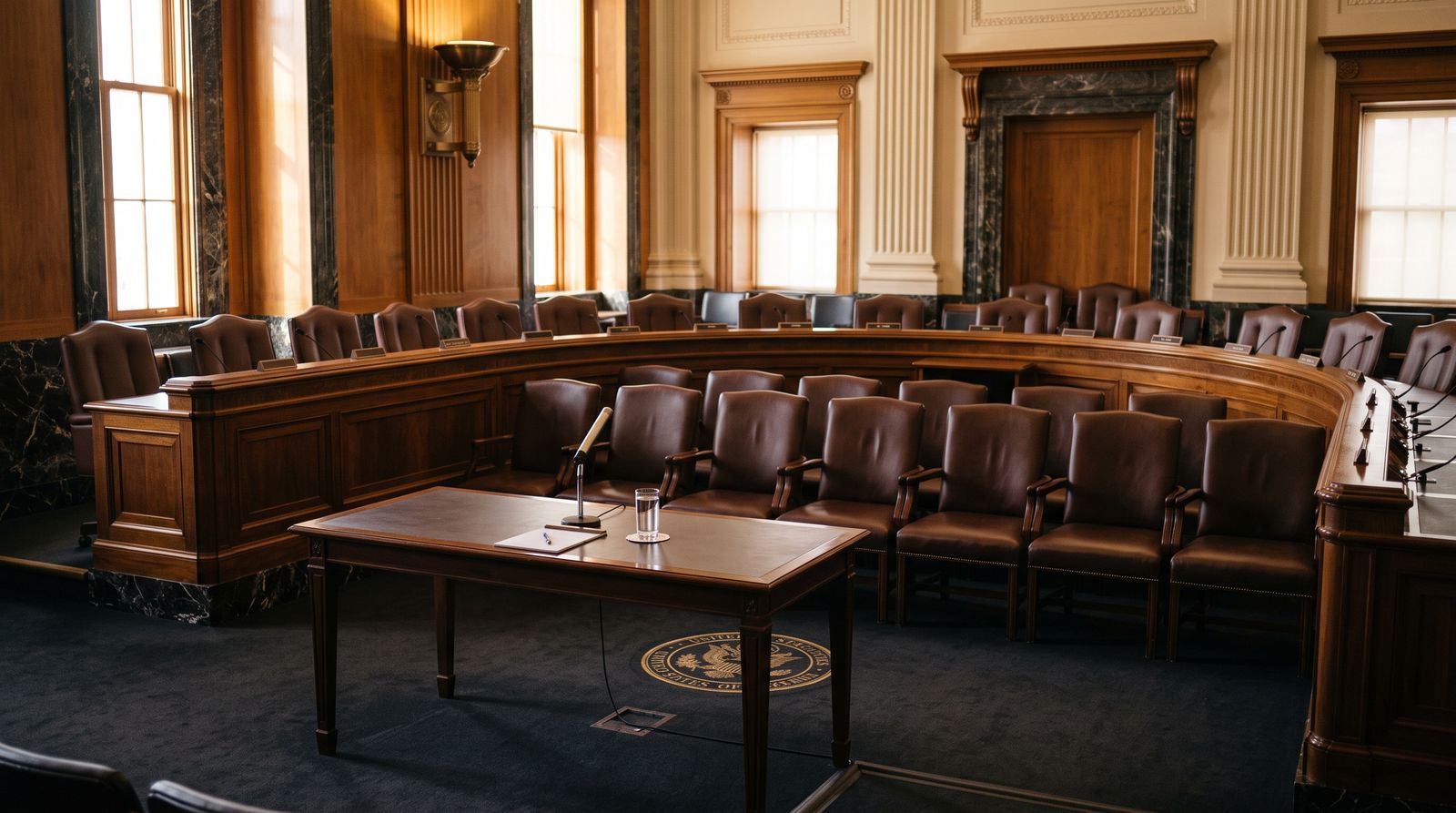
Tuesday, July 14 is the most concentrated morning on the summer calendar. At 8:30 a.m. ET the government publishes June’s Consumer Price Index — economists expect headline inflation to cool to about 3.8% year over year, down from 4.2% in May. Before the opening bell, five of the country’s biggest banks — JPMorgan, Goldman Sachs, Bank of America, Wells Fargo and Citigroup — report second-quarter results at once. Then at 10 a.m., Federal Reserve Chair Kevin Warsh sits before the House Financial Services Committee for his first semiannual monetary-policy testimony, with the Senate Banking Committee to follow Wednesday. The market has had weeks to price the data. It has had almost no time to price the man.
That is the story. Warsh has been chair since late May, confirmed by the Senate 54–45. He has run exactly one policy meeting — rates held on June 17 — and given a handful of remarks, the bluntest of which was that inflation is still “too high.” Investors genuinely cannot place him on the hawk-dove spectrum yet. His debut testimony is the first time they get hours of unscripted answers instead of a two-line statement — and, by a quirk of scheduling, he will be fielding questions about a CPI figure that printed just 90 minutes earlier. He cannot dodge it. Whatever he says about that number is the cleanest read on his reaction function the market has had.
The setup raises the stakes. Futures have all but erased hopes of a 2026 rate cut — pricing roughly two-in-three odds of no cut at all this year — and June’s meeting minutes showed a committee split almost evenly, with nine officials open to a hike. The rally carrying stocks is narrow and top-heavy. Into that, a new chair whose incentive on day one is to build anti-inflation credibility — not to soothe — could quietly bury the last cut hope. Or, if he leaves a door open, hand risk assets a jolt of relief. As the first self-described crypto-friendly chair, he will also draw pointed questions on bitcoin, stablecoins and how light his touch on bank supervision runs.
Our take: The number everyone is watching is CPI. The variable that actually moves the tape is how Warsh answers for it. A new chair’s first testimony is a credibility audition, and dovish reassurance is a currency you spend later, not on opening day. Assume he validates “inflation’s too high,” refuses to promise anything, and lets the September-hike question hang. If he does, the setup that has already killed the rate-cut trade gets one more shove. The dovish surprise — any hint of an opening toward a cut — is the low-probability, high-payoff outcome. Position for the hawk; keep one hand free for the door.
What to watch
- The 90-minute gap. CPI at 8:30, gavel at 10:00. His first answer on the inflation print is the sound bite algorithms will trade.
- “Data-dependent” vs. a threshold. Every chair says data-dependent. Watch whether Warsh names a condition — what would actually justify a hike, or a hold deep into 2027.
- The dissent map. He speaks for a divided committee. If he leans toward the hawkish nine, September-hike odds move in real time.
- Crypto and supervision. The first crypto-native chair will be pressed on digital assets and how loosely he polices the banks — answers that reach well beyond the rate path.
- The bank read-through. The same morning’s bank earnings give his macro picture a real-economy cross-check on credit, lending and the consumer.
Markets can price a data release; they have had weeks to try. They cannot price a temperament. Tuesday is the first time Wall Street hears the new chair answer the questions it actually cares about — with the freshest inflation number in the country sitting on the desk in front of him. The CPI is the setup. Warsh is the punchline.