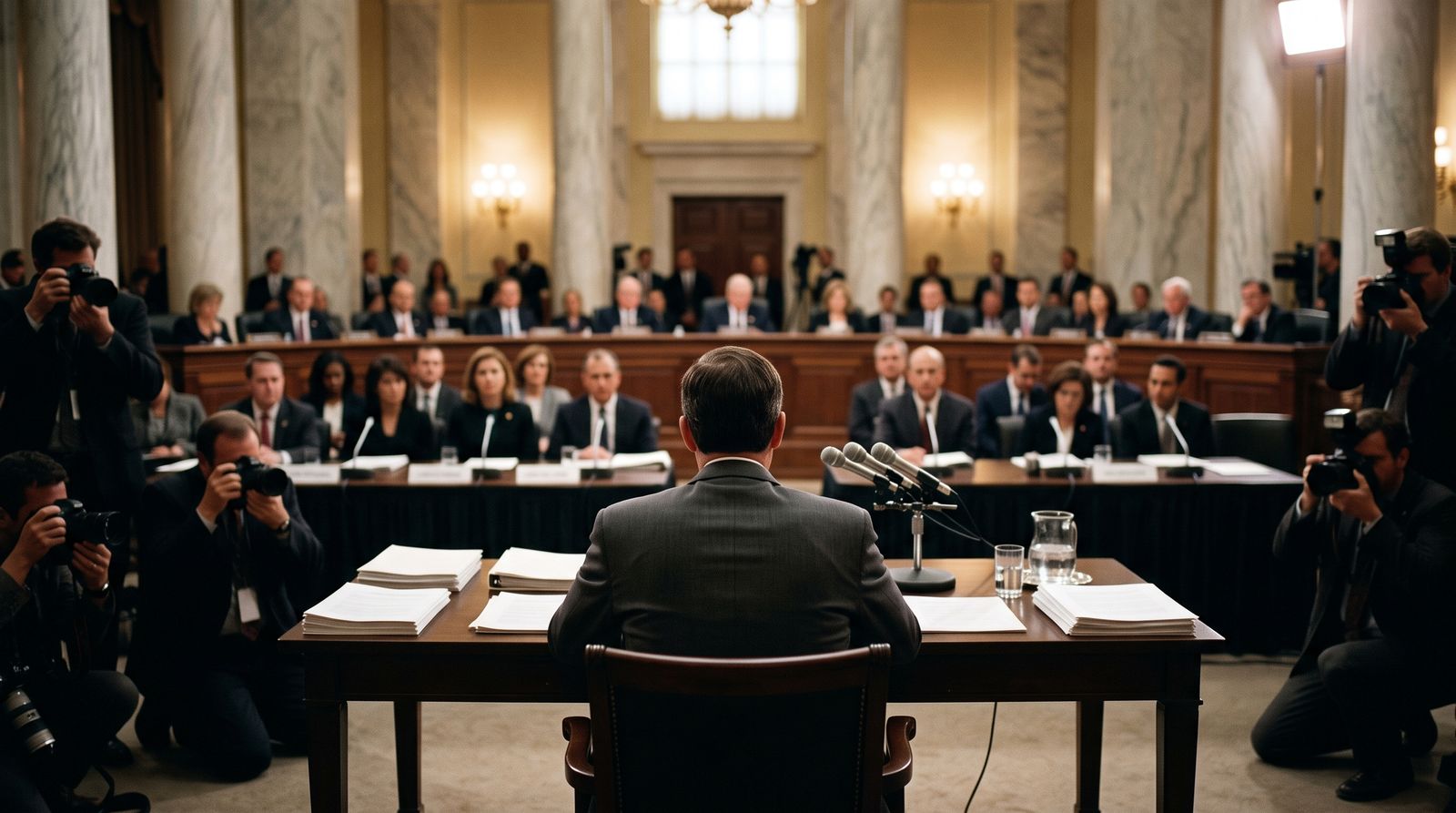
Kevin Warsh could not have scripted a friendlier morning for his first congressional testimony as Fed chairman. Hours before he sat down in front of the House Financial Services Committee, June CPI printed a 0.4% monthly decline — the fastest drop since April 2020 — pulling annual inflation down to 3.5%. He took the gift and declined to unwrap it: the improvement, he told lawmakers, is not “mission accomplished.”
The prepared text was blunter than Fed chairs usually get. “The members of our Committee have no tolerance for persistently elevated inflation,” Warsh said. “And we share a resolute commitment to restoring price stability.” With bond markets spending the past week toggling bets on whether the Fed hikes at its July 28–29 meeting, the chair gave neither camp an inch — soft print acknowledged, victory withheld, options open.
Then came the part that will outlast the rate debate: Warsh announced task forces to rework five core areas of how the Fed does its job — communications, balance sheet policy, economic data, productivity and jobs, and inflation frameworks. That is not tinkering; it’s a new chair putting the institution’s entire operating system under review in his first month of hearings. Asked directly whether he works for President Trump, Warsh kept it short: “We’re an independent central bank” — adding the Fed is “honored to be independent.”
The AI line that deserves more attention
Buried in the testimony was a sentence markets barely traded and probably should have. Pointing to the AI infrastructure buildout as a defining force in the economy, Warsh said: “Yet it seems inevitable that what is now called ‘AI investment’ will soon be called just ‘investment.’” A Fed chair just told Congress he views the capex boom as structural rather than speculative — the same week 200-plus economists signed a warning that AI’s economic transformation could outrun the Industrial Revolution’s. If the Fed treats AI spending as ordinary investment, it is not going to be the institution that calls the bubble.
Our take: First testimonies are where markets learn a chair’s reaction function, and Warsh’s reads hawkish-with-homework: no tolerance on inflation, no victory lap on a 3.5% print, and a five-front internal review that signals the Powell-era playbook is being rewritten, not inherited. The bar for cuts just moved higher — and the “AI investment is just investment” line tells you this Fed plans to accommodate the buildout, not lean against it.
What to watch
- Round two, Wednesday: Warsh repeats the exercise before Senate Banking on July 15 — watch whether “no tolerance” survives contact with a chamber that confirms Fed governors.
- July 28–29 FOMC: June’s soft CPI argues for patience; post-blockade oil argues the July print won’t be nearly as kind. The meeting decides which argument the “no tolerance” Fed weighs harder.
- Task force details: staffing and deadlines for the five reviews — especially inflation frameworks, where any move away from the 2% regime’s current architecture would be the biggest Fed story of the year.