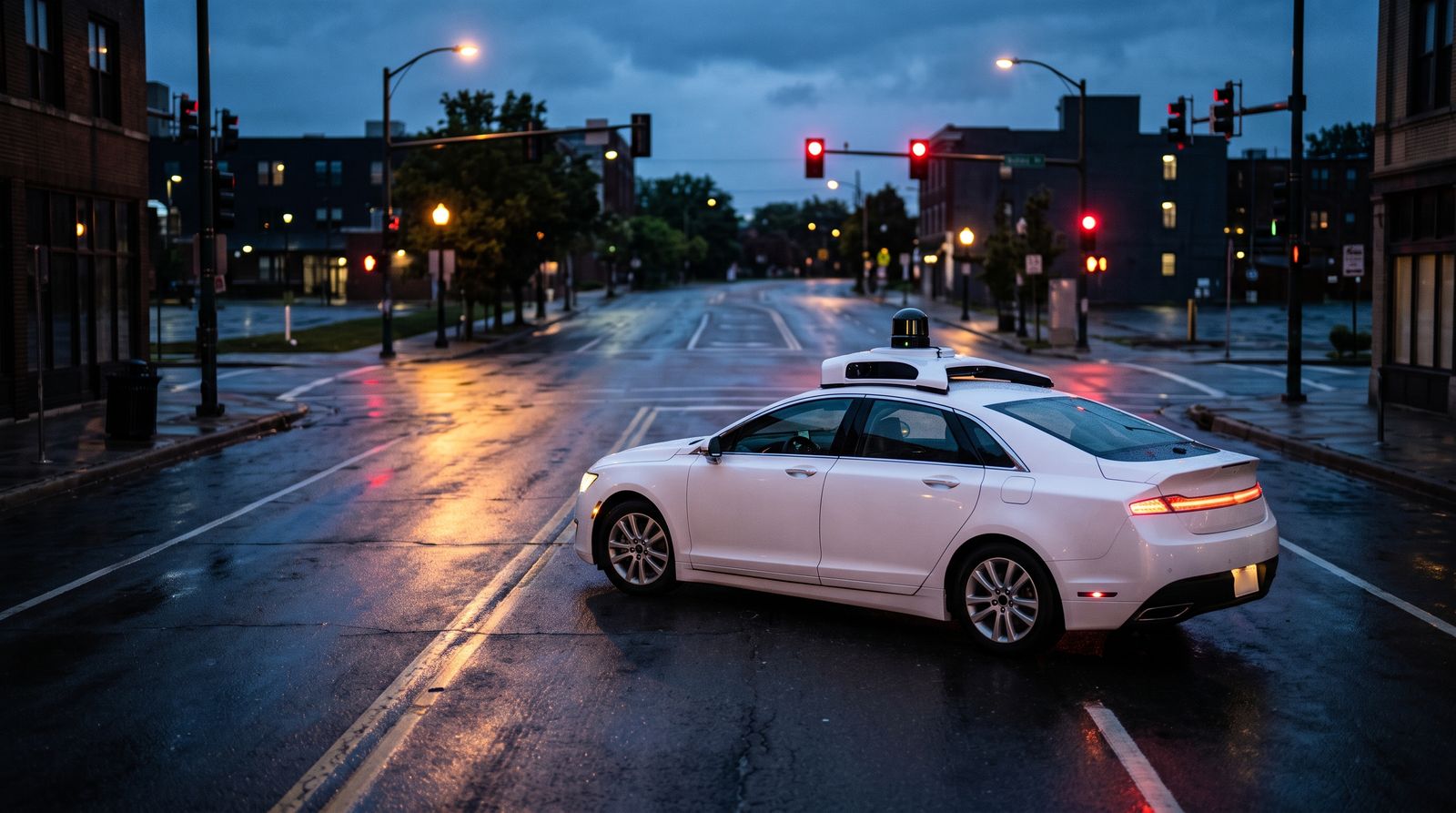
Uber shares fell as much as 4.8% on Friday and closed down roughly 4.3% — under $66, the lowest close in more than a year, and about $6.1 billion of market value gone in a session. The trigger was a Financial Times report that Alphabet’s Waymo has held internal discussions about ending its robotaxi partnership with Uber altogether.
Uber didn’t deny the direction of travel. A company spokesperson told CNBC that Waymo intends to launch the Waymo app in Austin and Atlanta in January 2028, alongside its existing deployment on Uber. Hundreds of Waymo vehicles stay bookable through Uber until at least May 2028, when the current contract runs out. Alphabet, for its part, closed Friday up 0.58%. The market decided exactly one of these two companies owns the asset.
This is the second notice in a month. The Phoenix pilot — the first market the two ran together, just over a dozen cars — wound down in late June, with those vehicles reverting to Waymo’s own fleet and app. Austin and Atlanta were supposed to be the scaled version of that experiment. Now they have an expiration date too.
Our take: Uber’s pitch to investors was that autonomy is a supply problem, and Uber owns demand — whoever builds the cars still needs the app with 170 million riders on it. That thesis holds right up until the supplier discovers it can build a demand channel faster than Uber can build cars. Waymo has spent three years learning the routing, the pickup choreography, and the local regulators using Uber’s network as training wheels. January 2028 is when it takes them off. Uber isn’t losing a partner; it’s losing the argument that aggregators are safe in an autonomous world.
The consolation prize is real, but smaller
Ending exclusivity cuts both ways: Uber is now free to put non-Waymo robotaxis onto its platform in Austin and Atlanta, and there is a growing queue of operators who would love the placement. That is a genuine hedge, and it is why the stock fell 4% instead of 15%. But it swaps a monopoly supplier for a commodity one — and commodity supply means Uber competes on take rate against a rival that has no take rate at all, because Waymo owns the car.
Note what Friday didn’t include: any new operational failure, any regulatory action, any guidance cut. This was a repricing of a story, not of a quarter. That’s the tell that the market had been paying for partnership permanence, and just found out the lease has an end date printed on it.
What to watch
- Uber’s Q2 call. Management will be asked to quantify AV bookings and name replacement partners for Austin and Atlanta. Vagueness there is worse than the FT story.
- Whether May 2028 holds. The contract runs to May; Waymo’s app arrives in January. Four months of a supplier competing with its own distributor is an unstable arrangement.
- City count, not car count. Waymo going solo in two metros is a data point. Waymo going solo in the fifth and sixth is a strategy.
- Alphabet’s capex language. Waymo running its own consumer app in more cities is a spending decision, and it lands inside an AI budget the street is already nervous about.
The robotaxi trade spent two years being a story about who could build the technology. Friday it became a story about who gets to own the customer — and that is a much shorter list.