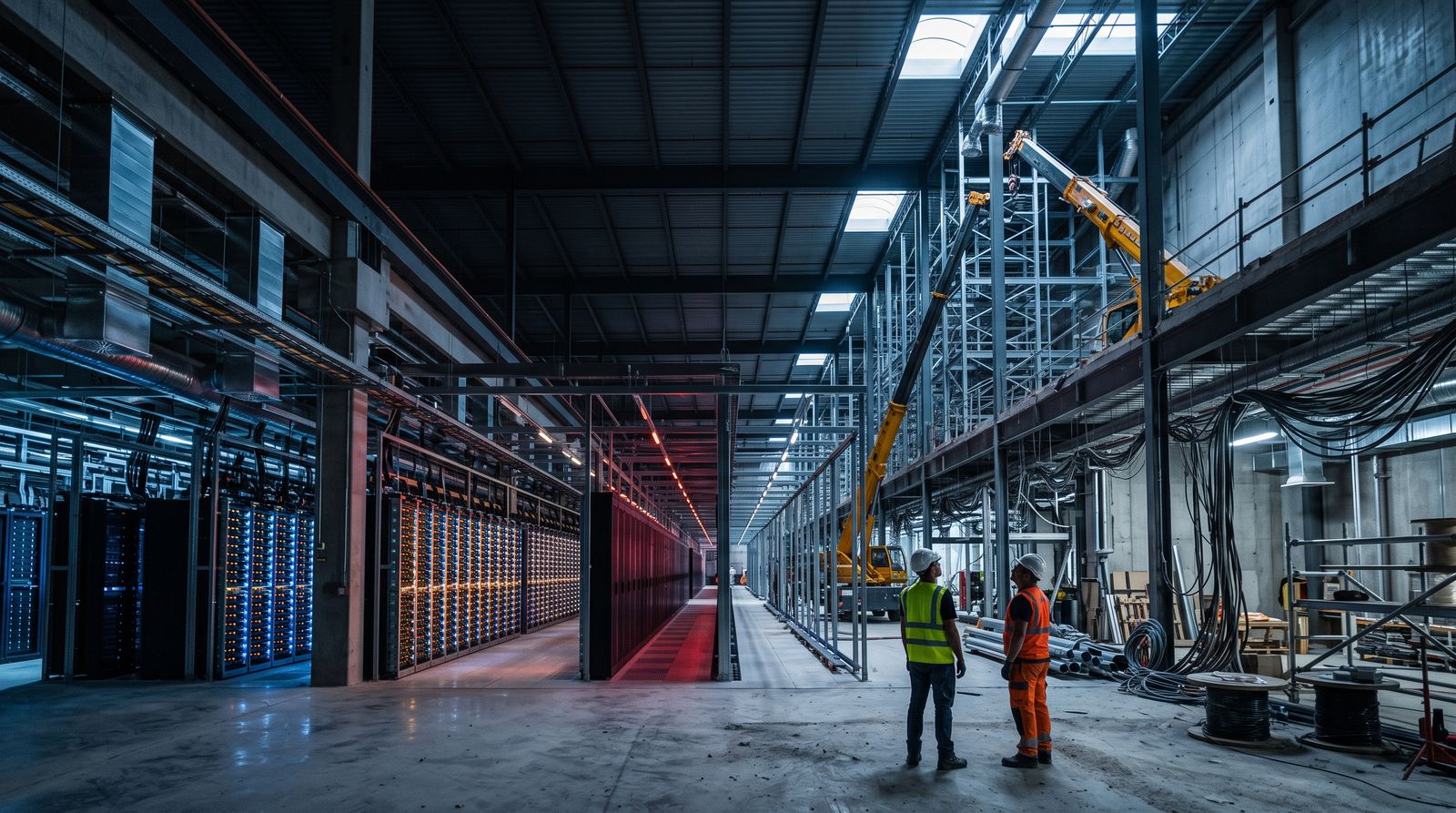
By any normal scoreboard, Alphabet just posted a monster quarter: $119.8 billion in revenue, ahead of Street estimates near $117 billion, with Google Cloud up 82% year over year to $24.8 billion and a cloud backlog of roughly $514 billion. Any other year, that’s a victory lap. Instead, shares fell more than 7% Thursday — the stock’s worst day in 14 months — because of the other number in the release: Alphabet raised its 2026 capital-spending forecast to between $195 billion and $205 billion, up from $180–190 billion.
The cost side is where the story lives. Quarterly capex roughly doubled from a year ago to about $45 billion, and free cash flow went negative — the first time that has happened in Alphabet’s history as a public company. The selloff didn’t stay contained, either. Tesla, nursing its own profit miss and a “massive capex year” of AI spending, dropped 12.6%. Microsoft, Amazon and Meta slid in sympathy, and the Nasdaq closed down 2.15% in its worst session in a month.
This is the test we flagged going into the week: Big Tech earnings as a referendum on the AI trade. Alphabet passed the demand portion with the best evidence yet — an 82% cloud growth rate at a $100 billion annual run rate — and still got marked down. That’s new.
The bill arrived
For two years, the AI trade ran on one question: is the demand real? Alphabet answered it. Half a trillion dollars of contracted backlog is not hype; it’s purchase orders. What changed Thursday is that the market started pricing the other side of the ledger. Roughly $200 billion a year in capex is a number without precedent in corporate history, and it isn’t discretionary — it’s the entry fee for staying in the race while rivals spend at the same pace and power costs climb.
Our take: The tell isn’t the capex raise — it’s that a half-trillion-dollar backlog couldn’t buy a green day. The market has stopped paying for AI growth stories and started discounting AI balance sheets. When the best-capitalized company on earth goes cash-flow negative to stay in the race, everyone below it either borrows, as Amazon already has, or ends up renting from a hyperscaler. The margin for error in the AI second tier just went to zero — and the winners of this phase will be picked by cost of capital, not model benchmarks.
What to watch
- The other hyperscalers’ guides. Microsoft, Meta and Amazon report in the coming days. If they match Alphabet’s raise, the sector-wide bill compounds; if anyone blinks, that’s the first crack in the arms race.
- The debt market. Negative free cash flow at these spend levels pushes AI buildout funding toward bonds. Watch issuance — the AI trade is quietly becoming a credit story.
- Input costs. TSMC has reportedly told customers advanced-chip prices rise as much as 10% next year. Every point of that flows straight into these capex budgets.