AMD reported its second quarter after Tuesday’s close and there was nothing to pick at in the print. Revenue was $11.5 billion, up 50% year over year and a company record, against a consensus near $11.3 billion. Non-GAAP earnings came in at $1.66 a share versus $1.62 expected, on $2.8 billion of non-GAAP net income. Data center revenue more than doubled to $6.7 billion, up 107%, ahead of the $6.5 billion the street had modeled, and now accounts for 58% of the whole company. Third-quarter guidance landed at roughly $13 billion give or take $300 million — about 41% growth, and above the $12.5 billion consensus.
A beat on revenue, a beat on earnings, a beat on the segment everyone cares about, and a raise. The stock, which had climbed about 8% during Tuesday’s session heading into the release, fell roughly 8% after hours.
The line that flipped it does not appear in any earnings preview. Capital expenditure for the quarter was $808 million. Analysts had modeled somewhere around $299 million. That is nearly triple the estimate and about 108% more than AMD spent in the first quarter. Free cash flow fell to $1.56 billion from $2.57 billion three months earlier.
What the money is for
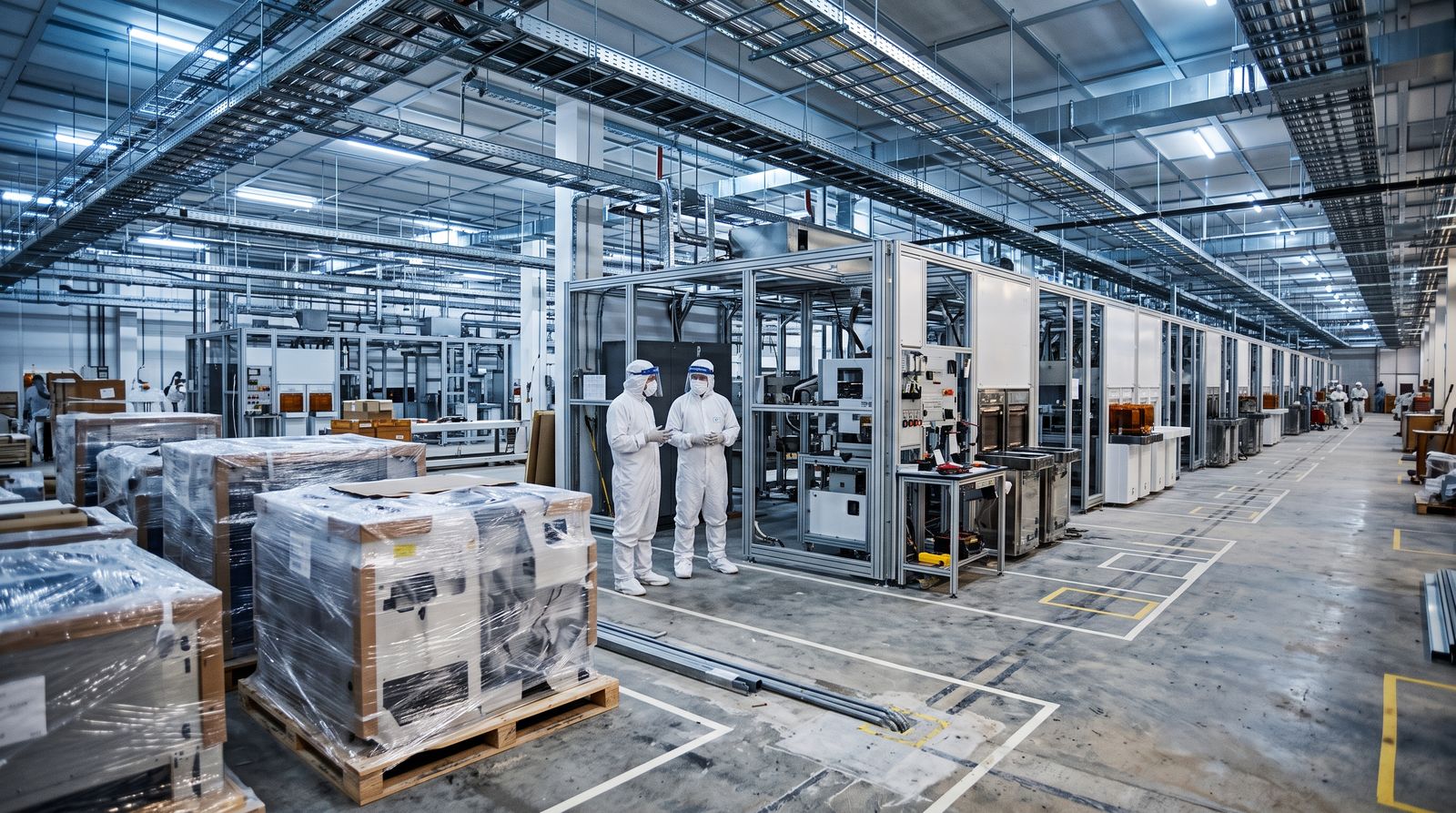
AMD is not building fabs; it never stopped being fabless. The spending is capacity, test and validation infrastructure, and the physical apparatus of shipping full racks instead of loose silicon — the shift that started when the company launched Helios and signed Anthropic for up to 2 gigawatts of MI450. Selling a rack is a heavier business than selling a chip. It carries inventory, integration, burn-in and floor space, and it pulls cash forward by quarters.
Underneath the headline, the mix keeps sorting itself. Client revenue was $3.1 billion, up 23%. Embedded added $977 million, up 19%. Gaming fell 31% to $779 million on weak semi-custom demand — the console cycle doing what console cycles do. Strip those out and AMD is increasingly one line of business with three hobbies.
Our take: This is the second AI-adjacent beat sold off on a spending line in the same news cycle, and the sizes could not be more different — $18.37 billion at one company, $808 million at this one. That is the point. The market is no longer reacting to the magnitude of the bill; it is reacting to the surprise in the bill. A number three times consensus tells investors the model they were using is wrong, and a wrong model is worth more downside than $509 million is worth in cash. AMD came into this print priced for an exceptional quarter and delivered a very good one. When a stock runs 8% on the day of the release, “very good” is a miss.
What to watch
- Q3 capex. One quarter at $808 million is a Helios ramp. Two is a new cost structure. Management’s second-half number is the whole story.
- Data center gross margin. Rack-scale systems carry more bought-in content than chips do. If 58% of revenue starts diluting margin, the mix shift stops being free.
- Instinct against the guide. $13 billion in Q3 implies the GPU line keeps compounding off a doubled base. That is the number that has to hold.
- Free cash flow. $1.56 billion, down from $2.57 billion, with a bigger build ahead. Cash conversion is where the rack business gets judged.
The comparison that matters is not Nvidia this quarter. It is every hyperscaler that has already learned that in 2026 the market grades the invoice, not the revenue. AMD just joined that list with a rounding error of a capex number — which tells you how little slack is left in the trade.