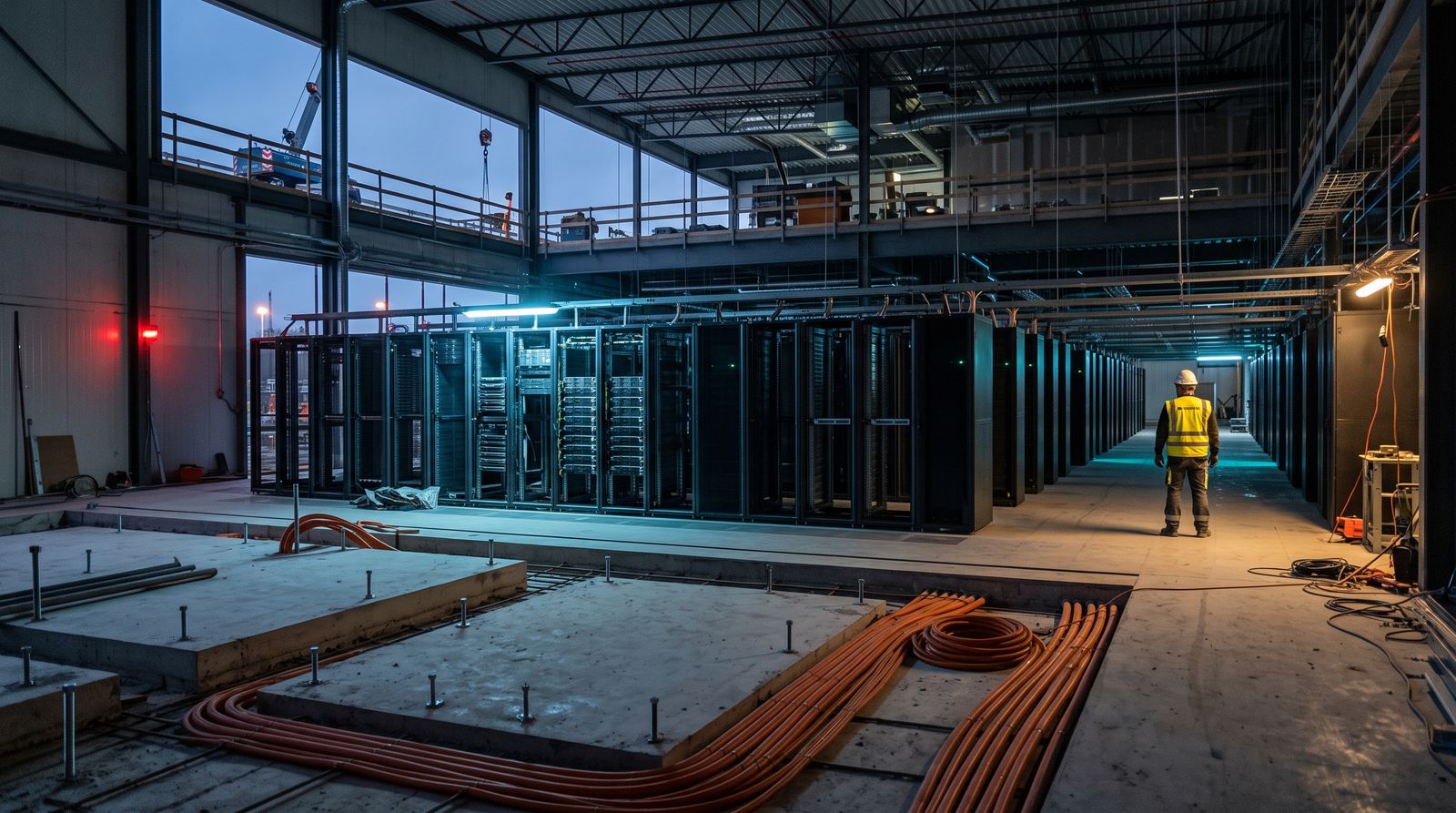
The last of the hyperscaler earnings cleared Thursday night, and the 2026 spending numbers are now on the record. Amazon lifted its full-year cash capital-expenditure plan to roughly $220 billion from about $200 billion, blaming higher memory prices. Alphabet raised its range to $195–205 billion from $180–190 billion. Meta narrowed its guide to $130–145 billion, lifting the floor rather than the ceiling. Microsoft does not publish a single annual figure; analysts track it north of $120 billion.
Add the disclosed guides and the four are pointing at something close to $680 billion this year. Published tallies run higher — $700 billion to $725 billion, depending on whether Oracle gets counted and how leases are treated — but every version of the arithmetic lands in the same place: roughly double what the same companies spent in 2025.
The demand side justified it. Amazon posted $200.6 billion in quarterly revenue, up 20%, with AWS growing about 37% — its fastest since 2021 — and operating income up 43% to $27.5 billion. Microsoft’s Azure grew 43% in its fiscal fourth quarter. Meta’s revenue hit $60.8 billion, up 28%, and beat. The market rewarded exactly one of them: Amazon closed Friday up 15% while Apple fell 7% on soft Services and China numbers.
Our take: The interesting number this week was not capex. It was Meta’s cash. Free cash flow came in at $784 million, against $8.55 billion a year earlier — a 91% collapse — because quarterly capex went to $31.08 billion from $17.0 billion. Meta is still enormously profitable. It is simply no longer generating enough spare cash to fund its own build. That is the line the whole trade turns on: for two years the AI buildout was financed out of operating cash flow, which cost nothing and required nobody’s permission. Sometime this quarter it stopped being self-funded. Everything after that is a financing story, and financing has a price.
The funding has already moved
It moved before the earnings did. S&P Global counts roughly $225 billion of bonds issued this year by hyperscalers and adjacent names such as Nvidia; a broader count of six firms puts it near $244 billion through mid-July. The comparison that matters: five of these companies issued about $121 billion across all of 2025. Half a year into 2026, they have already more than doubled it, and Nvidia’s $25 billion sale in June was one of the largest single corporate offerings on record.
The timing is unhelpful. The 30-year Treasury touched 5.27% this week, its highest since July 2007, after the Fed held at 3.50–3.75% with three dissents in favor of a hike. Long money is the most expensive it has been in 19 years precisely as the largest borrowers in the investment-grade market queue up for more of it. Coverage ratios on recent hyperscaler deals have been thinning — the polite signal that buyers want to be paid more.
None of this makes the spending wrong. Amazon and Microsoft are both showing cloud acceleration, which is the only evidence that would justify these numbers. But the risk profile changed character this quarter. Cash-funded capex is a bet you can stop making. Debt-funded capex is a schedule.
What to watch
- Meta’s free cash flow next quarter. If $784 million goes negative, the $130–145 billion gets funded externally, and the size of that deal will set the price for everyone else.
- New issuance concessions. Watch what hyperscalers pay over Treasuries, not just the headline size. Widening spreads are the first real constraint on the build.
- The long end. A 30-year above 5.25% raises the hurdle rate on assets that depreciate in three to five years. That math gets ugly fast.
- Memory pricing. Amazon named it as the reason for a $20 billion guidance raise. If it keeps climbing, every one of these budgets is a floor.
The 2026 capex number is now known. The 2026 funding number is not, and that is the one that will move the tape.