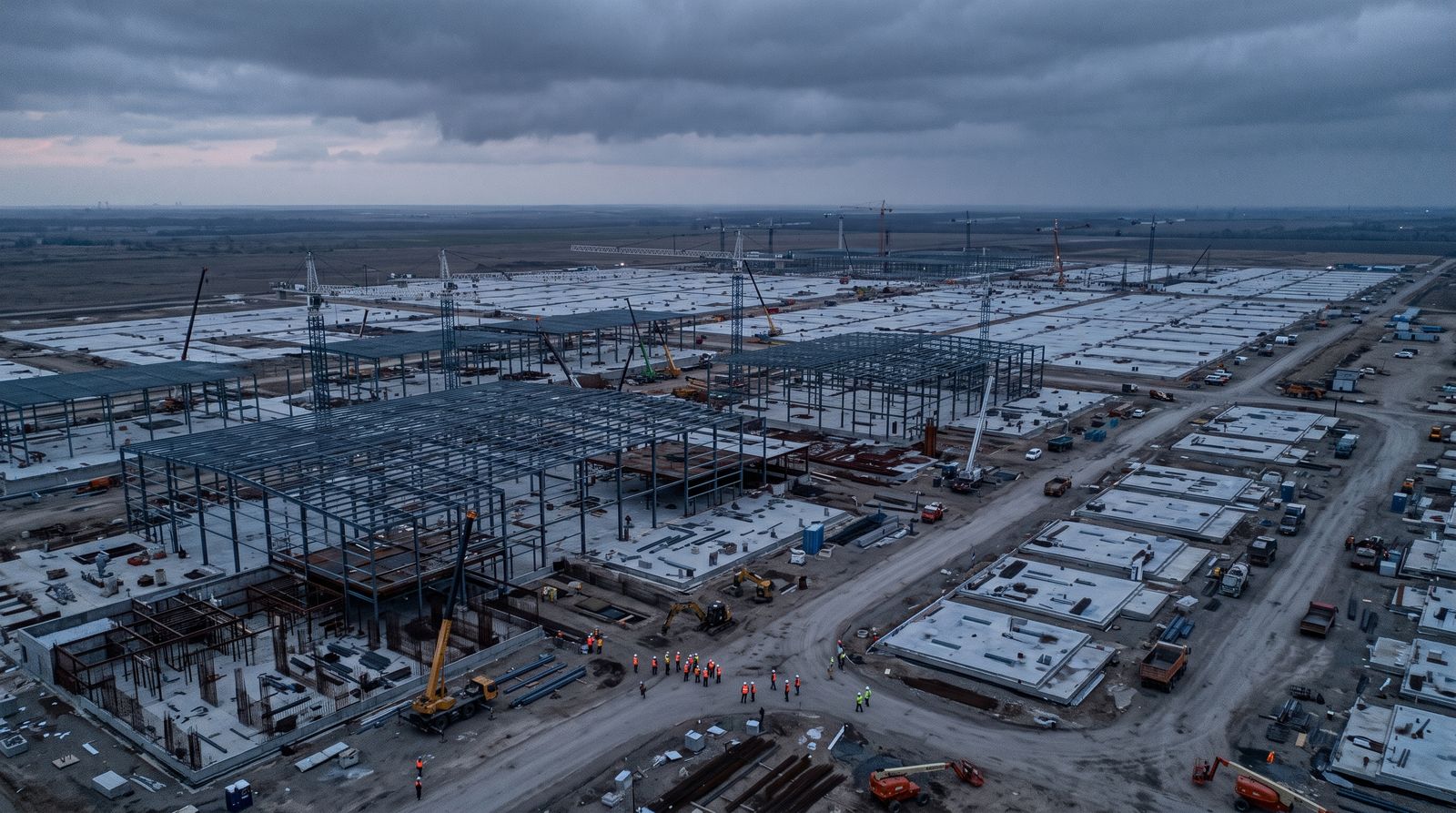
Moody’s Ratings published a report this week warning that “unprecedented” AI infrastructure spending is eroding free cash flow and raising balance-sheet risk at six companies it tracks together: Microsoft, Amazon, Alphabet, Meta, Oracle and CoreWeave. CNBC reported the findings Friday.
The headline figures: capex across the group reaching roughly $785 billion in 2026 and about $1 trillion in 2027. Direct debt already at some $460 billion. And the line most investors never model — roughly $1.2 trillion in off-balance-sheet data center lease commitments, of which more than $820 billion relates to leases that have not yet commenced, because the buildings are still going up.
Moody’s framing is structural, not cyclical: “the transition from asset-light to asset-heavy models requires unprecedented levels of investment.” These were companies valued for capital efficiency. They are becoming utilities with a software margin bolted on.
The $820 billion that hasn’t started counting
A lease that hasn’t commenced sits outside the reported liability but is contractually owed. It is a real obligation with a start date in the future, disclosed in the footnotes rather than the debt column. Add $1.2 trillion of committed leases to $460 billion of direct debt and the picture is not six cash-rich technology companies. It is six companies with the fixed-cost profile of an infrastructure operator, on revenue that is still being forecast rather than contracted.
That is the actual risk. Depreciation and lease expense start on a schedule. AI revenue starts when customers show up. The gap between those two curves is where credit ratings are decided, and Alphabet’s second quarter — capex outpacing operating cash flow, free cash flow negative for the first time since the IPO — is the first clean data point.
Where the pressure actually lands
Not evenly. Moody’s puts the four largest players in a defensible position: strong balance sheets, real operating cash, room to absorb a slow ramp. The immediate rating pressure sits at Oracle and CoreWeave.
Oracle carries a Baa2 rating with a negative outlook — two notches above high yield. CoreWeave is already in the high-yield market at Ba3, financing GPU fleets through complex private debt structures. Those two are running the same strategy as the hyperscalers without the same cash generation underneath it, which is a different business entirely when refinancing windows tighten.
Our take: A ratings agency warning is not a sell signal and Moody’s is not calling a bubble — it is doing the boring, useful work of counting obligations that don’t appear where most people look. The practical takeaway for anyone holding these names, or building anything with fixed commitments against uncertain revenue, is the same: read the lease footnote before you read the debt line. A commitment you signed but haven’t started paying is still a commitment, and it will not care whether demand arrived on schedule. The operators who survive capex cycles are the ones who match the duration of the obligation to the confidence in the revenue — and who can name, out loud, the level of demand shortfall at which the plan stops working. If you can’t name that number for your own commitments, you haven’t finished the analysis.
What to watch
- Oracle’s outlook: Baa2 negative is two steps from junk. A downgrade repriced across its debt stack would be the loudest signal yet that the market is done funding capex on faith.
- Free cash flow at the other five: Alphabet went negative first. Whether that spreads through Q3 reporting determines if this is one company’s timing or the whole cohort’s new baseline.
- Lease commencement schedules: The $820 billion of not-yet-started leases has a calendar. As those buildings come online, the expense moves from footnote to income statement.