Bloomberg reported on Monday that Nscale and Anthropic are on the verge of announcing a second compute deal worth about $45 billion. Reuters carried the same report. Both companies declined to confirm it, and the people briefed on the talks said terms could still change.
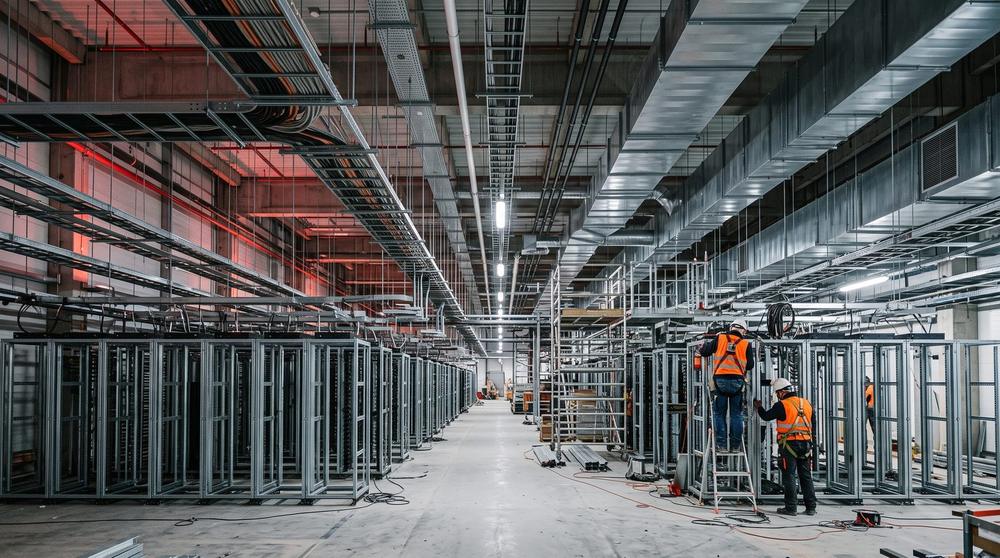
The number is familiar because it is the same number as last time. In August the two signed a roughly $45 billion, six-year agreement for capacity at Nscale’s flagship West Virginia data centre, running Nvidia’s Vera Rubin systems. That capacity is not expected to start serving Anthropic’s traffic until late 2027.
So the shape of the thing is: a second $45 billion commitment, reportedly close, on top of a first $45 billion commitment that has not yet switched on a single rack for the customer paying for it.
The run of deals behind it
Anthropic’s compute ledger over the past eighteen months reads like an infrastructure balance sheet rather than a software company’s procurement file. Amazon: access to an additional 5 gigawatts, agreed in April. Google and Broadcom: an expanded partnership adding power capacity, also April, no figure disclosed. SpaceX: reportedly around $1.25 billion of capacity a month across two of its data centres. AMD: a $5 billion compute deal in July. Volta: $10 billion over six years out of a Norwegian site in August. Nscale: $45 billion in August, and now reportedly another $45 billion.
Nscale’s side of this is worth stating plainly, because it is the part that explains the urgency. The West Virginia project Anthropic anchored in August was one Microsoft had walked away from. Nscale is Nvidia-backed, is pursuing an IPO, and has reportedly met investor pushback on a proposed $30 billion valuation. A second $45 billion anchor tenancy from the largest-spending AI lab not owned by a hyperscaler is the single most useful document that company could put in front of the market.
Our take: Watch the direction of dependency. Anthropic is buying optionality — multiple suppliers, multiple geographies, no single hyperscaler holding the off switch — and that is defensible strategy for a company that expects to be compute-constrained for years. Nscale is buying something else: a credit story. Its valuation rests substantially on contracted future revenue from one counterparty whose first contract has not yet delivered capacity. If the second deal lands before the first one runs, the risk has not been diversified. It has been doubled on the same unproven site.
Why “contracted” is not “paid”
A six-year lease on capacity that arrives in late 2027 is a promise exchanged for a promise. The provider promises racks, power and cooling at a site that in this case needs grid connection, construction and Nvidia hardware delivery to all land on time. The customer promises cash over a period longer than any current AI revenue forecast is worth much. Neither side has to be acting in bad faith for the arithmetic to be fragile — it only takes a slipped substation or a chip generation that arrives six months late.
This is the same structural question the credit market has been circling all autumn. Anthropic’s first rating, from KBRA, came in at BB+. CoreWeave’s bonds have been repricing. The pattern is consistent: enormous contracted revenue, thin realised cash flow, and lenders trying to work out which of those two numbers to underwrite.
What to watch
- Whether the deal is announced with terms or without them. August’s six-year length and the West Virginia location came out via sources, not a filing. A second deal disclosed with site, capacity and term attached would be a genuine step up in transparency.
- Nscale’s IPO price talk. If $30 billion was already a stretch for investors, a second Anthropic contract is the test of whether contracted backlog moves that number or whether the pushback was about concentration risk all along.
- Late 2027. That is the delivery date on deal one. It is the only hard milestone in this entire story, and everything else is a forward commitment hanging off it.
- Anthropic’s IPO timing. The company is expected to go public and is signing multi-decade-scale obligations in the run-up. Those commitments will have to be legible in a prospectus, which is the first moment outsiders get audited numbers rather than sourced ones.
Until then, the honest summary is short: two reported $45 billion deals, one site, zero gigawatts delivered. Everyone in the chain is being paid in confidence.