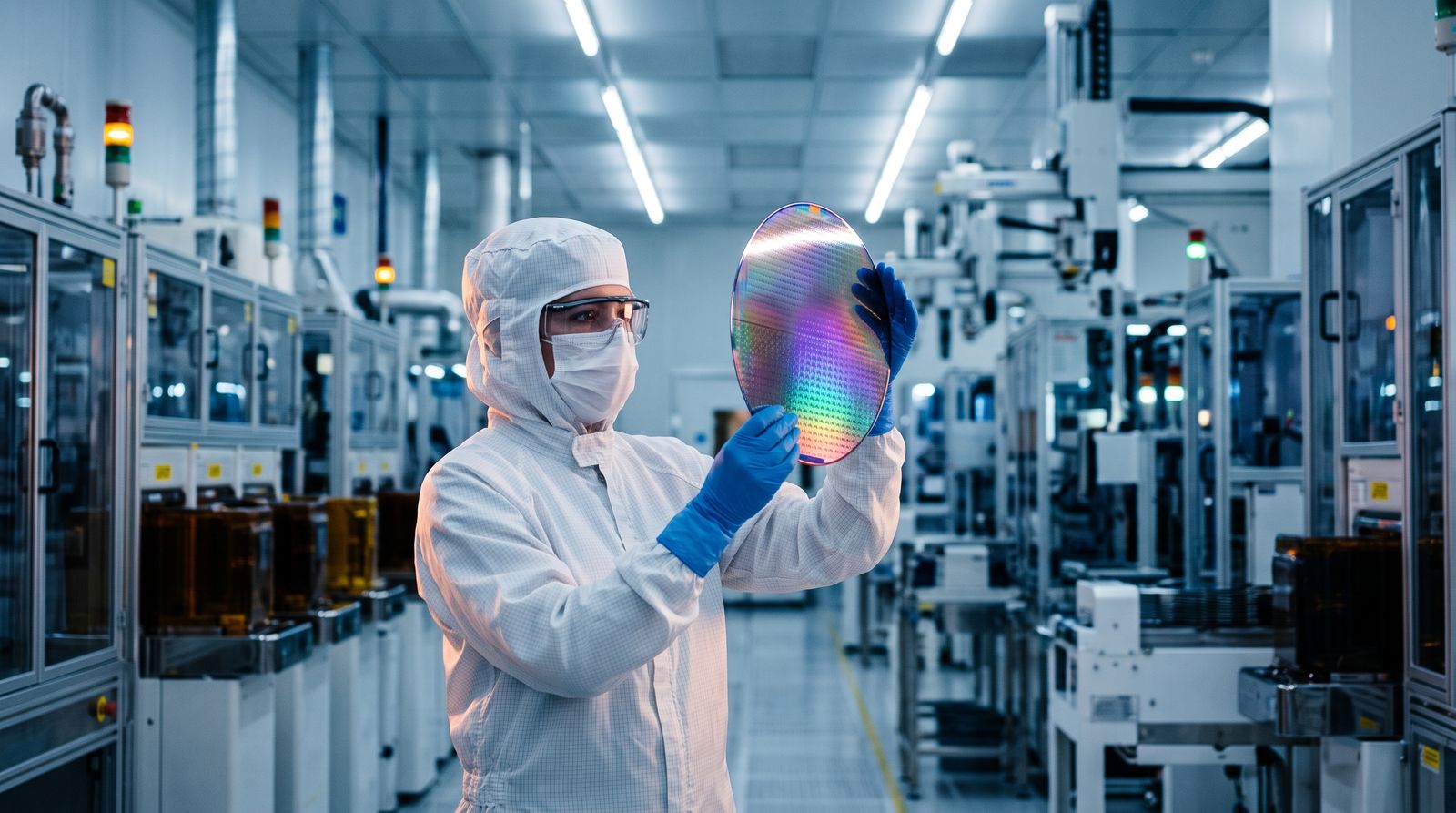
Apple on Wednesday said it will spend more than $30 billion with Broadcom to design and produce custom silicon and wireless-connectivity chips inside the United States — a multiyear commitment, reportedly running through 2031, that Apple calls its largest to date under the American Manufacturing Program it launched last year. The deal underwrites more than 15 billion U.S.-made chips and a $1.5 billion capital investment to expand and modernize Broadcom’s plant in Fort Collins, Colorado. CEO Tim Cook framed it as deepening Apple’s American supply chain and thanked “the president and his administration.”
The parts involved aren’t Apple’s marquee processors — those come from other suppliers. Broadcom’s job is the unglamorous but essential plumbing: FBAR radio-frequency filters and wireless-connectivity components that let iPhones, Watches and AirPods find a signal and talk to each other. It’s a decades-old partnership getting a jumbo renewal, and it lands squarely in Broadcom’s non-AI business at a moment when the market only wants to talk about the company’s AI accelerators.
Investors liked it anyway. Broadcom rose about 5% — one of the few large-cap winners on a red day, with the S&P 500 down 0.65% and the Dow off 1.14% as renewed Iran tension pushed oil higher. Apple added roughly 1%. The bigger tell is where the money points: this is the flagship piece of Apple’s $600 billion, four-year U.S. investment pledge, and it reads as much like tariff insurance as industrial strategy.
Our take: Strip away the flag-waving and this is a supply-chain and political-risk hedge dressed as a manufacturing announcement. Apple gets three things at once: goodwill with an administration that has made “build it here” a condition of doing business, insulation from tariffs on imported components, and a second-source cushion for parts it cannot afford to have stuck at a border. Broadcom gets a guaranteed, multiyear order book for a business Wall Street had written off as boring. The number that matters isn’t $30 billion — it’s that a company as ruthless about margins as Apple now treats “made in America” as the cheaper option once political risk is priced in. That is the reshoring trade in one line.
The caveats are real. “More than $30 billion” is spending spread across roughly six years, not a check written today, and Apple’s headline U.S. figures have a habit of folding existing spend into splashy new totals. Fort Collins is promised “hundreds” of jobs, not thousands. But the direction is unmistakable, and it rhymes with a week in which national supply chains keep beating the cheapest bid — from NATO’s decision to buy European radar planes to the chip-stock volatility whipsawing the market and the capex arms race reshaping big tech’s balance sheets.
What to watch
- The fine print on “$30 billion.” Watch whether Apple ever breaks out how much is genuinely new spending versus a renewal of orders it was already placing with Broadcom.
- Broadcom’s mix story. A fat, “boring” RF order book is a hedge against the AI-hype cycle. Watch how management frames non-AI revenue on the next earnings call.
- Tariff headlines. This deal only earns its political capital if import tariffs on components stay a live threat. Watch the trade docket.
- Jobs delivered. “Hundreds” of jobs by the early 2030s is the pledge. Watch Fort Collins for the build-out to actually break ground.