BJ’s Wholesale Club reported second-quarter results on Friday morning and the headline number looked spectacular: comparable club sales up 11.9% year-over-year. One bullet further down the same press release, the company reported comparable club sales excluding gasoline: 3.1%.
Both figures are true. The 8.8-point gap between them is the more interesting business.
The quarter was a clean beat either way. Total revenues came in at $6.23 billion, up 15.7%. Net sales of $6.09 billion topped the roughly $5.97 billion analysts expected. Adjusted EPS was $1.36 against $1.14 a year ago and about $1.17 expected — a 19.3% increase. Adjusted EBITDA rose 14.3% to $347.2 million, and net income climbed to $173.9 million from $150.7 million. Management raised full-year adjusted EPS guidance to $4.60–$4.80 from $4.40–$4.60. Shares were up roughly 4% ahead of the open.
The fuel is the funnel
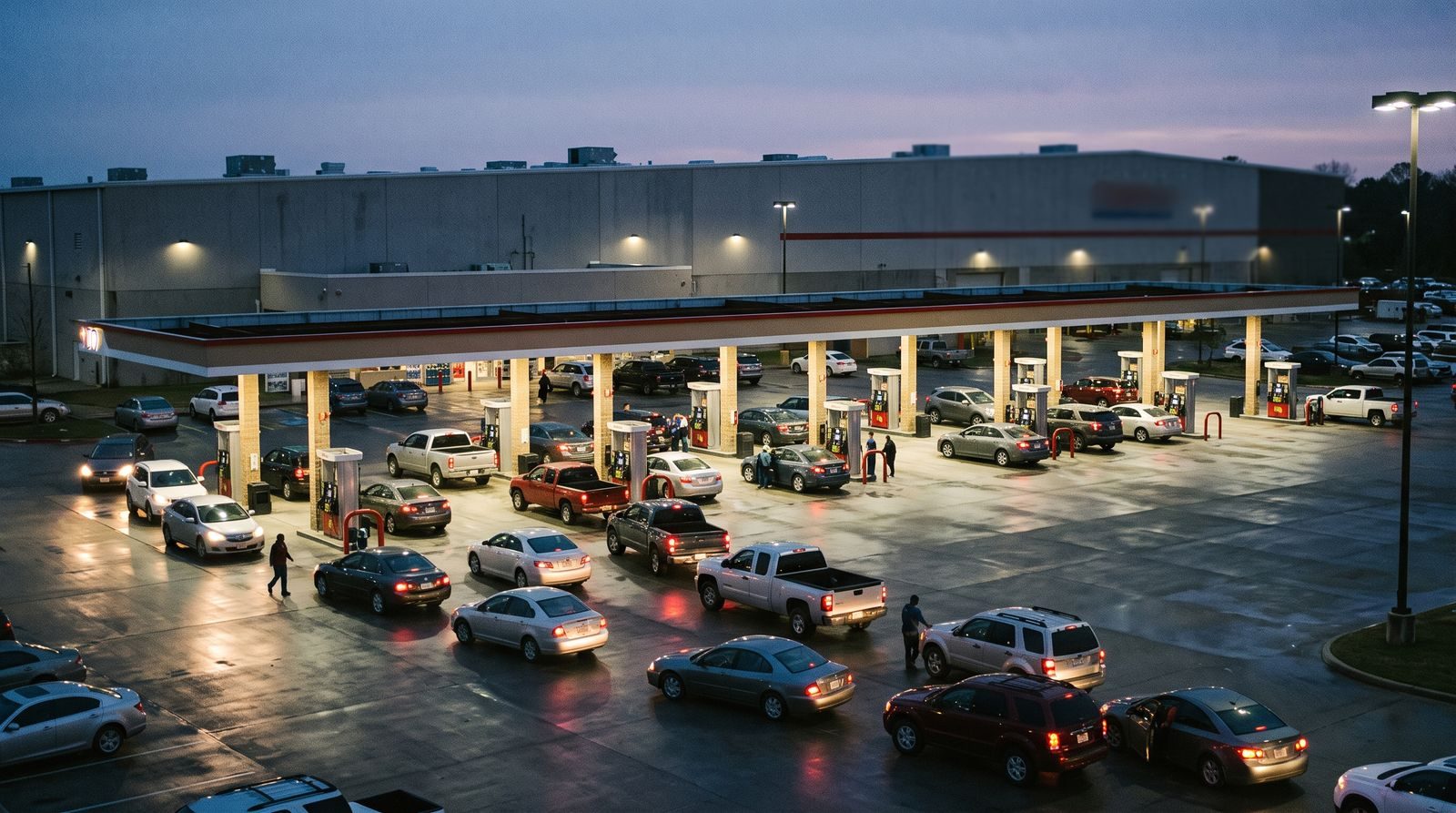
A comp number that nearly quadruples when you add gasoline back in tells you where the traffic came from. BJ’s opened three new clubs and one new gas station during the quarter, and fuel is the most price-transparent product in American retail — the one item a member can comparison-shop from the road at 55 miles an hour.
That makes gasoline a deliberately thin-margin acquisition channel rather than a profit center. It shows up as revenue, it inflates the headline comp, and it converts into the thing that actually pays: a card swipe inside the club. The mechanic is not new. What is notable is how much of this quarter’s optics it carried, and how easily a reader skimming a summary would mistake a pump story for a merchandising story.
The line that actually compounds
Membership fee income rose 9.9% to $135.6 million, up from $123.3 million. Member count hit a record 8.5 million. That fee line is only about 2.2% of total revenue — and it is worth more than the ratio suggests, because it arrives with almost no cost of goods attached. Set it against the quarter’s $173.9 million of net income and the arithmetic is blunt: membership dues alone were equivalent to roughly 78% of profit.
Meanwhile the merchandise gross margin rate, excluding gasoline and membership fee income, slipped about 20 basis points year-over-year. That is the honest counterweight. The goods business is running slightly thinner; the subscription business is running 9.9% hotter and does not renegotiate itself every quarter.
Digitally enabled comparable sales grew 30%, a two-year stacked rate of 64% — the clearest evidence that the club format is not being disintermediated so much as extended.
Our take: Read the ex-gas line first, always. Warehouse clubs are two businesses wearing one income statement — a low-margin volume machine that manufactures foot traffic, and a high-margin annuity that collects on it. The 3.1% is what the merchandise business earned. The $135.6 million is what the model earned. Investors who bought the 11.9% bought the wrong number.
What to watch
- The ex-gas guide. Management is modelling comparable club sales excluding gasoline up 2.0%–3.0% for the year. This quarter printed 3.1%. That is the top of the range, not the middle.
- Fuel prices cutting the other way. A gasoline tailwind is a gasoline headwind on the way back down. Any sustained move in crude flows straight into that headline comp within a quarter.
- Tier mix. The company credited higher-tier membership enrollment for part of the fee growth. Tier upgrades are a one-time step, not a rate — watch whether renewal economics hold once the upgrade cohort laps.
- Capex discipline. Roughly $800 million is earmarked for clubs and distribution this year, against $124.1 million of stock repurchased in the quarter. Both cannot be the priority forever.
The membership warehouse model keeps winning for an unglamorous reason: it charges customers for the privilege of shopping, then treats everything else as a customer-acquisition expense. BJ’s just published a quarter where that logic is visible in two adjacent bullet points. Most readers will only quote one of them.