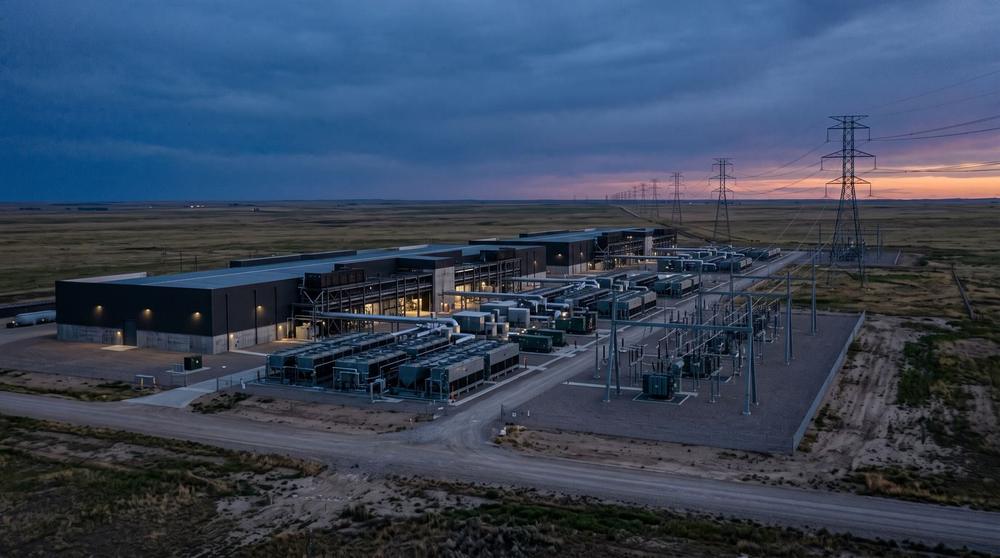
Blue Owl Capital is putting together a real estate investment trust for data centres and intends to take it public, Bloomberg reported this week, citing people familiar with the plan. The vehicle would be seeded with roughly $6.5 billion of Blue Owl’s own data centre assets, then raise money through an IPO and follow-on share sales to buy and build more. Deliberations are ongoing and the structure could still change.
The detail that separates this from everything else queuing up is the seeding. Blackstone’s digital infrastructure trust raised capital first and went shopping afterwards — a blind pool, priced on a mandate. Blue Owl proposes to arrive with the buildings already inside the box.
Which means public investors would, for the first time at this scale, get a daily quote on assets that private credit has been carrying at appraised value.
The mark is the story
AI infrastructure has been financed almost entirely in places where nobody has to print a price every afternoon. Private funds hold it at appraisal. Lenders hold it at par until something breaks. We have written about $219 billion of hyperscaler bond issuance clearing at two-times coverage, and about $9 billion of non-voting equity structured to keep an asset off a public tape. The common feature is that valuation stayed a negotiation between a small number of counterparties.
A listed REIT ends that for whatever goes inside it. Cap rates on data centre leases stop being a modelling assumption and become an observable number that moves against ten-year yields every day the market is open.
Our take: This is the private-capital cycle doing what it always does at the late stage — converting illiquid positions held at model prices into liquid instruments held at market prices, and letting new money take the second half of the trade. That is not a scandal; it is how the plumbing works, and public investors get access to an asset class that has been closed to them. But the incentive is worth naming plainly. The manager seeding the vehicle sets the opening mark on its own inventory, and the IPO is the moment that mark stops being self-assessed. Read the seed portfolio before you read the pitch.
What a public data centre REIT actually owns
The category gets discussed as if it were one thing. It is at least three. There is stabilised, leased space with an investment-grade tenant on a fifteen-year contract, which behaves like a bond. There is powered shell and land banked ahead of demand, which behaves like an option. And there is development in flight, which behaves like a construction loan with equity risk.
Those three deserve wildly different multiples and rarely get them. The disclosure that matters in the eventual filing is the split — how much of $6.5 billion is contracted cash flow, how much is grid interconnection queue position, and what the weighted average lease term looks like against the depreciation schedule on the hardware inside.
Tenant concentration sits underneath all of it. A handful of buyers account for most of the demand, and the private marks in this sector have moved on the strength of single counterparties. Diversification across twenty buildings leased to four customers is not diversification.
What to watch
- The seed portfolio breakdown. Stabilised versus development versus land. This single table decides whether it is a bond proxy or a growth story.
- Weighted average lease term against equipment life. A fifteen-year lease on a building housing five-year silicon is two different assets stapled together.
- Whether the manager takes fees on gross assets. External management is where REIT economics quietly leak.
- Who else files behind it. One roll-up is a firm’s decision. Three is the private market telling you it wants out at these prices.
- Cap rate on day one versus the appraised carry. If the public market clears wide of the private mark, every comparable portfolio in the sector gets re-marked with it.