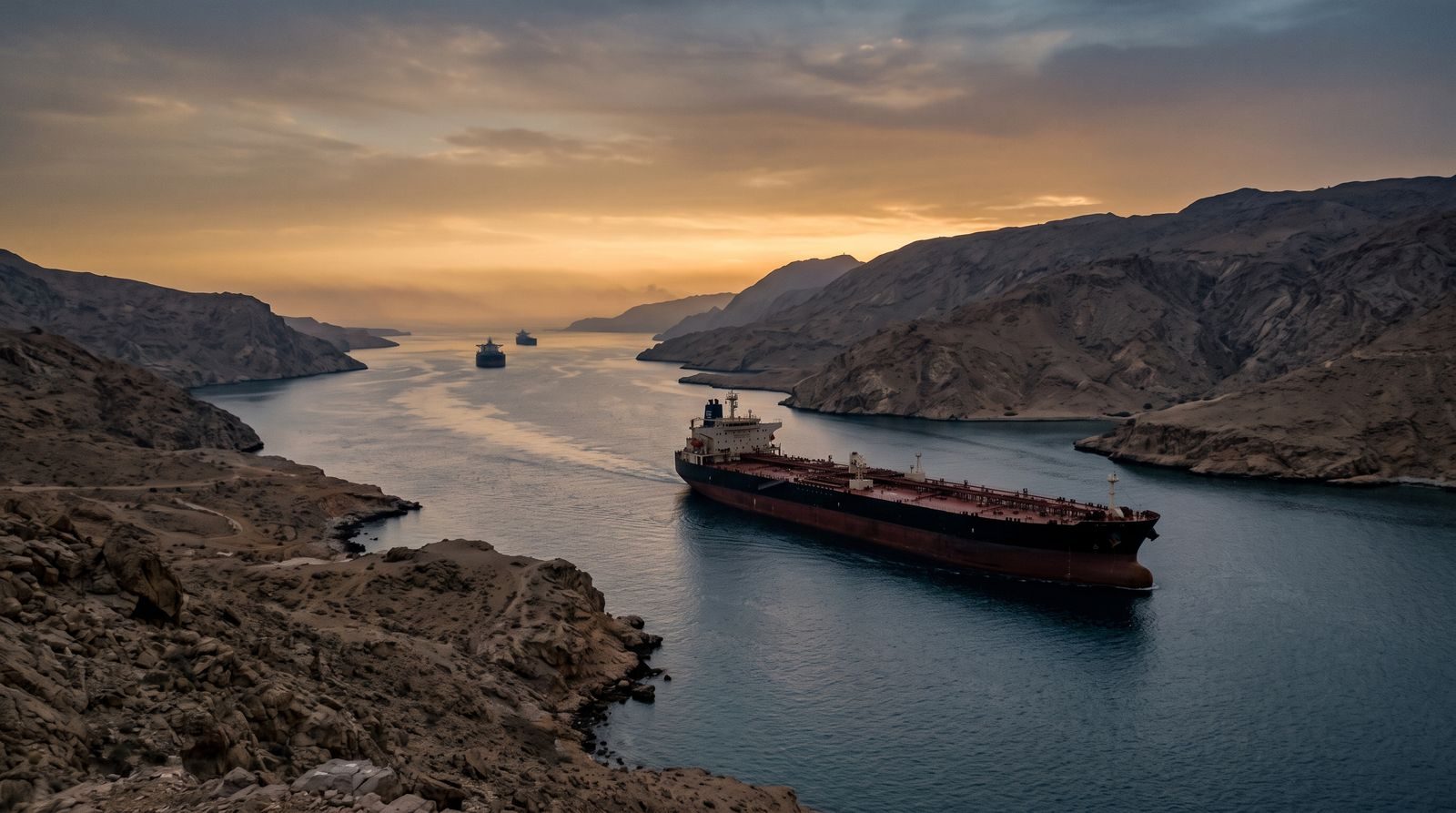
Every oil headline in August pointed the same direction. The price went the other way.
Brent slipped to around $88 a barrel on Friday and US crude to around $83, paring the previous session’s gains. That is the market’s verdict on a month in which the Trump administration rolled out a global sanctions plan focused on Iran, Tehran repeated that the Strait of Hormuz stays shut until its conditions are met, and attacks in the region repeatedly dented hopes of a reopening.
Any one of those items would once have been worth several dollars a barrel. Instead crude touched a one-week low on August 25 — the session after the sanctions plan landed — and has drifted since. Brent was at $91 ten days ago, with the US strategic reserve at its lowest level since 1982. It is lower now, with the reserve no fuller.
The barrels came back
The explanation is arithmetic rather than sentiment. Goldman Sachs estimates Persian Gulf exports have climbed back to roughly 15 to 16 million barrels a day. That is still well below the 22 to 24 million the region moved before the conflict, but it is a long way from March, when flows bottomed near 5 to 6 million. Roughly two-thirds of the missing supply has been restored.
Traders have accordingly re-classified the confrontation. Sanctions are an economic instrument: they redirect cargoes, add freight days and widen discounts, but they rarely destroy barrels — and more than 80% of Iran’s crude goes to a single buyer that has spent years building workarounds. A closed strait destroys barrels. As long as the flow number keeps rising, the market treats each new sanctions headline as a routing problem rather than a supply shock.
Iran and Oman have also agreed a revenue-sharing framework covering the strait, though Tehran has been careful to say the agreement does not imply an immediate reopening. A framework is not a transit. But it is the first structure either side has put around the question, and the market has noticed.
Our take: A war premium is a wasting asset. It gets paid when the market cannot see the barrels and it drains away the moment it can — regardless of whether the underlying politics have improved at all. They have not: the strait is still closed and the sanctions are broader than they were a month ago. What changed is visibility. Worth holding in both directions, though. With two-thirds of the lost supply restored, the remaining premium is thin, which means any genuine interruption would have to be re-priced from a much lower base than the one crude was trading at in the spring.
What to watch
- Whether the Iran–Oman framework produces actual transits. Volumes, not communiqués. The gap between 15–16 million and the pre-conflict 22–24 million is the entire remaining story.
- Whether the sanctions bite. The plan is new. If Gulf export estimates stall or reverse over the next few weeks, the market’s “economic, not physical” read gets tested.
- Freight and insurance rates. They move before the crude price does, and they price risk the flat price is ignoring.
- The macro overlay. Cheaper energy arrives just as Kevin Warsh is calling inflation too high. Falling crude is one of the few disinflationary inputs currently working in the Fed’s favour.