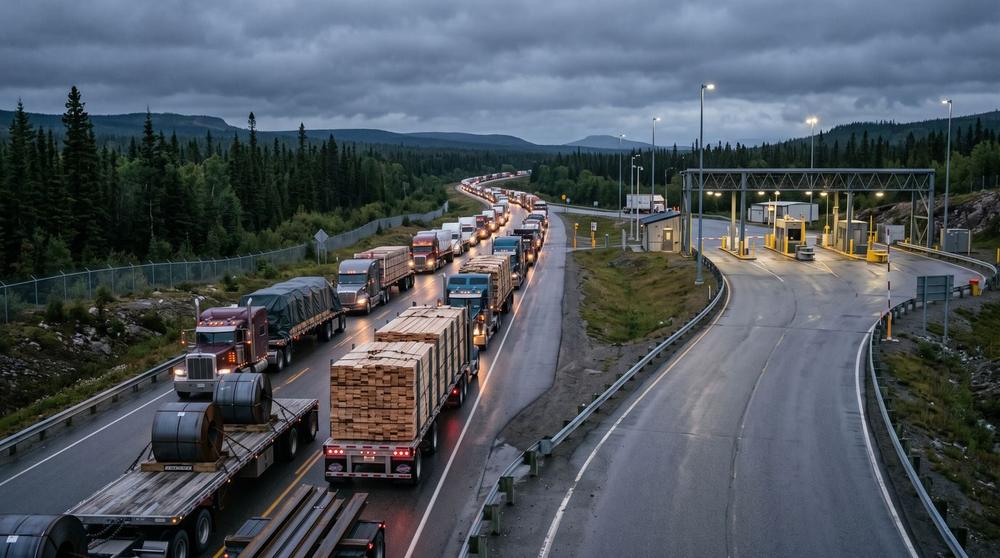
Canada's counter-tariffs took effect on Tuesday, covering C$27.6 billion of United States imports across roughly 900 product lines. The rates are 15%, 25% and 50%. Steel, aluminium and iron products, furniture and clothing sit at the top rate. Dairy, agricultural equipment, appliances, pulp and paper and electronics are on the list.
Ottawa announced the package on 25 August, after trade talks collapsed, and described the design in one phrase: dollar for dollar, rate for rate. Each Canadian rate matches the corresponding US rate on products drawn from Washington's Section 232 and Section 338 actions. Existing Canadian counter-tariffs on steel and aluminium go from 25% to 50% to match. It is the retaliation equivalent of a mirror.
That design choice is more interesting than the tonnage.
Why "rate for rate" is a negotiating position, not a punishment
Most retaliation lists are built for political leverage: pick the goods produced in the districts you want to hurt, and set the rate high enough to be noticed. Canada has done that before — the 2018 lists were famously targeted at swing-state products.
This one is built differently. By matching the American rate on the American product list, Ottawa has made its tariffs a function of Washington's tariffs rather than an independent policy. Every rate has an explicit removal condition attached: the US rate it mirrors. That is a package designed to be unwound in a single meeting, not negotiated line by line over eighteen months.
It also produces the one number worth noting on the announcement. The US action was on $27.6 billion of Canadian goods, effective 22 August. Canada's response is C$27.6 billion — the same figure in a different currency, which is roughly US$20bn. That is why the same package has been reported at both $20 billion and $27.6 billion in the past fortnight. The nominal match is exact; the economic match is about a quarter smaller. Ottawa gets to say “dollar for dollar” while leaving itself a discount.
Our take: Read the currency, not the headline. A mirrored package sized in the retaliating country's own currency is a deliberate piece of diplomatic engineering — it satisfies the domestic politics of proportional response while pulling the actual burden down by the FX differential. If you sell into Canada, though, the arithmetic that hits you is the 15/25/50 rate on your specific HS code, and that number is not discounted at all.
Who actually eats this
Three groups, in descending order of pain.
US exporters of finished goods at the 50% band. Furniture, clothing, steel and aluminium products. A 50% tariff is not a margin problem, it is a market-exit problem. Canadian buyers will substitute domestically or from Mexico and Asia rather than absorb it, and once a supply relationship breaks it does not automatically snap back when the tariff lifts.
Canadian manufacturers buying US inputs. Agricultural equipment and appliances at 15–25% flow through to Canadian producers and consumers, not American ones. This is the structural weakness in all mirrored retaliation: a country with a tenth of its neighbour's market retaliating proportionally imposes proportionally more damage on itself.
Anyone with a cross-border bill of materials. The auto and machinery complexes move components across the line multiple times. A tariff applied at each crossing compounds against a value-add that was counted once.
Ottawa is buffering: a C$7.5 billion support package for affected businesses and workers, on top of C$25 billion committed since the US tariff programme began in April 2025. That is over C$32 billion of fiscal support against a C$27.6 billion tariff line — a government spending more to cushion the retaliation than the retaliation collects.
What to watch
- Substitution speed in the 50% categories. If Canadian importers re-source within a quarter, the leverage evaporates regardless of what happens at the negotiating table.
- Whether the mirror holds. The moment Ottawa adds a product Washington did not tariff, the “rate for rate” framing — and its easy off-ramp — is gone.
- Guidance revisions. Consumer and industrial names with meaningful Canadian revenue have a fresh input cost as of today. Expect this in Q3 calls before it shows in Q3 numbers.
- The support package's burn rate. C$7.5bn is a number that gets tested quickly if the 50% bands bite as designed.
The mirror is a signal that Ottawa wants this over. Mirrors are also brittle: they only work while both sides agree on what is being reflected.