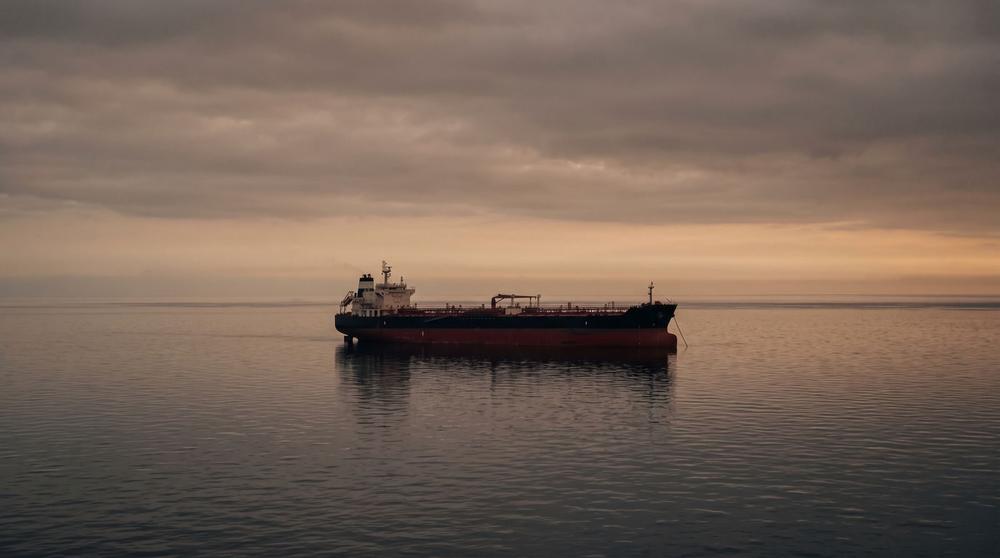
War-risk insurance for a tanker transiting the Strait of Hormuz now runs 7.5% to 10% of the vessel’s hull value. Before the crisis it ran 1% to 3%. On a 270,000-deadweight-tonne crude carrier valued around $210 million, that is roughly $21 million of premium — for one transit, on one voyage, before a barrel is sold.
Insurance is the quietest indicator in shipping and usually the most honest one. Underwriters have no incentive to be dramatic and every incentive to price the actual probability of a total loss. Six P&I clubs have withdrawn cover in the region. Those still writing it are adding higher deductibles and new exclusions — cyber acts, pre-existing damage, specific weapon types. When cover narrows at the same time as it reprices roughly fortyfold, that is not a market charging more for the same risk. It is a market declining to hold part of it at any price.
The traffic numbers are volatile, and that is the point
Transit counts have swung violently. USNI News counted 114 transits in the week to August 24 — around 16 a day, against a pre-crisis norm near 85. Other tallies put a single day, August 30, at six. Both can be true; that is the shape of a corridor operating on ceasefires and their breakdowns rather than on a schedule.
The sequence matters for anyone modelling this. Iran closed the strait to normal commercial traffic on February 28. A ceasefire in early April and a memorandum of understanding in mid-June partially reopened it. That arrangement broke down in early July after attacks on commercial vessels. The strait normally carries around 20% of the world’s seaborne oil and a comparable share of global LNG. Brent traded near $97.50 on Monday, up about 1.7%.
Our take: Most businesses are modelling this as an oil-price problem. It is a schedule-variance problem that shows up as an oil-price problem. A corridor where weekly throughput moves between six and eighty-five vessels a day does not just make energy expensive — it makes arrival dates unforecastable, which is far more corrosive to a manufacturing plan than a known higher price. You can hedge a barrel. You cannot hedge a ship arriving three weeks late, and the insurance market is telling you the variance is structural, not transient.
Where the cost actually lands
Premiums of this size do not stay with the shipowner. They pass into charter rates, then into landed cost, and they land unevenly. Long-term contracted buyers with committed tonnage absorb a modest increase. Spot buyers — typically smaller firms, and typically the ones with the thinnest margins to absorb it — pay something close to the full number. The gap between those two positions is currently wider than most procurement models assume.
The second-order effect is routing. Cargo that avoids the strait entirely takes longer voyages, which absorbs vessel capacity globally and tightens freight on routes with no connection to the Gulf at all. That is why a chokepoint event shows up in freight costs for companies who have never shipped anything through the Middle East.
What to watch
- Whether more P&I clubs exit. Six is already a meaningful share of the market. Each additional withdrawal concentrates risk into fewer underwriters and makes pricing gappier.
- The spread between contracted and spot landed cost. This is where the pain distribution shows up in earnings, roughly one to two quarters after it shows up in premiums.
- Government backstops. When private war-risk capacity withdraws, states tend to become insurers of last resort. Watch for sovereign guarantee schemes — they are the clearest signal that the private market has given up on the corridor.
- Freight rates on unrelated routes. If tonnage tightens on Pacific or Atlantic lanes, the rerouting effect has become global and the cost is no longer regional.