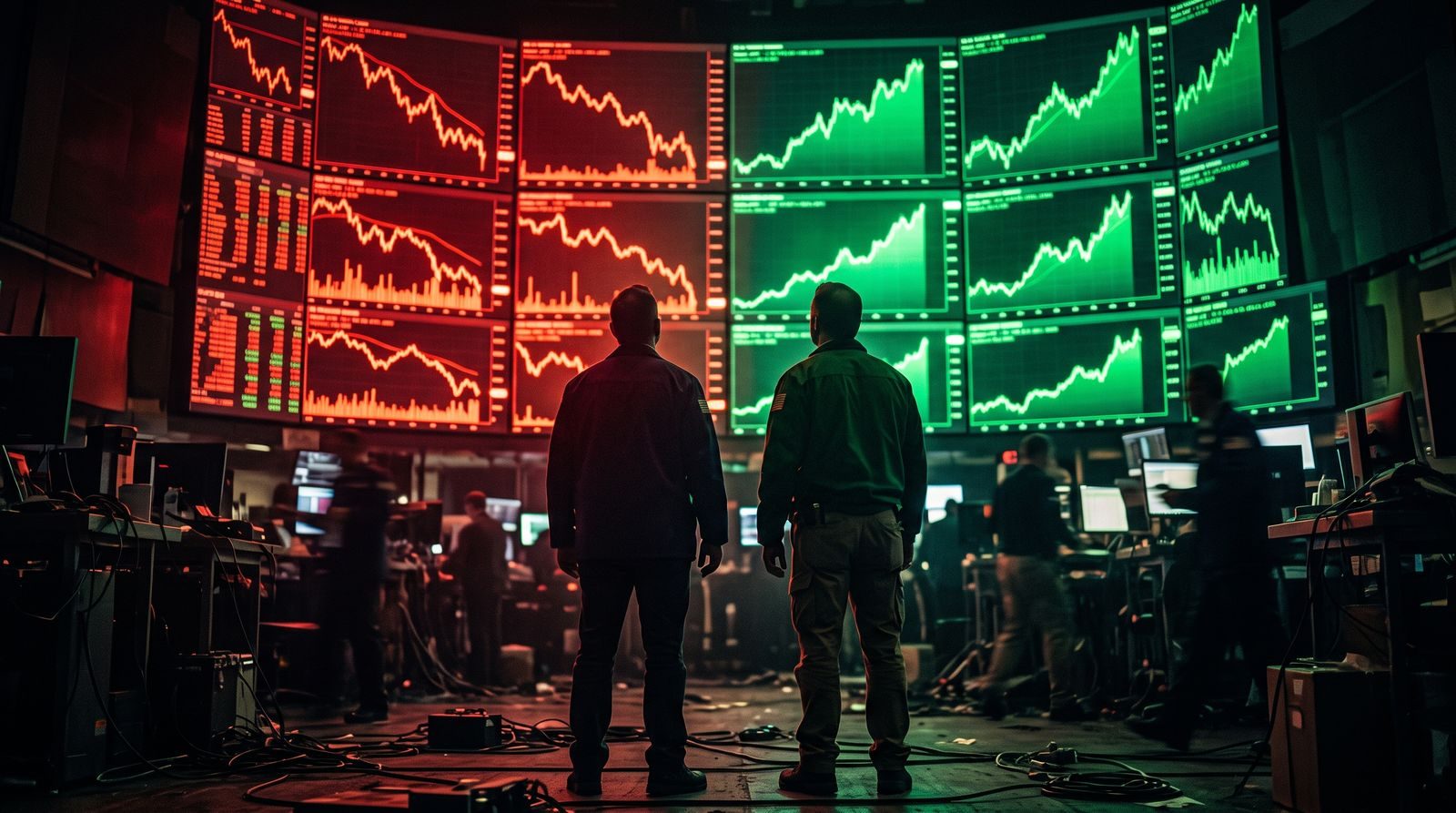
Monday gave you two markets in one close. The Dow industrials added 140 points to 53,417 — up 0.3% — while the S&P 500 slipped 0.3% to 7,653 and the Nasdaq dropped 0.8% to 25,980. Same session, opposite verdicts. The difference was one decision: own chips, or own almost anything else.
The selling was surgical. Micron shed 5.8%. AMD lost more than 3%. Broadcom gave up about 2%. Nvidia fell roughly 2% to around $210 — its seventh straight decline, the longest losing streak since September 2022, landing exactly two days before the company reports earnings. The Philadelphia semiconductor index hit a three-week low. And the money didn’t leave the building: financials gained more than 1%, with JPMorgan up about 1.5% and Visa about 2.6% — the entire reason the Dow stayed green.
The reason is the calendar. Wednesday after the close, Nvidia reports the quarter that decides whether the AI trade’s August wobble was a pause or a repricing — a print that reaches far beyond chip investors, because Nvidia is now 7.5% of the biggest S&P 500 fund. The same morning brings PCE, the Fed’s preferred inflation gauge. Friday, new Fed chair Kevin Warsh delivers his first Jackson Hole speech with the 30-year Treasury yield still above 5%, days after touching a 19-year high, and a CNBC report Monday that the Treasury could tap its roughly $1 trillion general account to fund bond buybacks. Traders now price one quarter-point rate hike by year-end, per LSEG. Nobody wants to be overweight the most crowded trade on Earth 48 hours before all of that.
Geopolitics stacked on top. Treasury Secretary Scott Bessent promised what he called an “economic D-Day” against Iran in a weekend Financial Times op-ed, with sanctions aimed at Tehran’s oil buyers detailed Monday afternoon. And US–Canada trade talks collapsed outright over the weekend: tariffs on Canadian cars, trucks and parts jump to 50% on January 1, and Ottawa’s like-for-like answer is already dated September 8. Ford fell 3.9%, GM lost 1.9%, and trucker J.B. Hunt slid 5.4%.
Our take: This was rotation, not retreat — money ran from semiconductors to banks, not to cash, which says investors fear a chip-specific repricing rather than a market-wide one. The sharper read: a single company’s guidance now trades like macro data, ranked alongside PCE and a Fed chair’s debut. If your “diversified” index fund swings on what Nvidia says Wednesday night, you are not diversified — you are long Nvidia with extra steps. Worth knowing before Wednesday, not after.
What to watch
- Wednesday, after the close: Nvidia’s Q2 report. Guidance, not the beat, moves the tape — the stock has fallen seven sessions straight into the print.
- Wednesday morning: PCE inflation. A hot number followed by a hawkish Warsh on Friday is the bear case for both legs of this market.
- Friday: Warsh at Jackson Hole — the first read on how the Fed judges the Treasury’s bond-market rescue, which lasted exactly one session last week.
- The sanctions fine print: whether Washington names China’s buyers of Iranian crude — that detail decides if this stays a headline or becomes an oil-market event.
- September 8: Canada’s retaliation list goes live unless talks restart.