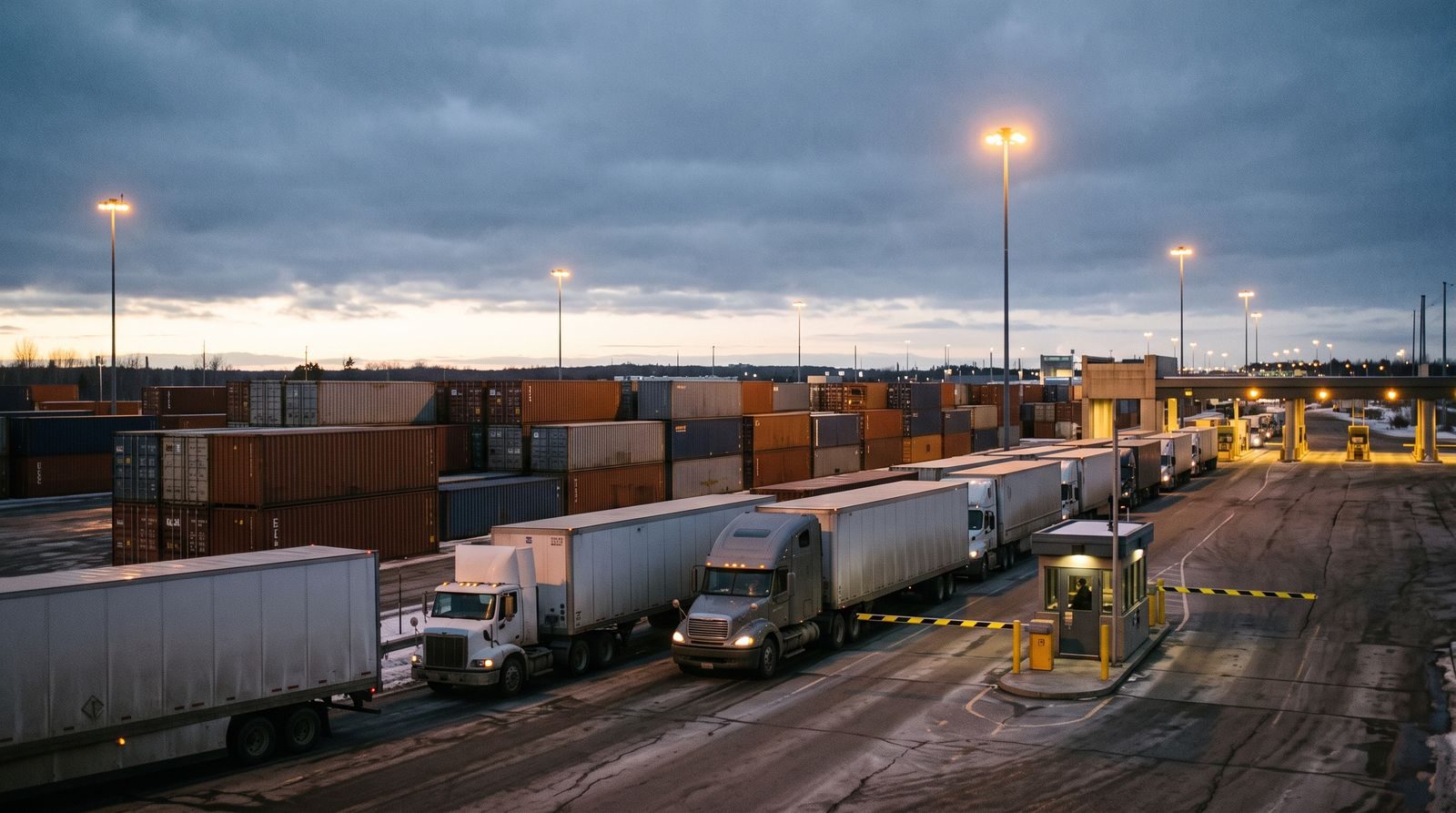
The deadline held this time. At midnight Eastern on Friday, the United States began collecting 50% duties on roughly $20 billion of Canadian goods — dairy, alcoholic beverages, cement, hockey equipment among them — after three days of marathon talks failed to produce a deal. Customs and Border Protection had already sent importers a bulletin warning that officers would enforce the new rates the moment the clock rolled over.
Hours later, Mark Carney stood in Ottawa and put a date on the response: September 8. Canada will match the duties “dollar for dollar,” targeting American steel, dairy, appliances, agricultural equipment, pulp and paper, and electronics. He called Trump’s move “a miscalculation.” Asked why he sounded like a man going to war, he said: “You’re at war when you get attacked. We got attacked.”
Strip out the theatre and there is a number that matters more than any of the rhetoric. Sixteen days. That is the gap between today and the Tuesday after Labour Day, when Canadian duties start landing on American goods. US importers of Canadian product are already paying. US exporters to Canada are not — yet.
Our take: Retaliation with a lead time is not a threat, it is a scheduling problem. Carney announced the sectors before he published the tariff lines, which means the next few days are the only window a US exporter gets to look at its Canadian order book, pull forward what can ship, and reprice what cannot. Companies that treat September 8 as a news event rather than a logistics deadline will discover the difference on their October invoices.
What actually broke
Both sides agree the deal was close and disagree about who moved. Carney says the US “asked too much and offered too little,” citing eleventh-hour demands on car imports and, more pointedly, language that would have limited Canada’s ability to sign trade agreements with anyone else. “They had language that wanted to restrict that. Unacceptable.”
US Trade Representative Jamieson Greer says Canada “declined to finalize the trade deal under the terms agreed earlier this week,” and that Washington had offered tariff reductions on steel, aluminium, autos and lumber, plus formal USMCA renegotiation talks. On Saturday Greer added that no further talks are scheduled and that the US would be “moving forward with measures” in response to Canadian retaliation.
That last clause is the one to underline. A dollar-for-dollar response that triggers a counter-response is not a ceiling on this. It is a ratchet.
Who is exposed
The US list is oddly narrow — $20 billion is a rounding error against roughly $700 billion in annual two-way goods trade — but it is concentrated. Cement importers and beverage distributors carry the load on this side; Canada’s list hits US machinery, appliance and paper exporters on the other.
The businesses most likely to be caught out are the ones that assumed a pause would follow a pause. The Wednesday deadline slipped to Friday. Friday did not slip.
What to watch
- The published tariff lines. Carney said details would come “in the coming days.” Sector names are not HS codes. Until Ottawa publishes the schedule, no US exporter can price its exposure precisely.
- Greer’s “measures.” Whether Washington answers the September 8 tariffs, and on what, decides if this is a two-round fight or a longer one.
- Whether talks restart before Labour Day. Carney suspended negotiations and recalled his team to Ottawa. Sixteen days is also enough time to un-suspend them.
- Q3 guidance language. Companies with material Canadian revenue will have to say something about this within weeks.
The deals in this trade war have mostly been made at the deadline, not before it. The new deadline is September 8. Everything between now and then is preparation, not prediction.