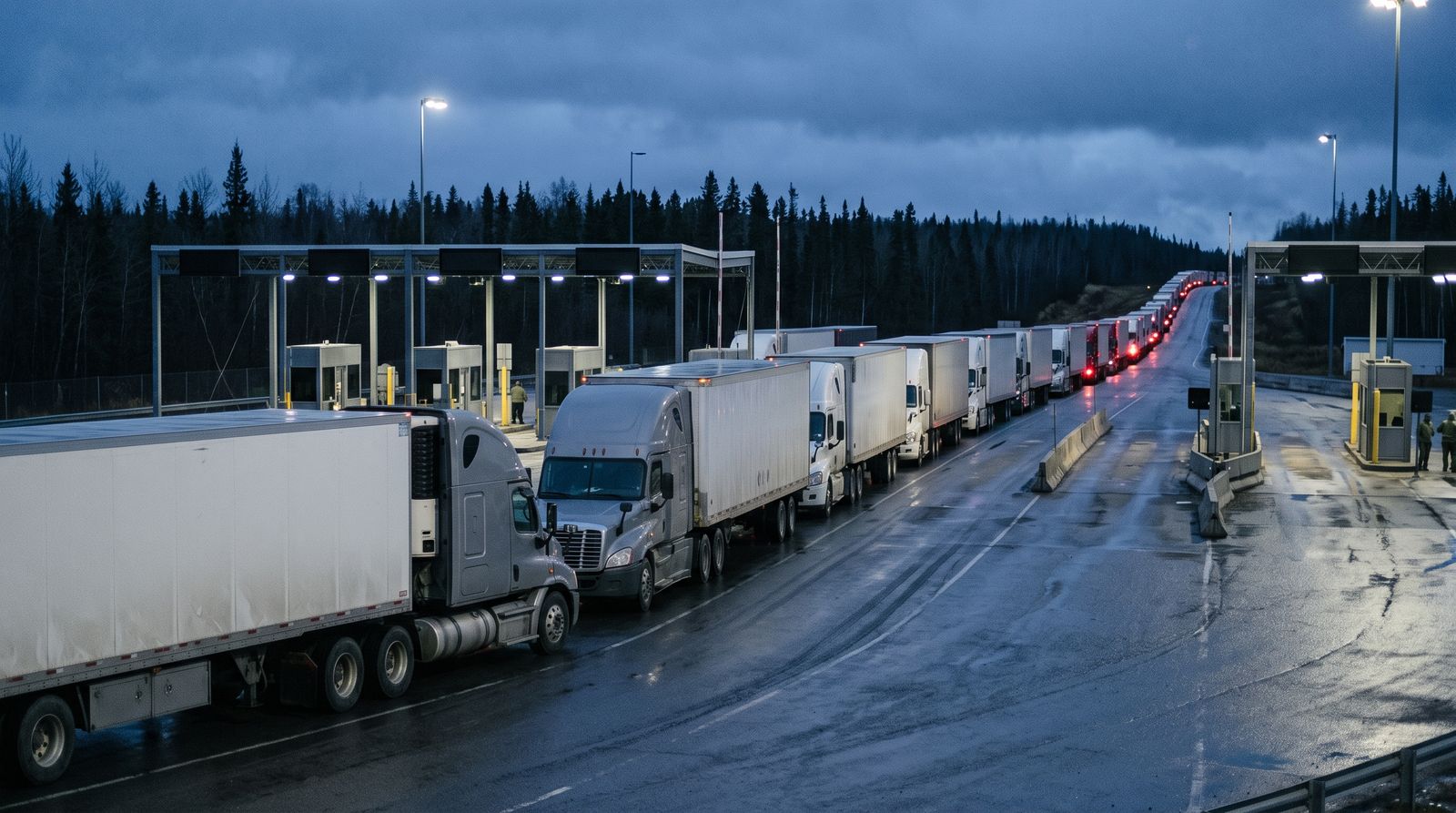
Three proclamations signed on 20 July put an additional 50% ad valorem duty on a defined basket of Canadian-origin goods. The legal hook is Section 338 of the Tariff Act of 1930 — 19 U.S.C. § 1338, a Smoot-Hawley-era provision that lets the president act against a country deemed to discriminate against U.S. commerce. It has been on the books for 96 years. It had never once been used to impose a duty.
The duties attach to goods entered for consumption, or withdrawn from warehouse for consumption, on or after 12:01 a.m. Eastern on 19 August. USTR puts the exposure at roughly $20 billion, about 5.2% of the $382 billion in goods the United States imported from Canada in 2025, spread across something on the order of 554 tariff subheadings. The proclamations name three categories — motor vehicles, alcoholic beverages and dairy. Energy, potash, critical minerals and fish are carved out.
Two features separate this from every tariff action of the last three years. First, Section 338 requires no predicate: no USTR investigation the way Section 301 does, no Commerce national-security finding the way Section 232 does, no hearing, no comment docket. A proclamation is the whole process. Second — and this is the line importers keep re-reading — USMCA origin does not exempt covered goods. On nearly every prior Canada action, a valid certificate of origin was the escape hatch. Here it does nothing.
Our take: The number that matters isn’t 50 or $20 billion. It’s zero — the number of times this statute produced a duty in 96 years. It got dusted off because the other doors narrowed: with IEEPA tariff authority struck down, Section 338 is the fastest unilateral instrument left, and it’s fast precisely because it demands no investigation. Holland & Knight read the rate as a “50 percent opening bid” against the USMCA table, and that framing fits the facts better than a revenue theory does. Which means the date to watch isn’t 19 August. It’s the ten days before it.
The clock is the weapon
Trade counsel broadly expect a challenge at the Court of International Trade, and the questions are real: whether Section 301 effectively superseded 338, and whether the ITC must investigate before the authority can be used at all. No modern judicial precedent marks where Section 338’s limits sit. That is exactly the importer’s problem. Estimates of time to a final ruling run past a year; the duty attaches in 17 days. Even the importer who eventually wins pays first and argues later.
The annex also reaches well past the three headline categories. Trade advisories reviewing the subheading lists have flagged wine, cement, plywood, furniture, fishing rods, seeds, clothing, hockey sticks and swimming pools. If you assumed you were clear because you don’t ship cars, cheese or whisky, read the annex this week, not the press release.
Ottawa is holding fire on purpose. Prime Minister Mark Carney has said there is “a full range of things that we can do” if the tariffs land, while calling immediate retaliation “counterproductive” with talks live. He has reason to be careful: subsection (b) of the same statute authorizes escalation from duties to an outright ban on imports if the discrimination is found to persist. Nobody has tested that either.
What to watch
- CBP implementing guidance. The CSMS message had not landed as of this weekend, which leaves the proclamation annexes as the operative subheading lists. Classification fights start the moment guidance fills the gaps.
- 12:01 a.m. ET, 19 August. The trigger is the entry timestamp, not the order date. Pulling entries forward is the only lever most importers still have.
- The first CIT filing. Who brings it, and whether they seek to enjoin collection rather than sue for refunds, tells you how the bar rates its own odds.
- Whether the rate moves. A carve-out, a delay or a narrowed annex before the 19th would confirm the opening-bid reading. Silence would mean the other one.
A law can sit unused for 96 years and still be law. That was always the risk in a tariff code full of dormant authorities — not that someone would write a new one, but that someone would finally read the old ones.