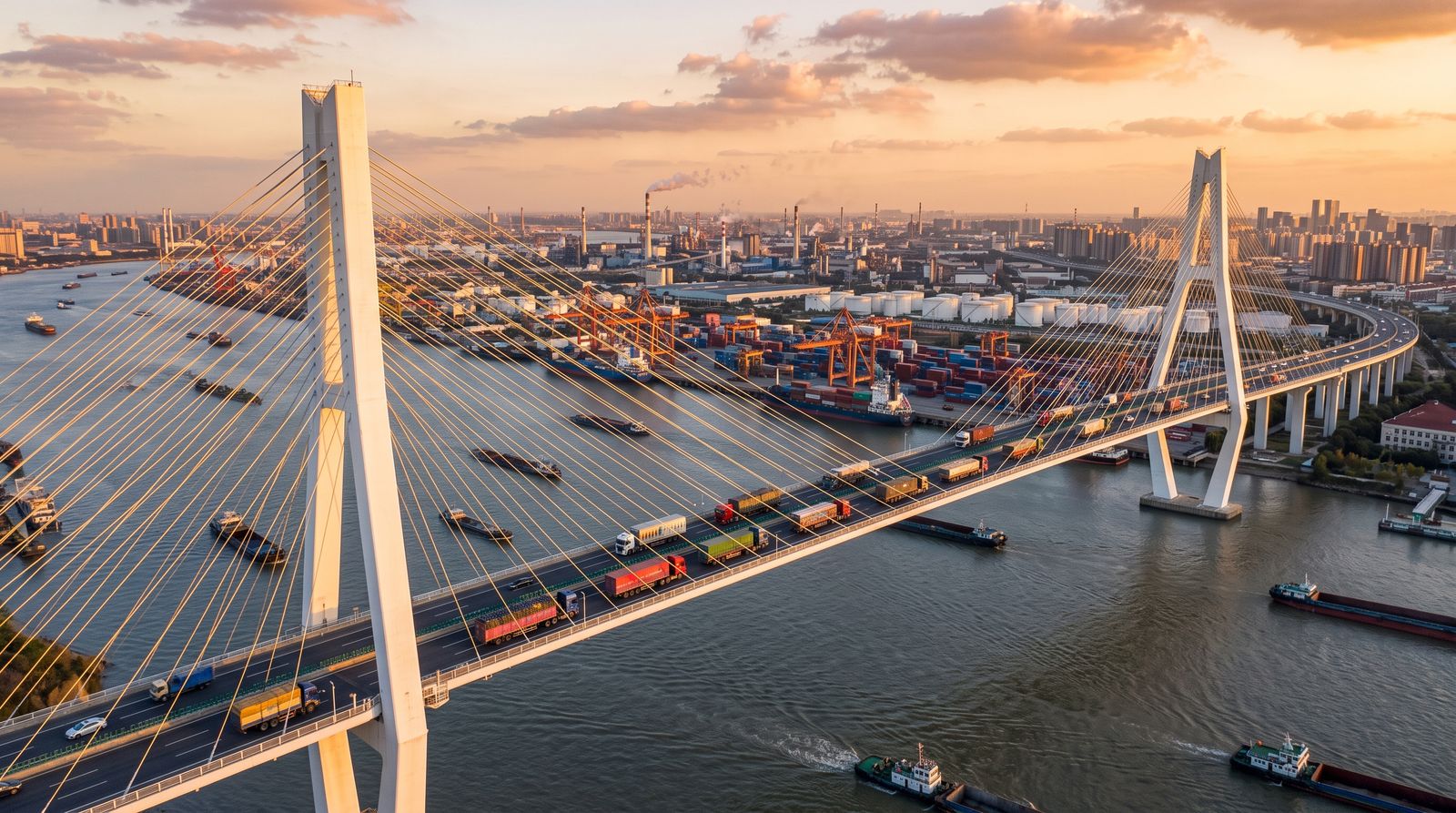
After months of brinkmanship, the United States and Canada have struck a deal to open the Gordie Howe International Bridge, and Ottawa has confirmed the cable-stayed span linking Windsor, Ontario to Detroit will carry its first traffic on July 27. The crossing was originally slated to open in June, but the launch stalled in February when President Trump raised objections over the bridge’s finances and threatened to hold it up. The fix is a revenue-sharing arrangement — and Canada, which fronted the entire cost of the bridge, including the American-side plaza and interchange, agreed to give up a lot to get the gates open.
Under the agreement, Canada keeps 50% of the bridge’s net toll profits — the take after operating costs — for the first 15 years of operation. The other half is earmarked for a U.S. regional economic development fund tied to the Detroit–Windsor area. Washington also gets a say over pricing: if Canada wants to raise tolls by more than 10%, or move them out of line with comparable crossings, the U.S. has to agree. For an asset one country paid for outright, that is a striking amount of control handed across the border.
The prize is the corridor itself. Detroit–Windsor is the busiest commercial land crossing between the two countries — by widely cited estimates, roughly US$300 million in goods move across it every day, a large share of it auto parts feeding the tightly integrated North American car industry. Until now, nearly all of that truck traffic has funneled over the privately owned Ambassador Bridge, which opened in 1929. The Windsor-Detroit Bridge Authority expects the new publicly owned span to absorb about half of commercial truck volume within its first year — finally giving the continent’s most important trade artery a modern backup.
Our take: The bridge is the headline; the terms are the story. Canada spent the better part of a decade and roughly C$6.4 billion building infrastructure it owns outright — then agreed to surrender half the profits and a veto over its own pricing to get its neighbor to let it open. That is the new math of cross-border projects: paying for something is no longer the same as controlling it, and a neighbor’s sign-off can be extracted at the very finish line, when the sunk cost is total and the leverage runs one way. Any government or company planning infrastructure that touches a border should now price in that final, non-engineering risk. Pouring the concrete was the easy part.
What to watch
- July 27: first traffic. The real test is how quickly trucks actually shift off the Ambassador Bridge — the authority’s 50% first-year projection is the number to check against.
- Toll schedule: the opening prices, and whether the 10% cap and the U.S. pricing veto ever bind in practice.
- The fund: where the U.S. half of the profits actually flows, and who decides how it’s spent.
- The template: whether this revenue-share model resurfaces in the next cross-border pipeline, power line, or rail fight.
It lands in a year already defined by enormous sums pouring into North American capacity — from chipmakers reshoring production in deals like Apple and Broadcom’s $30 billion U.S. chip pact and Micron’s $250 billion memory buildout, to a record run of megadeals reshaping who owns what. The Gordie Howe bridge is a reminder that the physical plumbing of that trade still runs through a handful of choke points — and that widening one now comes with political strings attached.