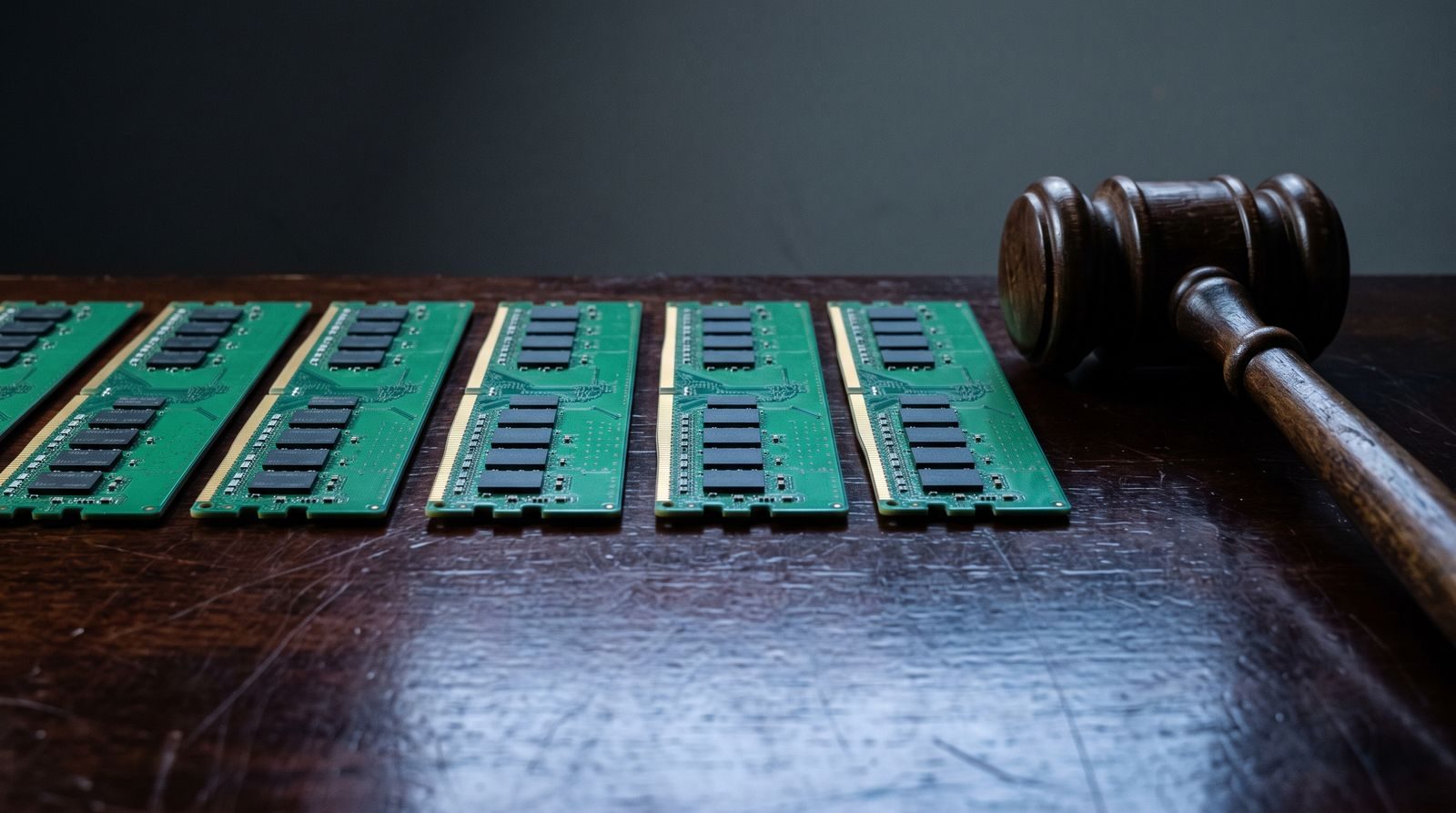
ChangXin Memory Technologies, China’s largest maker of DRAM, sued the US Defense Department on Friday to get itself removed from the Pentagon’s list of companies it says support Beijing’s military. CXMT’s claim is narrow: it says it designs, produces and sells memory for civilian and commercial use — smartphones, PCs, servers and AI systems — and has no military affiliation.
The more damaging part of the filing is procedural. CXMT says the Pentagon published a notice in February 2026 stating the company would come off the list, then withdrew that notice the same day, and relisted it in June without adequately explaining the reversal. That is an administrative-law argument about the quality of the government’s reasoning, not a geopolitical one about China. It is also the argument that has been working.
The suit names Defense Secretary Pete Hegseth, Deputy Secretary Steve Feinberg and Assistant Secretary for Industrial Base Policy Michael Cadenazzi. CXMT joins a lengthening queue: Alibaba filed a similar challenge, and rulings involving lidar maker Hesai, drone manufacturer DJI and biotech firm WuXi AppTec have shown judges willing to scrutinise the Pentagon’s evidence and grant interim relief.
What the designation actually does
It is worth being precise, because the label sounds broader than its legal effect. Appearing on the Pentagon’s Chinese military companies list does not ban CXMT from selling memory to anyone. It restricts Defense Department contracting and, far more consequentially, functions as a reputational flag — the kind that makes Western customers ask their lawyers a question before signing, and makes financiers price in a risk they would rather not underwrite.
In an ordinary memory cycle, that is a nuisance. This is not an ordinary memory cycle.
Why memory is the pressure point
DRAM has become one of the genuine bottlenecks in the AI build-out. Every accelerator rack needs more of it, high-bandwidth memory has pulled capacity away from ordinary modules, and the squeeze has already worked its way down to the price of phones and laptops. The supply side is concentrated in a handful of names, and CXMT is the one sitting outside the Korean-and-Micron triangle with the most capacity and the fewest customers willing to say so publicly.
Our take: A CXMT win would not add a single wafer of capacity, and anyone expecting memory prices to break on a court docket is reading the wrong scoreboard. What it would change is who feels comfortable buying the wafers that already exist. The designation is friction, not a wall — and in a market where the constraint is availability rather than production, removing friction on the fourth-largest supplier is a bigger deal than its market share suggests. The tell to watch is not the ruling itself but whether the Pentagon can explain the June relisting. On the evidence of Hesai and DJI, that is exactly where these cases turn.
What to watch
- Interim relief. Earlier cases turned on judges granting it early. If CXMT gets it, the designation loses most of its practical bite long before a final ruling.
- The February notice. The Pentagon has to account for publishing a delisting and pulling it within hours. That single document is the strongest thing in CXMT’s filing.
- Customer behaviour, not headlines. Watch whether hyperscalers and handset makers change sourcing language in supply agreements — that moves before any price does.
- The next list update. The Pentagon can moot the case by delisting voluntarily, as it has done with other names under litigation pressure.
Export controls were meant to cap this company. Shanghai’s market has already declined to agree. Now a US court gets a turn.