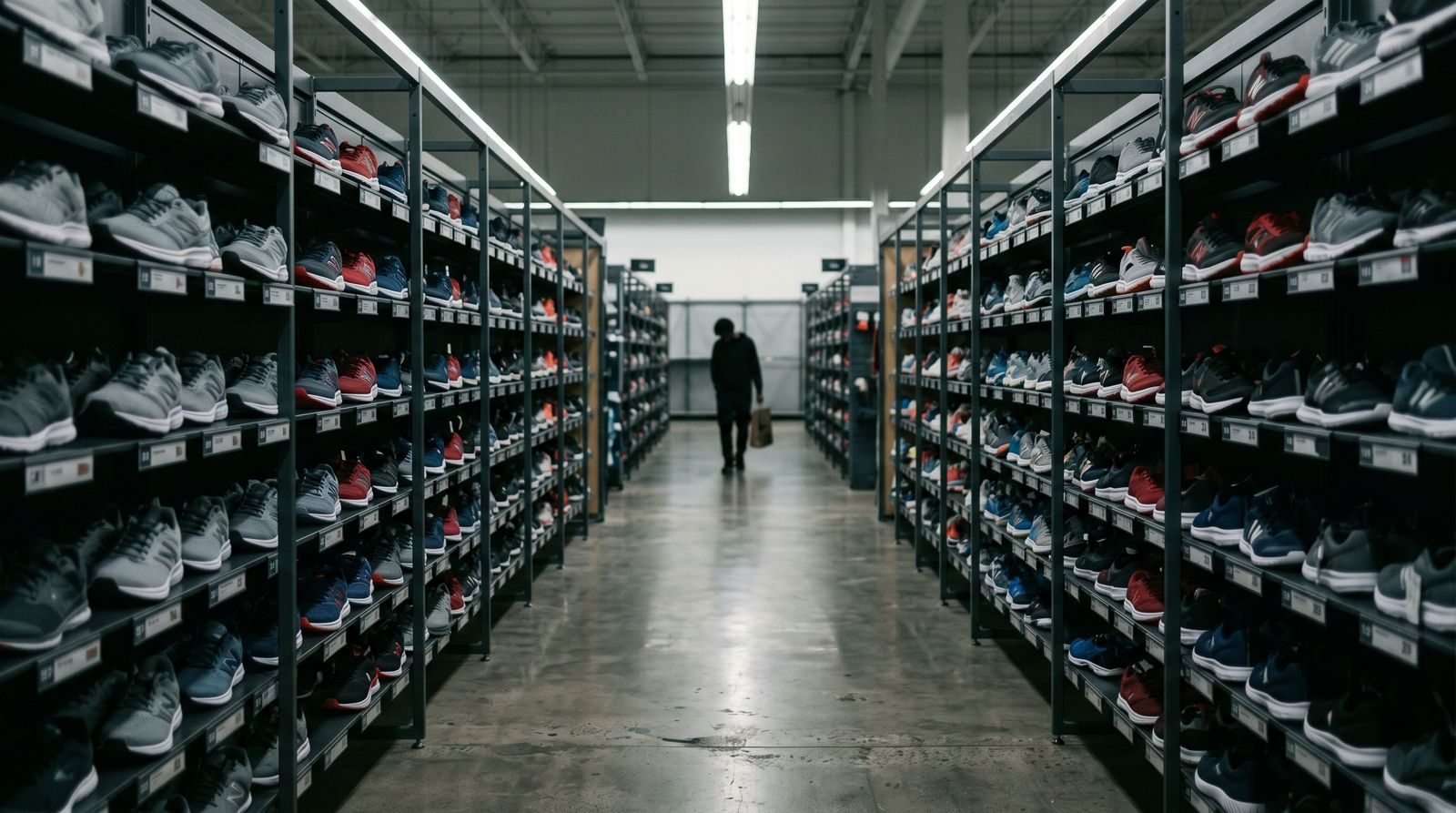
DICK’S Sporting Goods opened retail earnings week with a thud. Second-quarter adjusted earnings of $3.53 a share came in under the $3.78 analysts expected, revenue of $5.59 billion missed a $5.65 billion forecast, and management cut its full-year outlook, citing “challenging conditions.” Shares fell nearly 20% in premarket trading — from Monday’s $179 close toward $144 — before the opening bell.
The headline numbers hide a split business. Consolidated sales jumped 53.2%, but $1.74 billion of that was Foot Locker, consolidated for its first full quarter. Strip the deal out and the core DICK’S chain grew comparable sales 4.9% — genuine share-taking in a soft market, helped by a summer of World Cup demand. Foot Locker went the other way: pro forma comps fell 3.6% as the athletic-footwear market stayed in its slump. DICK’S bought a turnaround, and this quarter the turnaround outweighed the machine that was supposed to fix it.
That makes today less a sporting-goods story than a consumer one. The best operator in the category can still grow its own boxes; the mall-based sneaker chain it absorbed cannot — and the guidance cut says the drag lasts through the holidays. It’s the same bifurcation showing up across retail, from Walmart’s quiet white-collar restructuring to Shein pricing its IPO at a quarter of its former valuation: winners are consolidating weaker rivals, then discovering the weakness comes attached.
Our take: A 20% one-day repricing isn’t about one quarter’s EPS — it’s the market moving DICK’S from one bucket to another. For years it traded as the cleanest execution story in retail. Now its earnings depend on variables it doesn’t control: mall traffic, the sneaker cycle, and a footwear market that keeps undershooting. The 4.9% core comp proves the operating machine still works. The guidance cut proves the machine now has a passenger.
What to watch
- The Foot Locker comp line. A second straight negative pro forma quarter would turn “integration year” talk into “impairment risk” talk.
- Holiday assumptions. How much of the cut is footwear-market weakness versus tariff-era cost pressure working through retail supply chains.
- The World Cup hangover. Core comps got a one-time summer boost from tournament demand — the third quarter shows what organic growth looks like without it.