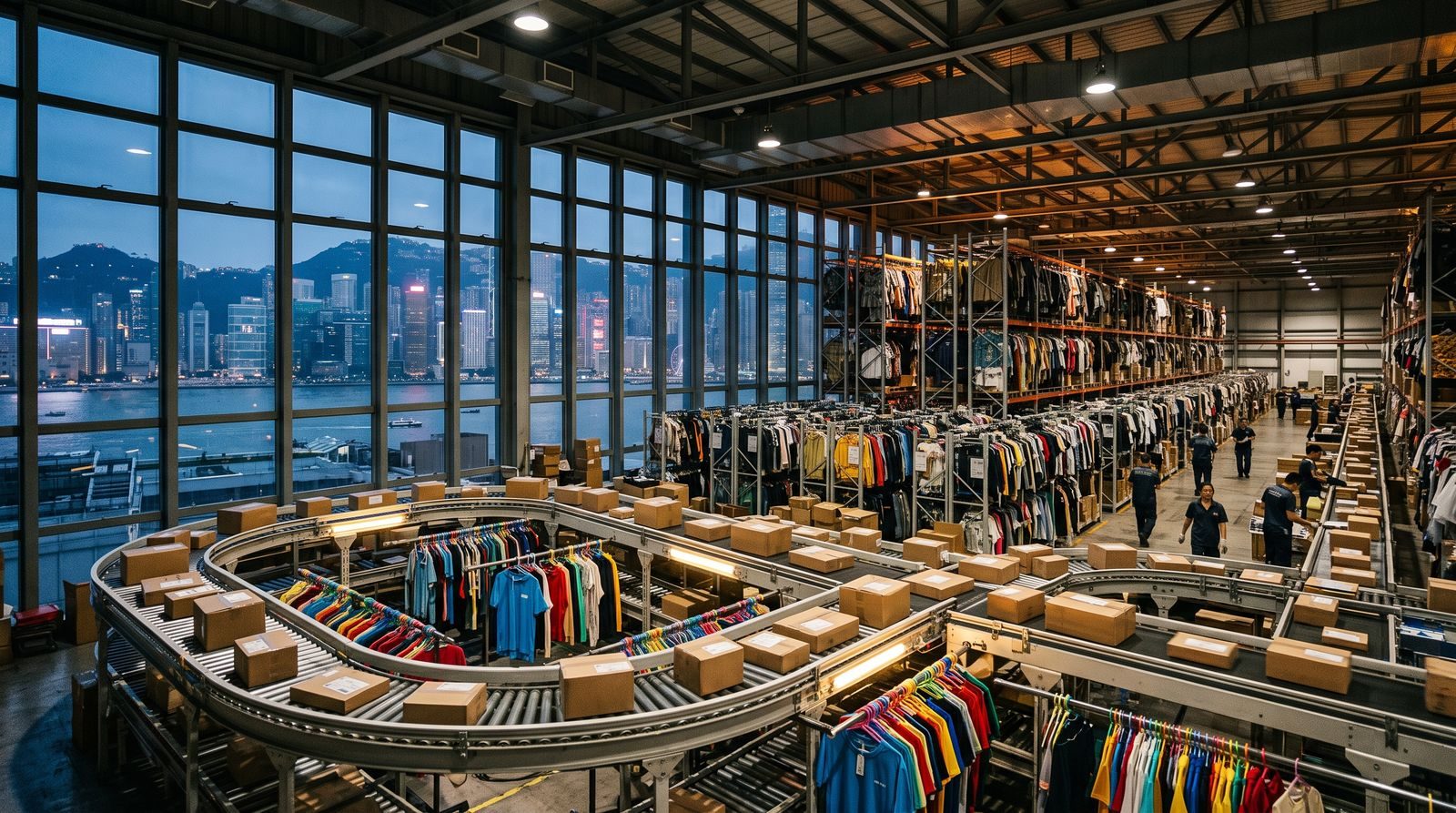
Shein finally put a number on itself. In a filing to the Hong Kong stock exchange Monday, the fast-fashion giant launched an offering of roughly 280 million Class B shares at HK$47.60 to HK$49.50 apiece — about $6.07 to $6.32 — to raise as much as HK$13.86 billion, or $1.77 billion. The final price gets fixed August 31; trading starts September 1. At the top of the range, the company is worth just under $27 billion.
That is roughly a quarter of the $100 billion investors stamped on Shein in 2022, when it was the fastest-growing retailer on earth and the most downloaded shopping app in America. The gap between those two numbers is the story — and very little of it is about clothes.
Hong Kong was not the plan. Shein spent 2023 and 2024 trying to list in New York, then London, and abandoned both under pressure from regulators and lawmakers on two continents. The venue it ended up with is the one that says the quiet part out loud: a company founded in Nanjing, headquartered in Singapore and dependent on Chinese supply chains could not get a Western listing done at any price.
The loophole was the valuation
Shein’s model was built on the de minimis exemption — the rule that let sub-$800 parcels enter the US duty-free, letting it airship millions of small packages straight from Guangzhou factories to American doorsteps with no tariffs and minimal customs friction. Washington killed that exemption in summer 2025. The bill arrived fast: Shein swung to a $99 million loss in the first quarter of 2026, against a $395 million profit a year earlier, and revenue growth decelerated to about 8% in 2025 from over 20% the year before.
The squeeze is going global. The EU imposed its own flat customs duty on low-value parcels entering the bloc on July 1, and Britain is expected to follow with similar measures. Add Temu undercutting it on price, an EU consumer-protection investigation opened in February over allegedly addictive app design and illegal product listings, and years of scrutiny over labor practices in its supply chain, and the 2022 valuation stops looking like a markdown and starts looking like a correction.
Our take: Shein’s edge was never just fast design cycles — it was tariff arbitrage at parcel scale, executed better than anyone. The $73 billion that evaporated between 2022 and today is the market discovering how much of the “tech-enabled retail disruptor” premium was actually a customs policy. That is the lesson for every cross-border model still standing: revenue built on a loophole is revenue the government can repossess. The IPO still likely gets done — $27 billion for the machine Shein built is not nothing — but it prices the company as what it is now: a low-margin global retailer paying tariffs like everyone else.
What to watch
- August 31 pricing. Top of the range signals real institutional demand in a Hong Kong market currently obsessed with AI and chip listings; bottom of the range says Shein is the deal investors settled for.
- September 1 debut. A first-day pop or drop will set the tone for every consumer-facing Chinese listing queued behind it.
- The UK parcel decision. Britain is Shein’s last major duty-light market. When it closes the door, the model has no loopholes left anywhere.
Shein joins a crowded week for Hong Kong capital markets — days after Alibaba raised $10.2 billion in the city’s biggest-ever follow-on — and lands in the middle of a tariff war that is redrawing supply chains from Canada to the parcel networks UPS is rebuilding around it.