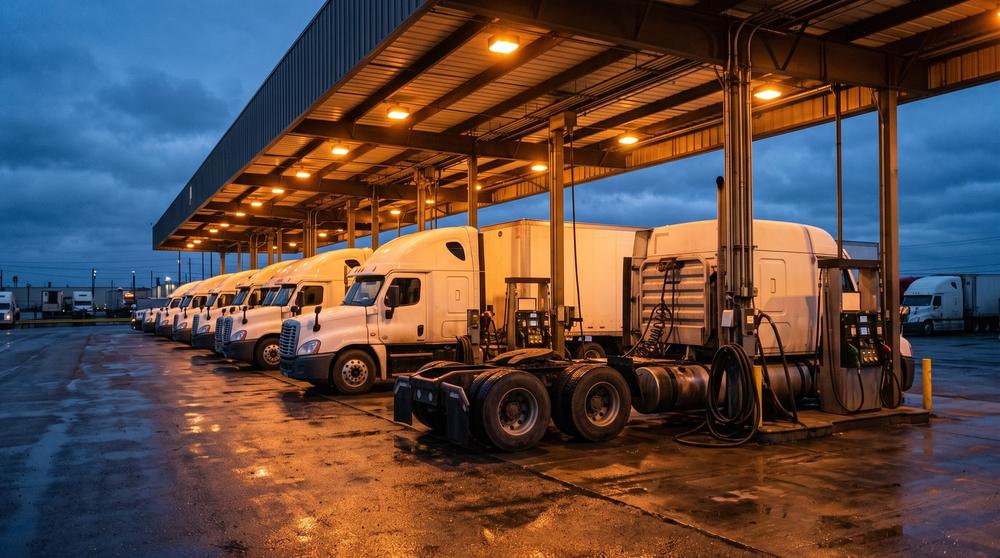
The national average price of diesel was around $6.23 a gallon on Monday. A year ago it was about $3.71. The previous all-time record, set in the summer of 2022, was $5.82, and it was taken out on 4 September and then again a week later when the average crossed $6 for the first time.
The instinct is to file this under “oil is expensive.” Brent settled near $107.90 today and WTI near $104.10, both up more than 2%, with Saudi Arabia’s East-West pipeline still shut after drone damage. So yes, crude is expensive.
But crude does not explain the gap. Diesel has risen roughly 68% year over year; crude has not. Gasoline, refined from the same barrel, has risen far less. If the barrel were the whole story, everything made from it would move together. It hasn’t.
The constraint is distillate, not oil
Four things are squeezing the middle of the barrel at once:
- Refining capacity is maxed. US operable utilisation has been running at roughly 98%. There is no spare unit to turn on.
- Russian diesel exports are restricted, following Ukrainian strikes on Russian refining and Moscow’s subsequent export ban. Europe bids for barrels that used to be somebody else’s.
- Jet fuel outbids diesel. Jet and diesel compete for the same distillate cut, and jet margins have been better. Refiners follow the margin.
- Freight demand does not flex. Trucks, rail, agriculture and marine cannot substitute away from diesel on any timescale that matters. Demand is close to vertical.
That combination produces a price that keeps setting records even on days when crude is flat or lower. The scarce thing is not oil. It is the capacity to turn oil into the specific fuel that moves physical goods.
Who actually pays
Diesel is an input to almost every delivered price in the economy, and it is one of the few that cannot be hedged away by a small business. A regional carrier running 40 trucks at 100,000 miles a year and 6.5 miles per gallon burns about 615,000 gallons. The year-over-year move is roughly $2.52 a gallon. That is about $1.55 million of additional annual fuel cost on a fleet that size — before insurance, wages or equipment.
Carriers with indexed fuel surcharges pass most of that through within weeks. Carriers on flat contract rates eat it until renewal, and some of them will not get to renewal. Shippers who negotiated hard on rate and left the surcharge clause vague are about to discover which side of that line they are on — the same failure mode we covered in the input-cost exposure playbook.
Our take. This is a margin story disguised as a commodity story. A crude spike is symmetrical — it goes up, it comes down, and everyone waits. A refining-capacity shortage is not: you cannot build a distillate unit in a quarter, and nobody is going to finance one for a fuel that policy has spent a decade signalling it wants less of. Which means the spread between crude and diesel is structural until either Russian barrels return or demand breaks. If diesel is more than about 3% of your delivered cost, treat this as a permanent repricing and renegotiate on that basis, not as a spike to wait out. The companies that waited out 2022 got lucky. The setup is different this time.
What to watch
- Weekly EIA distillate inventories. The inventory number, not the crude price, is the leading indicator for where this goes.
- The diesel crack spread. If it stays wide while crude falls, the refining-constraint thesis is confirmed and the price is sticky.
- Wednesday’s Fed decision. A hike is heavily priced, and fuel-driven inflation is precisely the kind the Fed cannot fix but does respond to.
- Surcharge language at Q4 renewals. The contracts being signed in the next eight weeks will decide who carries 2027’s fuel risk.