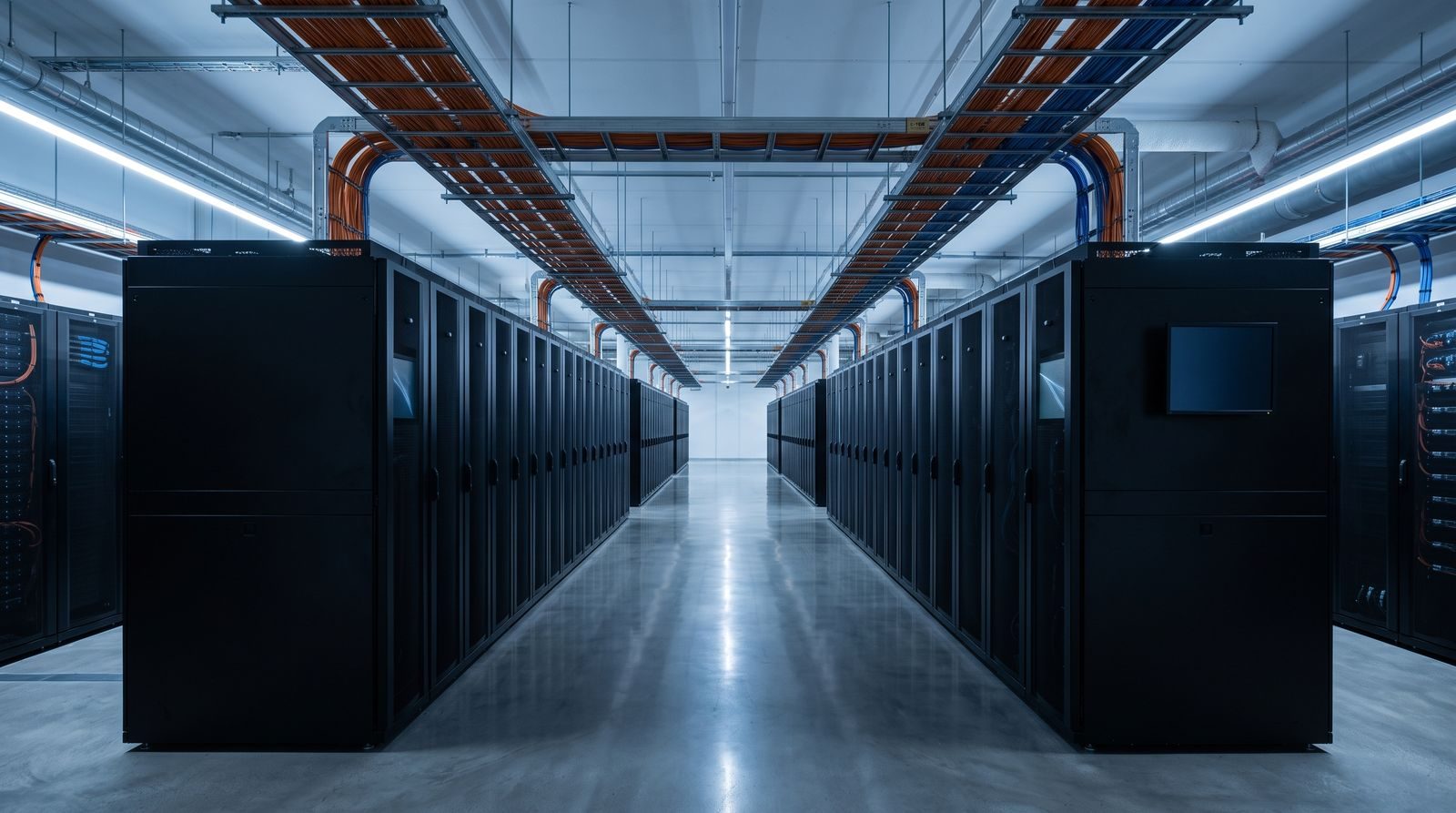
The EuroHPC Joint Undertaking signed a procurement contract on 31 August for LUMI-AI, a next-generation system to be built by Bull at the CSC — IT Center for Science data centre in Kajaani, Finland. The contract is worth €387.8 million covering acquisition, delivery, installation and maintenance, split evenly between EuroHPC JU and the LUMI AI Factory consortium.
The machine runs on AMD Instinct MI430X accelerators paired with sixth-generation AMD EPYC processors at 256 cores apiece. AMD and EuroHPC both put the target at roughly ten times the AI capacity and close to twice the high-performance computing throughput of the existing LUMI system. Deployment is scheduled for the second half of 2027 at CSC’s new facility in the Renforsin Ranta business park.
Six countries sit in the hosting consortium: Finland, Czechia, Denmark, Estonia, Norway and Poland. The system is owned by EuroHPC JU and is meant to serve as the compute backbone of the LUMI AI Factory — industrial AI work, academic research, training and inference, and large-scale scientific simulation.
Our take: Read the vendor sheet, not the flop count. A sovereign buyer with a €388m budget and a 2027 delivery date picked AMD silicon and a European integrator, in a year when almost every comparable announcement has been an Nvidia AI factory. That is not a benchmark decision — at this scale nobody buys on a single benchmark. It is a procurement decision, and procurement decisions are where second-sourcing stops being a slide in an architecture review and becomes a signed contract. The interesting number is not 10x. It is one: the number of realistic alternatives Europe now believes it has.
Why the integrator matters as much as the GPU
Bull is the HPC arm of Eviden, the Atos spin-out — a European system builder rather than an American hyperscaler or an Nvidia reference design. Between that and the AMD silicon, the whole stack of this machine sits outside the default supply chain that most large AI buildouts have used since 2023.
That is the point of an EuroHPC procurement. These contracts are industrial policy with a delivery schedule attached. Europe has spent three years being told its AI capacity is a rounding error against US hyperscaler capex, and the answer has been to buy machines it controls, hosted in member states, on hardware it can source without a single point of failure in the middle.
The trade-off is real and worth naming. Nvidia’s advantage was never only the chip; it was CUDA and the decade of tooling built on top of it. Choosing AMD at this scale means the LUMI AI Factory is also betting that ROCm will be good enough by 2027 for the researchers and companies who actually queue for time on it. That bet has been made before at LUMI, which already runs AMD Instinct hardware — so this is the renewal of an existing choice rather than a leap, which is exactly what makes it evidence rather than a press release.
What to watch
- MI430X delivery against schedule. A second-half-2027 date means AMD has to ship a next-generation part in volume to a customer with public deadlines. Slippage here is far more visible than slippage inside a hyperscaler order book.
- Utilisation, not capacity. Ten times the AI capacity is only worth something if the queue fills with work that could not run before. EuroHPC publishes allocation data; that is the honest scoreboard.
- Whether the other AI Factory tenders take the same shape. One contract is a decision. Three or four with the same vendor profile is a policy.
- Software friction reports out of the consortium. The gap between ROCm and CUDA is the whole risk in this purchase, and the people running jobs on it will say so publicly.
The machine arrives in late 2027. The signal arrived on Monday, and it was addressed to anyone who assumed there was still only one place to buy frontier AI compute.