Groq announced on Monday that it has closed a $350 million Series A led by the Dallas investment firm Disruptive, with planned participation from Nvidia. The round values the company at $3.5 billion.
Eleven months ago Groq raised at $6.9 billion. It was, at the time, the most credible independent challenge to Nvidia’s grip on inference — the compute that runs AI models in production rather than trains them. Groq built its own silicon, the LPU, and sold speed: tokens out of the model faster than a GPU could manage them.
Then in December Nvidia struck a licensing deal and hired founder and chief executive Jonathan Ross along with much of the senior team. What was left rebuilt itself as a neocloud — a data-centre operator that buys Nvidia systems and rents them out. The company that was supposed to displace Nvidia is now an Nvidia customer, and Nvidia is an investor in the round that repriced it.
Our take: the $3.5 billion is not a verdict on Groq’s execution. It is a fairly precise measurement of what the chips were worth. Strip the LPU roadmap and the people who built it out of a $6.9 billion company and the market says roughly half the value walks out with them. That is the number worth carrying into any conversation about an AI hardware startup: how much of this is the silicon, and how much is the six people who understand it?
What Groq actually is now
A spokesperson told TechCrunch the company does not regard the round as a down round, but as a fresh mark on the “post-Nvidia-licensing-deal version of Groq.” That framing is doing work, but it is not wrong — the asset being priced in August is genuinely not the asset that was priced last September.
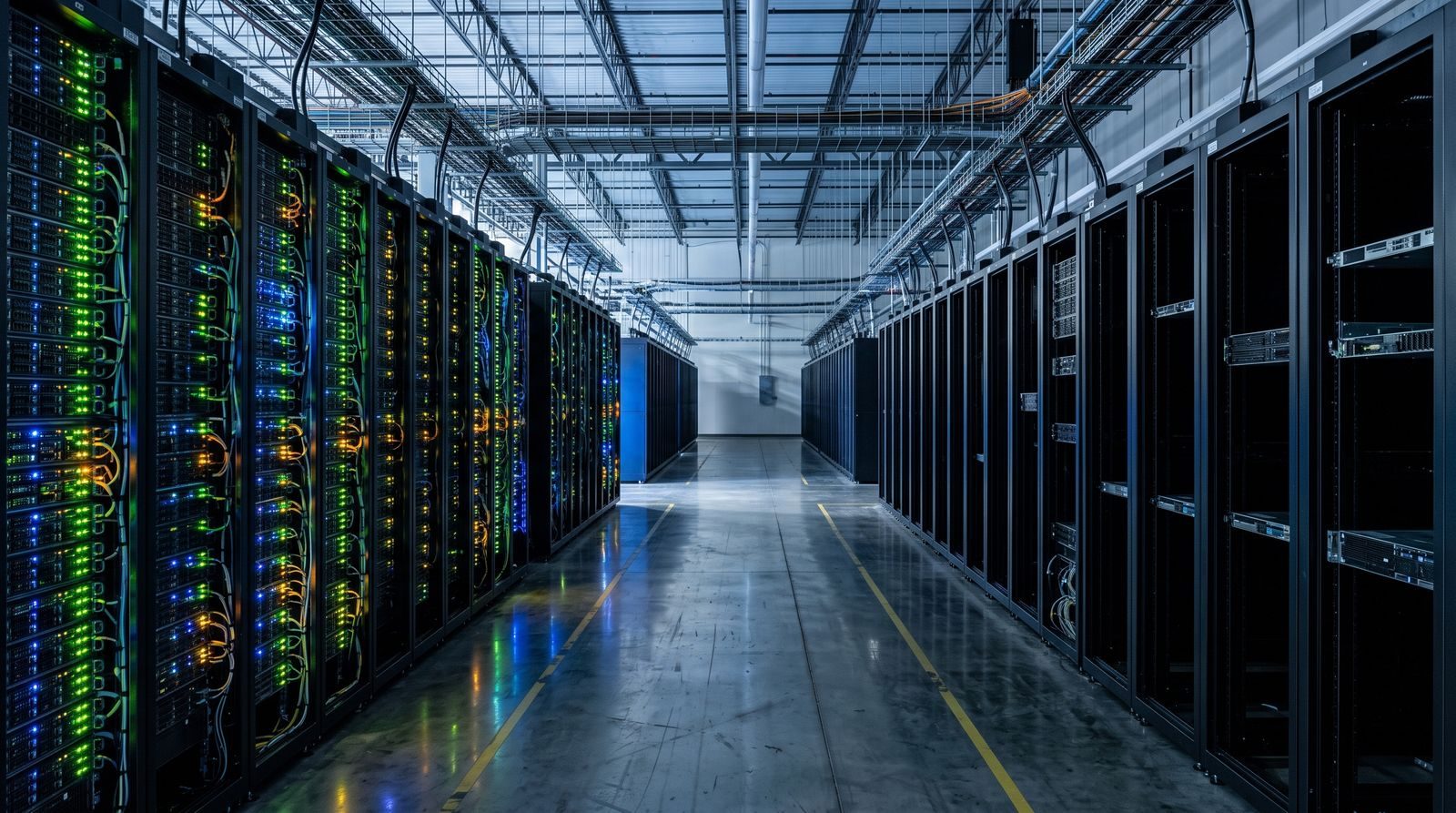
The current business runs 13 data centres across North America, Europe, the Middle East and Asia-Pacific, serving what the company says is more than six million developers, enterprises and AI-native firms. It intends to scale from 54 megawatts of capacity to more than 200 megawatts by 2027. A $650 million raise in June started that build; this $350 million continues it, aimed at customers wanting medium and large clusters of Nvidia hardware for training and inference.
“We are building Groq into the world’s leading AI inference cloud,” said Alex Davis, Groq’s chairman and the chief executive of Disruptive. “Inference will without a doubt become the largest and most critical layer of AI infrastructure.”
The neocloud problem
Davis is very likely right about inference. That is not the same as being right about the business. A neocloud buys depreciating hardware with borrowed money and rents it by the hour, which means the model works only if utilisation stays high and the residual value of a GPU holds up longer than the debt does.
CoreWeave is the live experiment: strong revenue growth, marquee contracts with Meta and Anthropic, and a persistent investor argument about capital expenditure, debt load and how fast the fleet ages. Nvidia supplies CoreWeave, Lambda and Nebius, and has invested in several of them. Groq joins a category where the largest supplier is also frequently the largest shareholder — which is efficient, and also means the category’s pricing power sits somewhere other than with the category.
Groq’s financials are private. The 200-megawatt target by 2027 is the number to hold them to.
What to watch
- Utilisation, not capacity. Megawatts announced are a spending commitment. Megawatts contracted are a business. Watch which one Groq discloses.
- Whether Nvidia’s stake grows. Nvidia participating in a customer’s round is now routine; Nvidia participating in a former competitor’s round after taking its founder is a different signal about how the inference layer gets organised.
- The other LPU bets. Etched and Olix are still selling custom inference silicon. If capital keeps flowing to them at rising marks while Groq’s halves, the market is pricing the team, not the thesis.
The uncomfortable version of this story: the fastest route to a return in AI hardware may not be beating Nvidia. It may be building something Nvidia wants enough to license, and then selling it the parts of your company it did not take.