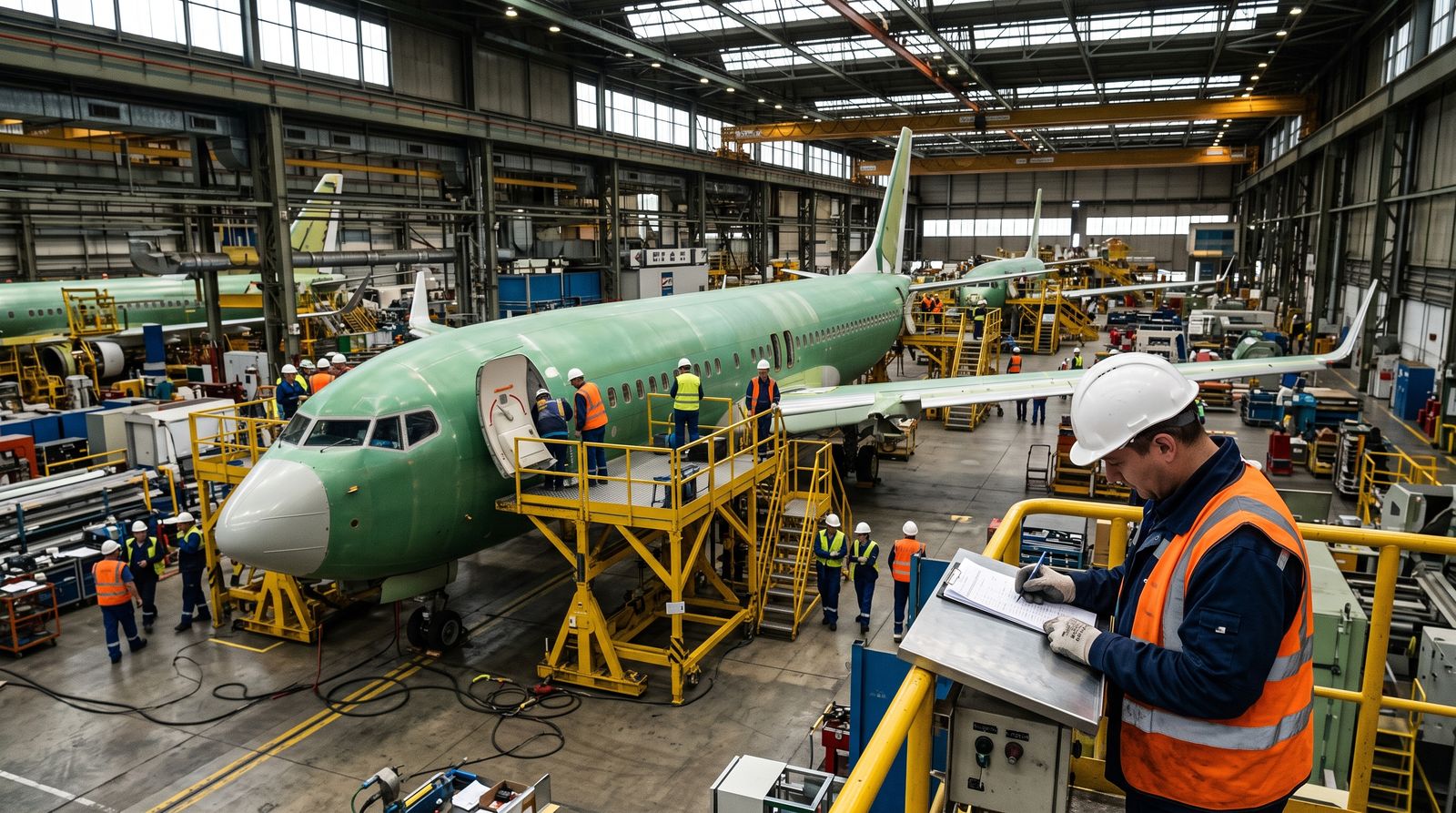
Starting Monday, a Boeing employee — not a federal inspector — will sign the final airworthiness certificate on every new 737 MAX and 787 that leaves the factory. The FAA has fully restored Boeing’s authority to issue its own delivery sign-offs effective July 20, ending a regime that began in 2019, when the regulator seized the MAX paperwork after two crashes killed 346 people, and extended to the 787 in 2022 over production-quality lapses.
The handback wasn’t sudden. The FAA restored limited “ticketing” authority in September 2025, then ran a shadow comparison for the better part of a year. Its verdict: “During the past eight months, the FAA has seen comparable production quality findings when Boeing issued airworthiness certificates and when the FAA issued them.” Same jets, same findings, either signature — so the pen goes back.
The timing is the story. The FAA lifted its hard cap on MAX output in March, Boeing passed the “capstone” review for a 47-jet monthly 737 rate in the spring, and first-half deliveries hit 314 aircraft — up 12% from a year ago and the company’s best first half since 2018. June alone saw 64 jets out the door, including 42 MAXes and 13 787s. Every certificate that required a federal inspector’s personal signature was a potential queue on the delivery ramp. That queue just disappeared — exactly as the line accelerates.
Our take: Two things are true at once. This is the world’s most-watched aviation regulator formally stating that Boeing’s quality data is indistinguishable from its own — the strongest institutional all-clear since the door-plug blowout put the company under a microscope in early 2024. It is also a return of delegated self-certification, the exact arrangement that curdled before the MCAS disasters — restored at the moment Boeing is pushing rate, which is historically when quality slips. The market will read it simpler than either: faster tickets mean faster deliveries, and deliveries are when Boeing gets paid.
What to watch
- July 28: Q2 earnings. Delivery-driven cash flow is the number that moves the stock — in a tape that’s been punishing even good news, Boeing needs the cash story airtight.
- The second-half run rate: a 47-a-month 737 line implies H2 deliveries well above the first half. Watch whether the ticketing handback shows up in the monthly totals.
- MAX 7 and MAX 10 certification: still expected in 2026 — the FAA decision with the most revenue attached, since both models are sold in the thousands.
- The quality data itself: this restoration rests on “comparable findings.” The first meaningful divergence puts the pen back in play.
Boeing has spent two years buying credibility back one audit at a time — the same slow rebuild Apple is attempting with the DOJ, one draft settlement at a time. Meanwhile SpaceX is learning the opposite lesson, watching its stock pay for four engines that didn’t light. And the deals Boeing lost while grounded haven’t come back — NATO just picked Saab’s radar plane over Chicago’s. Trust, it turns out, is the actual product.