Fluence Energy cut its fiscal 2026 guidance on Wednesday for the second time in roughly six weeks. Revenue now lands around $2.4bn against a prior midpoint near $3.0bn, and the adjusted EBITDA loss widens to about $200m. The stock fell roughly 18% after hours and traded as low as about $7.30.
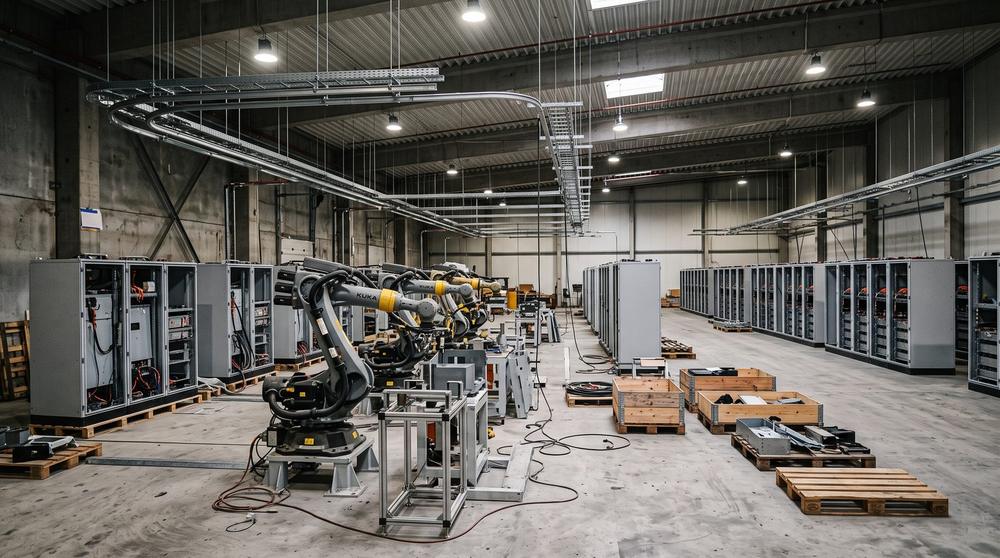
The August cut had already taken the range down from $3.2–3.6bn to $2.9–3.1bn. Put the two together and something close to $1bn of expected revenue has left the year since midsummer. The company attributes it to the same cause both times: a slower-than-planned ramp at its contract-manufacturing facility in Houston, which is supposed to build battery enclosures in the United States, and which has run into construction delays and problems automating the line.
Demand is not the stated problem. Grid-scale storage orders are not the thing that moved. One building is.
Our take: This is what the reshoring premium actually costs, and it is not mostly capex. Customers increasingly want US-manufactured content, which turns a domestic line from a nice-to-have into a gate every order has to pass through. The moment that happens, management loses the ability to route around it — you cannot ship a Chinese enclosure to a customer who is buying American content, so the plant stops being one supplier among several and becomes the throat of the entire year. When a single facility is load-bearing for a full year’s revenue, guidance is a construction schedule wearing a finance costume. Fluence’s second cut is the market learning that the schedule, not the demand, was the number worth watching.
Two cuts is a different signal from one
A single guidance cut on a factory ramp is ordinary industrial life. Plants are late. The second cut is the expensive one, because it says the first estimate of the delay was itself wrong — and that is a statement about visibility, not about concrete. Management either did not know how far behind the automation was in August, or knew and hoped. Investors price those two possibilities identically and unkindly.
It is also the second mid-cycle warning from a US industrial in as many weeks; J.B. Hunt pre-announced on cost pass-through for entirely different reasons. The common thread is not a demand recession. It is that the operating assumptions underneath 2026 guidance were built in a calmer input environment and are now being marked to reality one company at a time.
The automation detail is the one to keep
“Construction delays” resolve on a calendar. “Automation issues” do not necessarily — a line that will not hold takt time is an engineering problem with an open-ended clock, and it is the reason a ramp forecast can be wrong twice. Enclosures are steel boxes, which sounds trivial and is exactly why the delay is instructive: the hard part of building things in America right now is rarely the technology. It is commissioning a workforce and a line at the same time, in a market where everyone else is trying to commission one too.
What to watch
- A dated ramp milestone, not a quarter. The useful disclosure is units per week out of Houston with a date attached. “Second half” language after two misses is not information.
- Backlog versus revenue. If the backlog holds while revenue slips, this is timing and the money arrives late. If the backlog softens, customers have started re-sourcing, and that is permanent.
- The cash line. A widening EBITDA loss alongside a plant that is consuming working capital is the combination that turns an operational problem into a financing one — and capital for power equipment is being priced creatively right now.
- Whether the contract manufacturer changes. Swapping partners resets the clock but admits the first choice was wrong. Watch for it quietly in the next filing.
Anyone underwriting a domestic manufacturing story should take the lesson generally: ask which single facility the forecast depends on, and what happens to the year if it opens two quarters late. Fluence just published the answer.