Fortaegis closed an oversubscribed $50 million Series A on Monday to commercialise a security approach that starts one layer below everything the AI infrastructure industry currently argues about. The round was led by Singapore-based Serendipity Capital, with participation from TEL Venture Capital — the corporate venture arm of Japanese chip-equipment maker Tokyo Electron — alongside investors from manufacturing, defence, quantum computing and critical infrastructure.
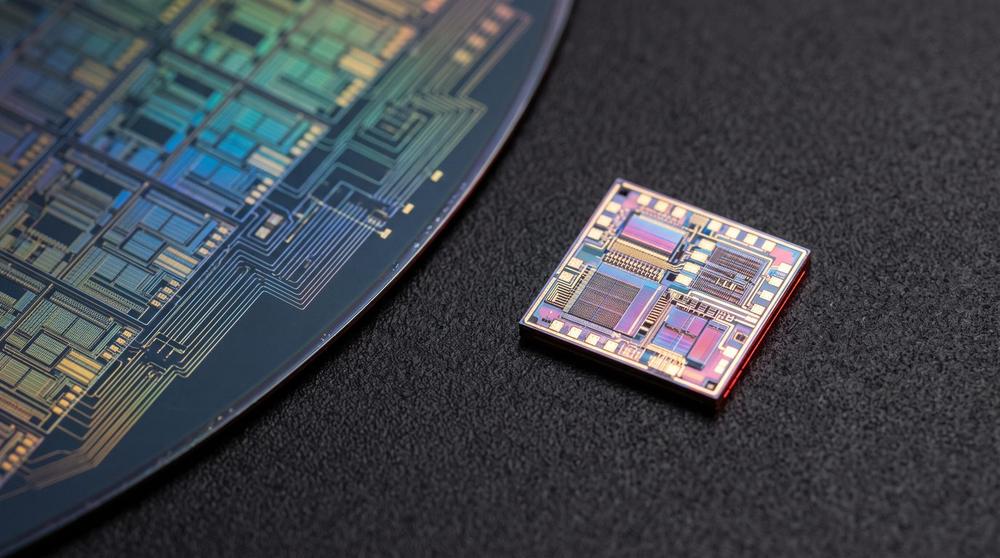
The technical claim is narrow and, if it holds at volume, consequential. When a silicon chip is manufactured, microscopic physical variations occur that no fab can eliminate and no two dies share. Fortaegis extracts a digital fingerprint from those variations and uses it to generate encryption keys that are then rotated frequently and never permanently written to the device. There is no key file, no secure-element vault, no stored secret to exfiltrate. If an attacker gets physical possession of the hardware, there is nothing sitting on it to read.
The company is targeting defence and autonomous systems first, then AI infrastructure, telecommunications, critical infrastructure, advanced manufacturing and automotive. It plans to start commercial manufacturing in 2027, expanding FPGA production in the meantime while it develops application-specific chips.
Our take: The interesting number in this round is not $50 million, it is 2027. Fortaegis is shipping FPGAs now and real silicon later, which means the bet is that the threat model it is designed for arrives on roughly that schedule. That is a defensible read — the AI buildout is putting enormous value into physically distributed hardware, in colocation space, at the edge, on vehicles and in the field, where the operator does not control who touches the box. Key material stored on a device you cannot guard is a problem the software layer has never solved. But an 18-month gap to production is a long time to hold a security thesis, and the incumbent answer — hardware security modules and TPMs — is entrenched, certified and already in the procurement catalogue.
Why the money came from where it came from
Tokyo Electron's venture arm showing up on the cap table is worth more than its cheque. A startup whose product is a manufacturing-derived property of silicon has a dependency problem that money alone does not fix: it needs process access, fab relationships and a tape-out path. Strategic capital from the equipment side is how that dependency gets managed. The defence and critical-infrastructure investors point the same way — these are the buyers who will pay a premium for tamper resistance, and who buy on multi-year qualification cycles rather than quarterly budget.
It also says something about where security spend is migrating. For a decade the assumption was that hardware roots of trust were solved and the action was in software: identity, detection, response. The AI infrastructure boom has quietly reopened the hardware question, because the assets now worth stealing — model weights, inference pipelines, the keys that gate access to both — increasingly sit on machines outside the owner's physical control.
What to watch
- Whether a named design win lands before tape-out. A defence or hyperscale customer committing publicly in 2026 would validate the timeline; silence until 2027 would not.
- Yield and stability data. Fingerprints derived from manufacturing variation have to stay readable across temperature, voltage and years of ageing. That is the engineering risk, and it is the one that has sunk similar approaches before.
- Certification. Defence and financial buyers do not adopt cryptography that lacks an accreditation path. Progress there matters more than benchmark numbers.
The pitch, stripped down: the safest key is one that was never stored anywhere. Everything now depends on whether that survives contact with a production line.