Home Depot took Express Delivery national this week. Order plumbing fittings, electrical supplies, hardware, paint, tools, adhesives or caulk from a local store and it arrives in three hours or less. No membership required. The flat fee is $7 in most major markets, $10 in Los Angeles.
Jordan Broggi, the company’s executive vice president of customer experience and president of online, told reporters that “the majority of those deliveries are actually happening in less than one hour.” The service had been running in selected markets already; the announcement extends it across the US, fulfilled from more than 2,000 stores.
The interesting number is not three hours. It is $7.
The network was already paid for
Amazon spent a decade and an unpublished fortune building same-day logistics, and is currently extending drone delivery from 11 metro areas to nearly 500 — a genuinely hard piece of infrastructure engineering. Home Depot did not build anything comparable. It relabelled a store estate it was already paying rent, staff and inventory costs on, and pointed a routing layer at it.
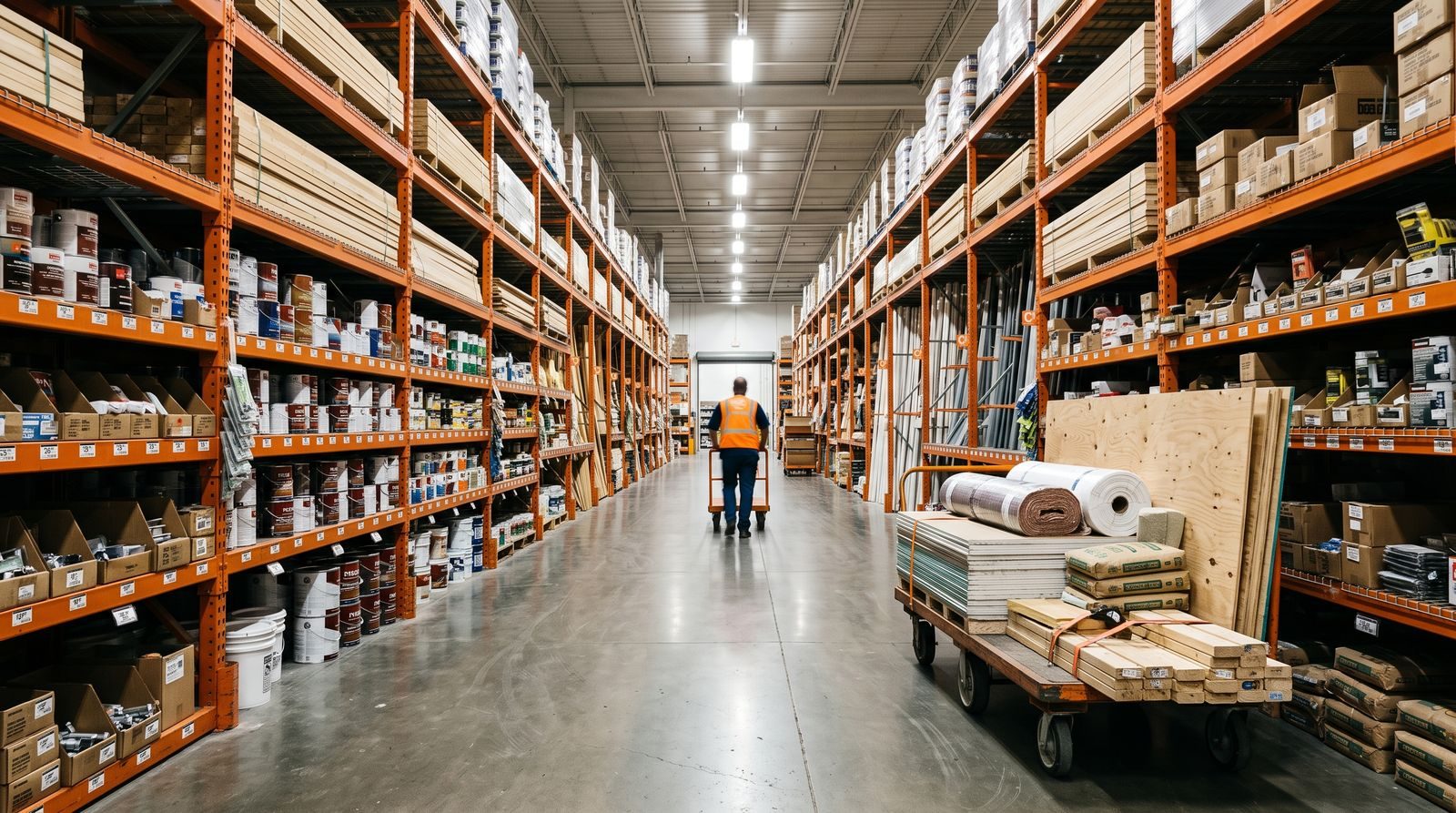
That is the whole economic argument. A big-box home improvement store is, structurally, a forward-deployed warehouse with a car park. It already holds the SKUs a contractor runs out of mid-job. It is already within a short drive of the job site. The incremental cost of turning it into a three-hour fulfilment node is a driver, a van and software — not a distribution centre, not a fleet, not an air traffic problem.
Our take: $7 is not a price. It is a fence. Set low enough that a Pro won’t send an apprentice on a 40-minute round trip, and low enough that no pure-play delivery intermediary can profitably sit between Home Depot and its own customer. The margin on the delivery is probably thin to negative. The margin on not losing the basket to whoever is closer is not. Watch what this does to the trade counters and independent suppliers whose only remaining advantage over a big box was being nearby.
Who this is actually aimed at
The Pro customer — contractors, remodellers, trades — is the segment Home Depot has been fighting for since it started buying up specialty distributors. Pros buy more, buy repeatedly, and are ruthless about time. A missing $9 fitting does not cost a contractor $9; it costs a crew hour. That is the number the three-hour promise is priced against, and it explains why the company is willing to eat the difference.
It also explains the no-membership decision. Subscription walls are how retailers monetise convenience. Home Depot skipped it, which suggests the goal is share of jobsite, not a new revenue line.
What to watch
- Attach rate, not delivery volume. The test is whether the average Pro order gets larger and more frequent, not how many vans move.
- The DIY spillover. The fee is available to DIY customers too. If weekend homeowners adopt it at scale, unit economics get harder fast — small baskets, dispersed drops.
- Lowe’s response. It has a comparable store footprint and no reason to concede the speed argument. A matching offer would turn this into a fee war within a quarter.
- Whether $7 holds. The LA carve-out at $10 is the tell that the number is cost-sensitive by market. Expect more carve-outs.
The broader lesson is not about home improvement. Every incumbent with physical proximity to its customers is sitting on a distribution asset it is currently accounting for as overhead. The companies that win the next round of retail logistics are mostly not going to build networks. They are going to notice the one they already own.